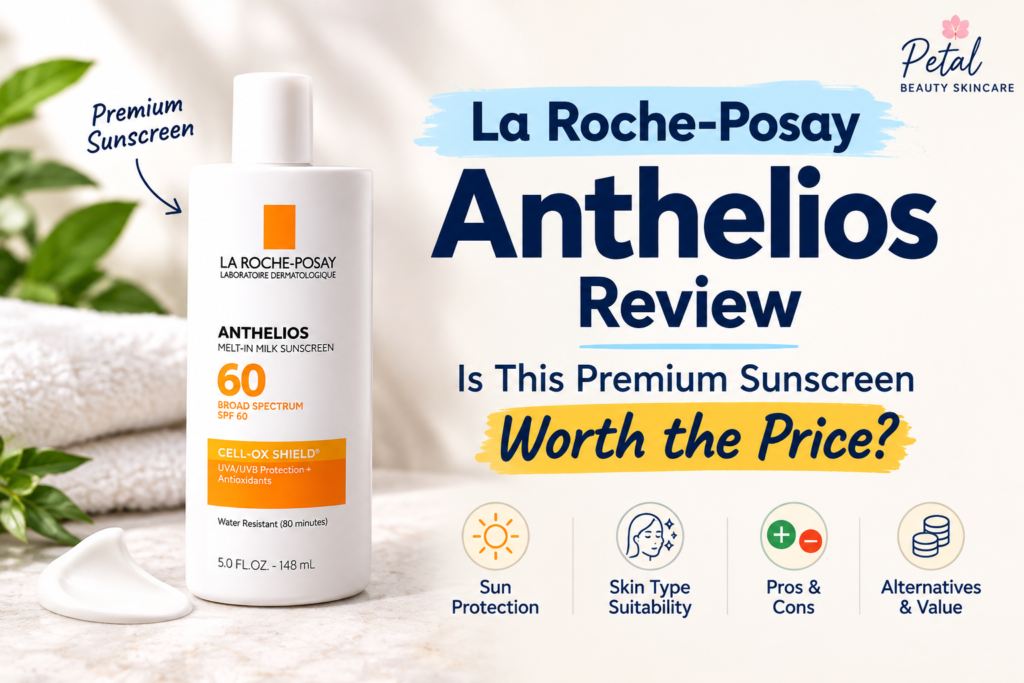
If you’re reading a La Roche-Posay Anthelios review, you’re probably wondering the same thing most premium sunscreen shoppers do: will I actually enjoy wearing this, and is the price justified? Protection matters, but so do texture, skin compatibility, and whether you’ll reapply it. Because Anthelios is a whole product family, this article focuses on one formula: Anthelios Melt-In Milk Sunscreen SPF 60, the face-and-body version. In short, it’s worth considering if you want a broad-spectrum, water-resistant, fragrance-free sunscreen you can use from head to toe. It isn’t the best pick for everyone, especially if you want a lower price or a mineral-only formula.
By the Petal Beauty Skincare editorial team. This is a research-based review built on the manufacturer’s label and published dermatology guidance. We have not personally tested this product.
Affiliate disclosure: Petal Beauty Skincare may earn a commission from qualifying Amazon purchases, at no additional cost to you.
Quick Verdict and Comparison Table
Our take: Anthelios Melt-In Milk SPF 60 is a solid, well-documented choice for people who want one bottle for face and body and who value a lotion-style finish. Its cost per ounce is reasonable for the amount of product you get, but it uses chemical filters and may not suit everyone’s skin or finish preferences. Prices below were checked in October 2026 and change often.
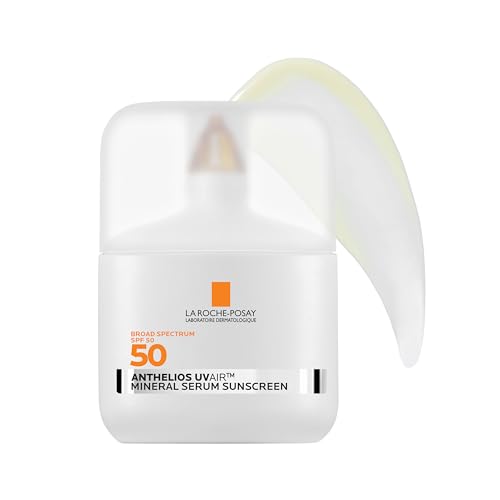
- Weightless & Blendable: Discover the light-as-air serum texture of this facial sunscreen, supercharged with antioxidants…
- Advanced UV Defense: Powered by Cell-Ox Shield Technology, this sunscreen spf 50 delivers broad-spectrum UVA/UVB protect…
- Hydration Booster: Infused with hyaluronic acid, antioxidants and niacinamide, this daily sunscreen for face hydrates fo…
| Product or formula | Best for | SPF and key feature | Approximate price | Buying recommendation |
|---|---|---|---|---|
| La Roche-Posay Anthelios Melt-In Milk SPF 60 (reviewed) | Face-and-body use, outdoor days | SPF 60, broad spectrum, water resistant (80 minutes), fragrance-free | About $37.99 for 150 mL on the brand’s site; Amazon price: Check current price | Worth considering if you want one sunscreen for the whole body |
| EltaMD UV Clear Broad-Spectrum SPF 46 | Daily facial use, skin prone to breakouts | SPF 46, contains niacinamide, face only | About $44 to $45 for 1.7 oz at retailers we checked; Amazon price: Check current price | A strong alternative if you only need a facial sunscreen |
| Beauty of Joseon sunscreen | Lightweight everyday facial wear | Korean-style facial sunscreen; confirm SPF on the version you buy | Check current price | Consider if budget and a light feel matter most |
| Round Lab sunscreen | Lightweight everyday facial wear | Korean-style facial sunscreen; confirm SPF on the version you buy | Check current price | Consider if budget and a light feel matter most |
| Mineral sunscreen (zinc oxide or titanium dioxide) | People who prefer mineral filters | Varies by product; check label | Check current price | Choose by label, not by brand name |
What Is La Roche-Posay Anthelios?
Anthelios is a range, not a single formula. La Roche-Posay’s official site lists several different Anthelios sunscreens, including a separate Melt-In Milk SPF 100, a Cooling Water Lotion SPF 60, a kids’ lotion, a tinted mineral sunscreen for the face, and a UV Hydra facial formula. Each has its own label, filters, and intended use, so a review of one doesn’t automatically apply to the others.
The version reviewed here is Anthelios Melt-In Milk Sunscreen SPF 60. According to the manufacturer, it’s a face-and-body sunscreen with broad-spectrum SPF 60, an 80-minute water-resistance claim, and a fast-absorbing, velvety lotion texture. It comes in 150 mL and 90 mL sizes. If you want a face-only fluid or a tinted mineral formula, you’d be looking at a different Anthelios product.
Key Features and Formula
Broad-spectrum protection. Broad spectrum means the product is designed to protect against both UVA and UVB rays. SPF mainly reflects UVB protection, and higher numbers add progressively smaller gains, as the Skin Cancer Foundation’s sunscreen guide explains. A higher price doesn’t automatically mean better protection; a properly used broad-spectrum SPF 30 or higher is what dermatologists recommend.
Active ingredients. The label lists avobenzone 3%, homosalate 10%, octisalate 5%, and octocrylene 7%. These are chemical (organic) filters, not mineral ones. The brand states the formula is free of oxybenzone and octinoxate.
Texture and extras. The brand describes it as non-greasy and hydrating, with glycerin and dimethicone, plus an antioxidant complex it calls Cell-Ox Shield. Those antioxidant claims come from the manufacturer and haven’t been independently verified by us.
Label details. The product page lists it as fragrance-free, oil-free, non-comedogenic, and paraben-free. Note that denatured alcohol appears in the inactive ingredients, which some very sensitive or dry skin types prefer to avoid.
Water resistance. The label says 80 minutes. Always follow the exact duration on the bottle you buy.
The page also notes that the Skin Cancer Foundation recommends the product, and its sensitive-skin tolerance claims come from the brand’s own testing.
Who Should Consider It?
Individual reactions and finish vary. Where we mention suitability below, it reflects the brand’s claims or general label information, not our own testing.
- Weightless & Blendable: Discover the light-as-air serum texture of this facial sunscreen, supercharged with antioxidants…
- Advanced UV Defense: Powered by Cell-Ox Shield Technology, this sunscreen spf 50 delivers broad-spectrum UVA/UVB protect…
- Hydration Booster: Infused with hyaluronic acid, antioxidants and niacinamide, this daily sunscreen for face hydrates fo…
Dry Skin
The glycerin-based lotion texture is described as hydrating, which suggests it should work comfortably for many dry skin types. The alcohol in the formula is worth watching if your skin is very dry or easily tight.
Oily and Combination Skin
The brand calls it oil-free and fast-absorbing. A lotion-style sunscreen can still feel heavier on very oily skin, particularly in humid weather. If shine is your main concern, a lighter facial-only formula may suit you better.
Sensitive Skin
La Roche-Posay says the formula is tested for tolerance, including on sensitive skin, and it’s fragrance-free. Still, chemical filters can irritate some people. Patch test first, and if you’re building a soothing routine, our guide to Centella asiatica vs. aloe vera can help you choose calming ingredients.
Acne-Prone Skin
The brand labels it non-comedogenic, which is a helpful signal but not a guarantee for every person. If you’re also working on post-breakout marks, see our comparison of niacinamide vs. vitamin C for acne marks.
Mature Skin
A hydrating, non-greasy lotion can be appealing if dryness or dullness is a concern. For more texture-focused options, browse our roundup of non-greasy sunscreens for women over 40.
People Who Wear Makeup
A fast-absorbing lotion is a good starting point under makeup, but pilling can happen with any sunscreen layered with silicone-heavy primers or foundations. Let it set for a few minutes before applying makeup.
Pros and Cons
Potential benefits
- Broad-spectrum SPF 60 with an 80-minute water-resistance claim
- Designed for both face and body, so one bottle covers more skin
- Fragrance-free, with a hydrating lotion texture
- Free of oxybenzone and octinoxate, according to the brand
- Large 150 mL size at a reasonable cost per ounce
Considerations
- Premium price compared with many drugstore sunscreens
- Chemical filters only, so it isn’t an option if you strictly want mineral sunscreen
- Contains denatured alcohol, which may bother some sensitive or dry skin
- Finish may feel heavier on very oily skin (an individual experience, not an established flaw)
- Eye stinging or pilling under makeup are possible individual experiences with many sunscreens; we have no verified evidence they’re specific to this one
- It’s a lotion for face and body, not a facial-specific or tinted formula
- Weightless & Blendable: Discover the light-as-air serum texture of this facial sunscreen, supercharged with antioxidants…
- Advanced UV Defense: Powered by Cell-Ox Shield Technology, this sunscreen spf 50 delivers broad-spectrum UVA/UVB protect…
- Hydration Booster: Infused with hyaluronic acid, antioxidants and niacinamide, this daily sunscreen for face hydrates fo…
Is La Roche-Posay Anthelios Worth the Price?
The brand lists the 150 mL bottle at $37.99, or about $0.25 per mL. That works out to roughly $7.50 per fluid ounce. By comparison, EltaMD UV Clear at about $44 for 1.7 oz comes to roughly $26 per ounce, though that product is made for the face only. Amazon prices can differ, so recalculate when you check the current listing.
The real value question comes down to how you’ll use it:
- Face and body use: The American Academy of Dermatology says most adults need about an ounce of sunscreen to cover the whole body, according to its guide to applying sunscreen. A 150 mL bottle holds about 5 ounces, so heavy body use will empty it quickly. That makes it better value for face-and-neck use or short outings than for daily full-body coverage.
- Wearability: If the texture feels comfortable enough that you reapply, it’s doing its job.
- Protection features: SPF 60, broad spectrum, and water resistance matter for beach, hiking, and sports days.
- Consistency: A sunscreen you enjoy and use generously protects you better than a pricier one you skip.
Likely worth it if you want one dependable bottle for face and body and like lotion textures. Better to look elsewhere if you want the lowest cost per use, strictly mineral filters, or a very light facial finish.
Best Alternatives to Consider
- EltaMD UV Clear SPF 46: A facial sunscreen with niacinamide, positioned for skin prone to breakouts. Retailer listings show it combines zinc oxide with a chemical filter, so check the label. It’s a different product from a face-and-body Anthelios, with a different intended use.
- Beauty of Joseon sunscreen and Round Lab sunscreen: Popular lightweight facial options. See our Beauty of Joseon vs. Round Lab sunscreen comparison. Formulas and SPF labeling can differ by market, so confirm the version sold in the US.
- A mineral sunscreen: If you prefer zinc oxide or titanium dioxide, pick based on the active ingredients, SPF, and water resistance on the label. La Roche-Posay also makes a tinted mineral Anthelios for the face.
No two of these share the same filters, water resistance, or skin suitability, so none is universally better.
How to Apply Sunscreen Correctly
The American Academy of Dermatology recommends a broad-spectrum, water-resistant sunscreen with SPF 30 or higher, as outlined in its Practice Safe Sun guidance. Apply enough to cover all exposed skin, including ears, neck, and the tops of feet. Reapply at least every two hours outdoors, and after swimming or sweating. For Anthelios Melt-In Milk, the brand also advises applying about 15 minutes before sun exposure and reapplying after 80 minutes of swimming or sweating and right after towel drying. Sunscreen works best alongside shade and protective clothing.
Frequently Asked Questions
Is La Roche-Posay Anthelios worth the money? For the Melt-In Milk SPF 60 formula, it can be, especially if you’ll use it on both face and body. It’s less compelling if you want the cheapest option or only need facial sunscreen.
Is Anthelios suitable for sensitive skin? The brand says Melt-In Milk SPF 60 is fragrance-free and tested for tolerance on sensitive skin. Chemical filters and denatured alcohol may still bother some people, so patch test first.
Can you use Anthelios on oily or acne-prone skin? The brand labels this formula oil-free and non-comedogenic. Feel and breakouts vary person to person.
Does Anthelios leave a white cast? The formula uses chemical filters rather than mineral ones, which typically means less visible cast than many mineral sunscreens. We haven’t verified this firsthand, and other Anthelios formulas, especially mineral ones, may differ.
Can Anthelios be worn under makeup? Many people layer lotion sunscreens under makeup. Let it set first, and test for pilling with your usual products.
Is Anthelios better than EltaMD UV Clear? Neither is better for everyone. Anthelios Melt-In Milk is for face and body with an 80-minute water-resistance claim; EltaMD UV Clear is a facial sunscreen with niacinamide.
How often should you reapply Anthelios? At least every two hours, and after 80 minutes of swimming or sweating or after towel drying, per the label.
Which Anthelios formula should you choose? Choose Melt-In Milk SPF 60 for face-and-body outdoor use. For a tinted mineral, a kids’ formula, or a face-only fluid, look at the specific Anthelios product built for that purpose and read its label.
Final Verdict
Our La Roche-Posay Anthelios review comes down to this: Anthelios Melt-In Milk SPF 60 offers broad-spectrum SPF 60, an 80-minute water-resistance claim, a fragrance-free formula, and a convenient face-and-body format at a fair cost per ounce. The trade-offs are its premium sticker price, chemical-only filters, denatured alcohol, and a lotion finish that may not suit very oily skin.
It’s best for people who want one dependable outdoor sunscreen for face and body. If you care most about lower cost, a mineral formula, or a lighter facial finish, start with an alternative such as EltaMD UV Clear, Beauty of Joseon, Round Lab, or a mineral option.
Check Price on Amazon
- Weightless & Blendable: Discover the light-as-air serum texture of this facial sunscreen, supercharged with antioxidants…
- Advanced UV Defense: Powered by Cell-Ox Shield Technology, this sunscreen spf 50 delivers broad-spectrum UVA/UVB protect…
- Hydration Booster: Infused with hyaluronic acid, antioxidants and niacinamide, this daily sunscreen for face hydrates fo…