
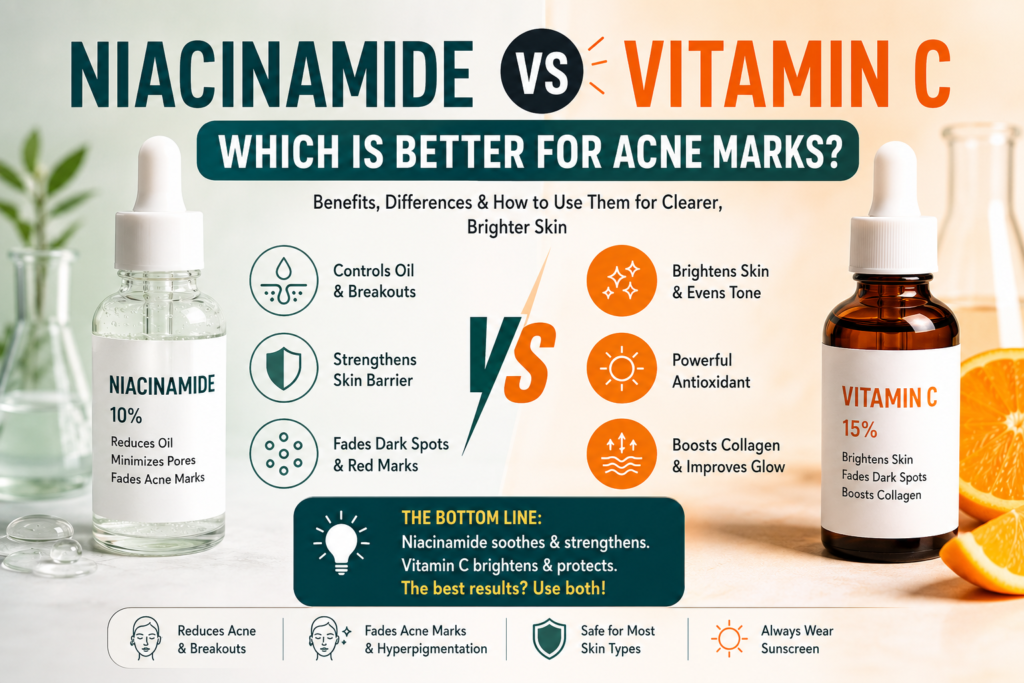
Anyone who has dealt with acne knows the frustrating part isn’t always the breakout itself — it’s the dark spots, red patches, and discoloration that stick around long after the pimple is gone. These post-acne marks can linger for weeks or even months, especially without the right skincare ingredients in your corner.
Two of the most talked-about ingredients for fading acne marks are niacinamide and vitamin C. Both are backed by solid research, widely available, and suitable for most skin types — but they work differently and shine in different situations.
So when it comes to niacinamide vs vitamin C for acne marks, which one should you actually reach for? And can you use them together without causing irritation? This guide breaks it all down.
Quick Verdict
| Goal | Best Pick |
|---|---|
| Best for active acne-prone skin | Niacinamide |
| Best for dark marks (PIH) | Vitamin C |
| Best for sensitive skin | Niacinamide |
| Best for oily skin | Niacinamide |
| Best for faster brightening | Vitamin C |
| Best overall (combined approach) | Both together |
What Are Acne Marks?
Before diving into ingredients, it helps to understand what you’re actually treating — because not all post-acne discoloration is the same.
Post-inflammatory hyperpigmentation (PIH) refers to the flat, brownish or tan spots left behind after a pimple heals. These occur when the skin overproduces melanin in response to inflammation. PIH is most common in medium to deeper skin tones.
Post-inflammatory erythema (PIE) shows up as flat, pinkish or reddish marks — not raised, just discolored. PIE is more common in lighter skin tones and occurs when small blood vessels are damaged during a breakout.
True acne scars are a different matter entirely. These involve actual changes to the skin’s texture — think ice pick scars, rolling scars, or boxcar scars. Skincare ingredients alone can’t reverse true scarring.
This article focuses on PIH and PIE — the flat discoloration left after acne heals — since both niacinamide and vitamin C are most effective for these.
What Is Niacinamide?
Niacinamide is a form of vitamin B3, a water-soluble nutrient that your skin uses in a variety of ways. When applied topically, it’s one of the most versatile and well-tolerated active ingredients in skincare.
How it works for acne marks: Niacinamide works by inhibiting the transfer of melanin (pigment) from melanocytes to skin cells — meaning it slows the process that creates dark spots in the first place. According to research published in the National Institutes of Health (NIH), niacinamide has demonstrated measurable effects on hyperpigmentation at concentrations of 2%–5%.
Key benefits for acne-prone skin:
- Oil regulation: Niacinamide helps control excess sebum, making it especially useful for oily and combination skin types. Less oil means a reduced environment for breakouts.
- Barrier support: It strengthens the skin’s protective moisture barrier, helping skin stay resilient and recover faster from inflammation.
- Redness reduction: Niacinamide has anti-inflammatory properties that can calm active redness and reduce the appearance of PIE.
- Pore appearance: While it doesn’t physically change pore size, it can reduce their visible appearance over time.
- Gentleness: At concentrations of 2%–10%, niacinamide is well-tolerated even by sensitive skin.
What Is Vitamin C?
Vitamin C (typically used as L-ascorbic acid, or in more stable derivatives like ascorbyl glucoside or sodium ascorbyl phosphate) is a powerhouse antioxidant that earns its reputation as a brightening ingredient.
How it works for acne marks: Vitamin C interrupts melanin synthesis by inhibiting tyrosinase — the enzyme responsible for triggering pigment production. It directly targets existing discoloration and prevents new pigmentation from forming. The American Academy of Dermatology (AAD) notes that vitamin C is one of the few topical antioxidants proven to alter the appearance of photoaged and discolored skin.
Key benefits for acne marks:
- Brightening: Vitamin C actively lightens existing PIH by interfering with melanin production at multiple points in the process.
- Antioxidant protection: It neutralizes free radicals from UV exposure, pollution, and stress — which can worsen post-acne pigmentation.
- Collagen support: Vitamin C stimulates collagen synthesis, which supports skin texture and overall skin health over time.
- Faster visible results: For existing dark marks, many people notice brightening effects from vitamin C before they see comparable results from niacinamide alone.
The main drawback? Vitamin C — especially L-ascorbic acid — can be irritating at higher concentrations (15%–20%) and oxidizes quickly if not stored properly. Beginners or those with sensitive skin may do better starting with a lower-concentration or more stable derivative.
Niacinamide vs Vitamin C: Side-by-Side Comparison
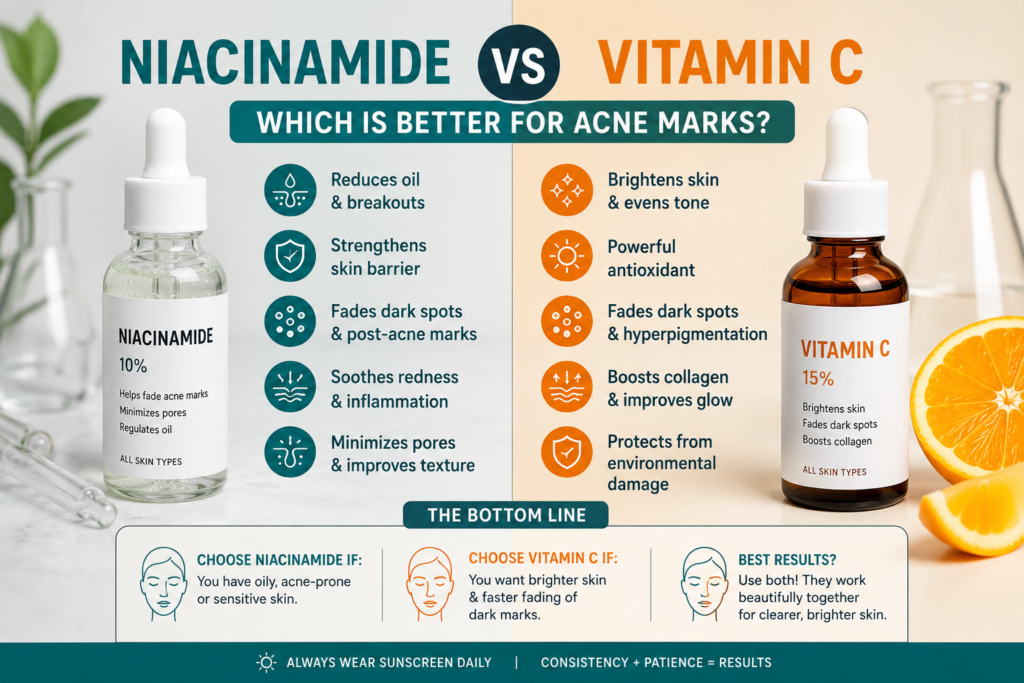
| Feature | Niacinamide | Vitamin C |
|---|---|---|
| Primary benefits | Oil control, barrier repair, redness reduction, fading marks | Brightening, antioxidant protection, collagen support |
| Best skin types | Oily, combination, sensitive, acne-prone | Normal, dry, combination (with care on sensitive) |
| Acne-fighting ability | Moderate — reduces sebum and inflammation | Low — targets pigmentation, not active acne |
| Brightening power | Moderate | High |
| Irritation risk | Low | Moderate to high (depends on form and concentration) |
| Stability | Very stable | Can oxidize quickly (especially L-ascorbic acid) |
| Compatible with | Retinol, AHAs, BHAs, moisturizers, SPF | Niacinamide, ferulic acid, vitamin E, SPF |
| Time to see results | 4–8 weeks | 3–6 weeks for brightening effects |
Which Ingredient Is Better for Acne Marks?
The honest answer: it depends on your skin type and the type of marks you’re dealing with.
Oily and Acne-Prone Skin
Niacinamide is the better daily foundation here. It tackles two problems at once — helping fade existing marks while also reducing oil production that leads to new breakouts. A 5%–10% niacinamide serum used consistently is a reliable choice for oily, blemish-prone skin.
Vitamin C can still be beneficial, but some oily skin types react to the acidic pH of L-ascorbic acid formulations. Look for gentler vitamin C derivatives like sodium ascorbyl phosphate, which research suggests may actually have direct antimicrobial effects against acne-causing bacteria.
Sensitive Skin
Niacinamide wins here, and it’s not close. It’s one of the most well-researched gentle actives available. Even at effective concentrations (4%–5%), it’s unlikely to cause stinging, flaking, or irritation — making it suitable even for reactive or rosacea-prone skin. If you’re exploring options for strengthening a compromised skin barrier alongside niacinamide, this CeraVe vs Vanicream comparison is a helpful read on barrier-focused moisturizers.
Vitamin C on sensitive skin requires a careful approach. A 10% or lower concentration of a stabilized derivative (like ascorbyl glucoside) is a safer starting point than a 20% L-ascorbic acid serum.
Dark Brown Marks (PIH)
Vitamin C has the edge for fading existing, stubborn pigmentation — especially the deeper brown spots common in medium to darker skin tones. Its direct inhibition of tyrosinase makes it more aggressively brightening than niacinamide alone.
That said, niacinamide used consistently alongside vitamin C significantly enhances overall results. The Cleveland Clinic notes that vitamin C combined with other brightening agents and daily SPF produces the most noticeable improvements in skin tone.
Red Acne Marks (PIE)
Niacinamide is the more targeted choice here. Because PIE involves vascular damage rather than excess pigmentation, niacinamide’s anti-inflammatory and redness-reducing properties work more directly on the visible discoloration.
Combination Skin
Use both. Niacinamide handles the oilier zones and barrier maintenance; vitamin C addresses brightening and antioxidant protection across the whole face.
Can You Use Niacinamide and Vitamin C Together?
Yes — and for most people, combining them is the smartest approach.
An older concern suggested that mixing niacinamide and vitamin C could form a compound (nicotinic acid) that causes flushing. Modern research has largely put this concern to rest. Studies show that any such reaction would require extreme concentrations and prolonged exposure that doesn’t occur in typical skincare routines. According to dermatologists cited by Harvard Health Publishing, modern cosmetic formulations are designed with pH and stability in mind, making these combinations very safe.
The key is thoughtful layering — not simultaneous mixing in your palm.
Suggested Morning Routine
- Gentle cleanser
- Vitamin C serum (allow 1–2 minutes to absorb)
- Moisturizer
- Sunscreen SPF 30+ (non-negotiable — UV exposure worsens all forms of hyperpigmentation)
Morning is ideal for vitamin C because its antioxidant properties protect the skin from daytime UV and environmental damage.
Suggested Evening Routine
- Cleanser
- Niacinamide serum
- Moisturizer
Niacinamide works well in the evening when the skin is in recovery mode. It can also be layered with other evening actives like retinol or gentle exfoliants if your skin tolerates them.
Layering Order (If Using Both in the Same Step)
If you’d prefer to use both in one routine, apply vitamin C first (it needs a lower pH environment to be effective), allow it to absorb, then layer niacinamide on top.
Common Mistakes to Avoid
Using too many active ingredients at once. Piling on exfoliants, retinoids, and multiple brightening actives simultaneously is a fast track to irritation. Introduce one new product at a time. If you’re looking for high-performing alternatives that simplify your routine, the Drunk Elephant alternatives guide covers effective options at more accessible price points.
Skipping sunscreen. This is the single biggest mistake when treating post-acne marks. Both PIH and PIE worsen with UV exposure. Without SPF, any brightening serum you use is working uphill. For skin-friendly daily options, the best non-greasy sunscreens for women over 40 lists lightweight, non-comedogenic picks that pair well with active ingredients.
Starting with too-high concentrations. A 20% vitamin C serum sounds impressive, but it can cause stinging and compromise the skin barrier in sensitive individuals. Start at 10% or below and work up.
Expecting overnight results. Even the most effective topical ingredients take time. Consistent use over 4–8 weeks is the standard minimum before judging results. Patience and consistency matter more than concentration.
Ignoring the skin barrier. If your skin barrier is compromised — tight, flaky, reactive — active ingredients will irritate more than help. Build barrier health first with a gentle moisturizer before introducing actives. Calming botanicals like centella asiatica and aloe vera are excellent companions for barrier recovery.
Final Verdict
Choose niacinamide if you have oily, acne-prone, or sensitive skin; you’re dealing with redness or PIE; you want a gentle, multi-tasking daily active; or you’re new to using actives and want to start simply.
Choose vitamin C if you have stubborn dark marks (PIH); you want faster brightening results; your skin is not reactive to acids; or you’re focused on antioxidant protection alongside fading pigmentation.
Use both if you want comprehensive results — which is the approach most skin specialists recommend. Vitamin C in the morning for brightening and protection; niacinamide in the evening for barrier support, oil control, and continued pigmentation fading. Pair both with daily SPF and give it 6–8 consistent weeks before evaluating results.
FAQs
Does niacinamide fade acne marks? Yes. Niacinamide reduces the transfer of melanin to skin cells, which gradually lightens post-inflammatory hyperpigmentation over 4–8 weeks of consistent use. It’s also effective at reducing the redness associated with PIE. It works more gradually than vitamin C but is better tolerated by sensitive and acne-prone skin.
Is vitamin C better than niacinamide for hyperpigmentation? For stubborn brown spots and post-inflammatory hyperpigmentation (PIH), vitamin C is generally more targeted and produces faster visible brightening. However, for redness-based marks (PIE) and oily/acne-prone skin, niacinamide is often the better daily option. Using both gives the most complete approach.
How long does it take to fade acne marks? Most people see noticeable improvement in 6–12 weeks with consistent use of either ingredient plus daily sunscreen. Deeper or more stubborn marks may take 3–6 months. Skipping SPF significantly slows progress.
Can I use niacinamide and vitamin C every day? Yes. Both ingredients are suitable for daily use. Vitamin C is typically applied in the morning; niacinamide can be used morning and/or evening. Start with once-daily application if you’re new to either ingredient, and increase frequency as tolerated.
Which concentration is best for beginners? For niacinamide, start with 5% — it’s effective and well-tolerated. For vitamin C, begin with a 10% formulation of a stable derivative like ascorbyl glucoside or sodium ascorbyl phosphate before working up to L-ascorbic acid at higher concentrations.
Can niacinamide and vitamin C cause purging? Neither ingredient is known to cause purging (unlike exfoliants or retinoids). Any initial breakouts or irritation are more likely a sensitivity reaction, in which case you should reduce frequency or switch to a gentler formulation.
Which is better for darker skin tones? Both are appropriate for deeper skin tones, which are more prone to PIH. Vitamin C is particularly effective for active brightening of existing dark marks, while niacinamide helps prevent new marks from forming by reducing inflammation. Daily SPF is essential for all skin tones to prevent marks from darkening further.
Ready to build a smarter skincare routine? Explore more ingredient deep dives, product comparisons, and sunscreen guides at Petal Beauty Skincare — your resource for evidence-based skincare advice that actually works for real skin.