
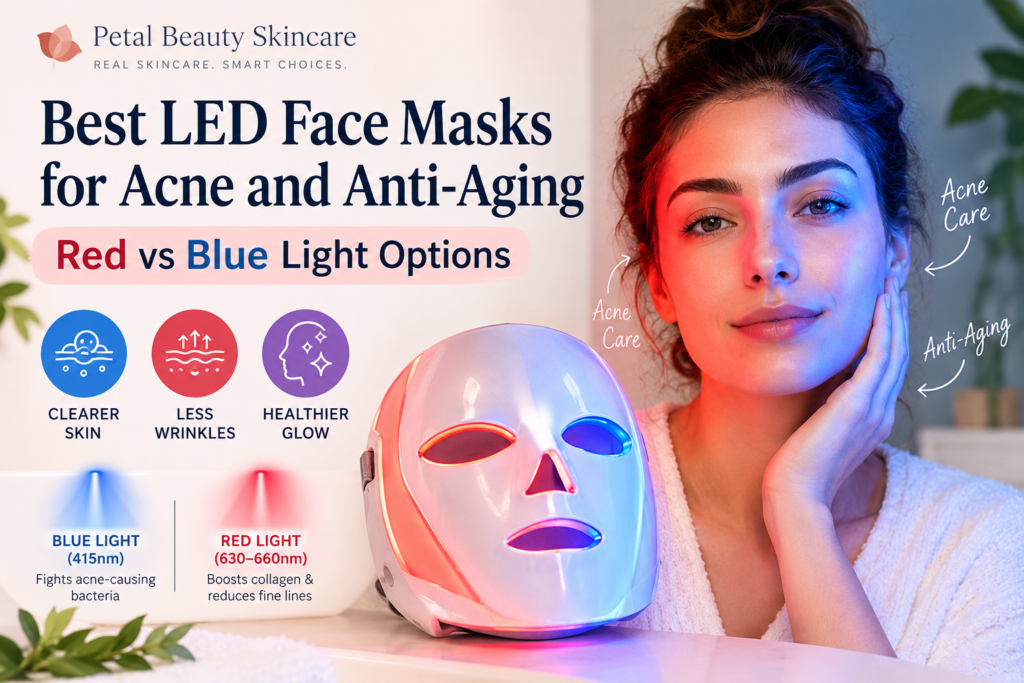
If you’ve been shopping for an LED face mask, you’ve probably noticed the same confusing question everywhere: should you get red light, blue light, or both? It matters more than most product pages let on. Blue light and red light target completely different skin problems, and picking the wrong one — or a mask that doesn’t disclose its wavelengths at all — is the easiest way to waste a few hundred dollars.
This guide is built around the decision that actually matters for anyone dealing with both breakouts and visible aging: which light does what, and how to find the best LED face masks for acne and anti-aging without falling for LED-count marketing. We’ll walk through the science, compare specific masks, and help you land on the right one for your skin.
As an Amazon Associate, Petal Beauty Skincare earns from qualifying purchases. This post is reader-supported — see our full disclosure at the end.
Quick Comparison
| Product | Best For | Light Type / Wavelengths | Treatment Time | Price Range | Why We Like It |
|---|---|---|---|---|---|
| Dr. Dennis Gross DRx SpectraLite FaceWare Pro | Best Overall (Acne + Aging) | Red + Blue LEDs (162 total) | 3 minutes | $300–$550 | Dermatologist-founded brand, FDA-cleared, fastest sessions of any mask here — Check Price on Amazon |
| Omnilux Clear | Best for Acne | Blue 415nm + Red 633nm (132 LEDs) | 10 minutes | $350–$400 | FDA-cleared specifically for mild-to-moderate acne, flexible silicone fit — Check Price on Amazon |
| iRestore Illumina | Best Red + Blue + NIR Combo | Red 635nm, NIR 830nm, Blue 415nm (360 LEDs) | 10 minutes | $350–$400 | Only mask here with three distinct wavelength modes you can mix or use solo — See Today’s Price on Amazon |
| Therabody TheraFace Mask Glo | Best Premium Pick | Blue 415nm, Red 633nm, Red+NIR 633/830nm (504 LEDs) | 12 minutes | $300–$380 | Full-face coverage including mouth and eye area, plus vibration massage — Check Price on Amazon |
| Shark CryoGlow | Best Value / Multi-Concern | Red 630nm, Blue, NIR 830nm (160 tri-wick LEDs) | 4–8 minutes | $300–$350 | Four short preset modes plus built-in under-eye cooling — Check Availability on Amazon |
| CurrentBody Red & Blue LED Therapy Mask | Best for Sensitive/Reactive Skin | Blue 415nm + Red 633nm | 10 minutes | $350–$400 | Flexible silicone shell, FDA-cleared, dedicated acne-and-brightening focus — Check Price on Amazon |
Prices are approximate ranges — Amazon pricing changes frequently, so always confirm the current price before buying.
Red vs Blue Light: What’s the Real Difference?
Before you buy anything, it helps to understand what each color of light is actually doing to your skin. This is the part most “best LED masks” roundups skip, and it’s the part that determines whether you’ll be happy with your purchase.
Blue light (typically around 405–420nm) is absorbed by porphyrins produced by Cutibacterium acnes, the bacteria linked to inflammatory acne. When blue light hits those porphyrins, it triggers a reaction that helps reduce the bacteria on the skin’s surface. That’s why blue light is the wavelength most consistently associated with acne treatment, and it’s the wavelength you’ll see in nearly every FDA clearance for at-home acne devices.
Red light (roughly 630–660nm) penetrates further into the dermis. Rather than targeting bacteria, it’s believed to stimulate fibroblasts — the cells responsible for producing collagen — and to calm inflammatory pathways in the skin. This is the mechanism behind red light’s reputation for softening fine lines, improving tone, and reducing redness.
Near-infrared light (NIR), usually in the 800–1070nm range, goes deeper still. It’s associated with cellular energy production and circulation, and it’s often paired with red light in masks designed for more intensive anti-aging support, since it reaches tissue layers that visible red light doesn’t reach as effectively.
| Feature | Blue Light | Red Light | Near-Infrared |
|---|---|---|---|
| Typical wavelength | ~415nm | 630–660nm | 800–1070nm |
| Main skincare goal | Reduce acne-causing bacteria | Collagen support, fine lines | Deeper tissue support, circulation |
| Acne relevance | Primary wavelength for acne | Secondary/supportive | Minimal direct acne evidence |
| Anti-aging relevance | Minimal | Primary wavelength for aging | Strong, deeper-penetrating support |
| Inflammation | Reduces surface bacteria load | Calms visible redness | Supports cellular recovery |
| Penetration depth | Epidermis (surface) | Dermis (mid-depth) | Subcutaneous (deepest) |
| Best user | Active inflammatory breakouts | Fine lines, dullness, redness | Deeper wrinkles, mature skin |
Is red or blue light better for acne?
Blue light has the most direct evidence for reducing acne-causing bacteria, but it isn’t the whole story. A well-known randomized trial published in the British Journal of Dermatology found that combined blue-and-red light phototherapy produced significantly better improvement in inflammatory lesions than blue light alone. The study, which randomized 107 patients with mild-to-moderate acne into blue light, mixed blue-and-red light, cool white light, and benzoyl peroxide groups, found that combined blue-red light phototherapy achieved a mean 76% improvement in inflammatory lesions after 12 weeks, outperforming blue light alone at several timepoints. A more recent randomized-controlled trial similarly found that at-home combination red-and-blue LED treatment significantly reduced total acne lesions at both 4 and 8 weeks, while blue light alone did not reach significance at either timepoint. So while blue light is the foundational acne wavelength, red light appears to add real benefit rather than just being a marketing add-on.
Is red or blue light better for wrinkles?
Red and near-infrared light are the wavelengths with the strongest rationale for anti-aging use, largely due to their role in supporting collagen production and calming inflammation in the dermis. Blue light has essentially no established role here. If wrinkles, fine lines, and skin firmness are your only concern, a red/NIR-focused mask is the more logical choice than a mask built primarily around blue light.
Do I need both, and is red + blue better than red alone?
If you only deal with breakouts, a dedicated blue-light or blue+red device is enough. If you only care about aging, a red/NIR device is the better fit. But many adults in their 30s and 40s manage occasional hormonal breakouts and fine lines at the same time — for them, a mask that includes both wavelengths saves buying two devices. For acne specifically, the evidence above suggests red+blue outperforms either wavelength alone for inflammatory lesions. For pure anti-aging with no acne concern, adding blue light won’t hurt, but it won’t meaningfully speed up results either.
LED Wavelength Guide: What the Numbers Actually Mean
You’ll see a handful of specific wavelength numbers repeated across LED mask listings. Here’s what they generally represent:
- 415nm (blue): The primary wavelength associated with reducing C. acnes bacteria on the skin’s surface.
- 630nm and 633nm (red): Common wavelengths used in FDA clearances for full-face wrinkle treatment; associated with collagen support and calming redness.
- 660nm (red): A slightly deeper red wavelength sometimes used interchangeably with 630–633nm in acne and rejuvenation studies.
- 830nm (near-infrared): A deeper-penetrating wavelength often paired with red light for more intensive anti-aging treatment.
A wavelength number alone doesn’t prove a device works — it just tells you which biological pathway the device is designed to target. A mask that clearly publishes its wavelengths (rather than just saying “7-color LED”) at least gives you something concrete to evaluate, which is more than you can say for masks that hide this information entirely.
What Matters More Than LED Count
Scroll through any marketplace and you’ll see masks bragging about having 500, 600, even 1,000+ LEDs. It’s an easy number to market, but it’s not the most useful one. What actually determines whether a mask works:
- Wavelength. A mask with 800 LEDs at the wrong wavelength is less useful than one with 150 LEDs at the right one.
- Irradiance (mW/cm²). This measures how much light energy actually reaches your skin. Two masks with identical wavelengths can still perform very differently if their irradiance differs — but many budget brands don’t publish this number at all.
- Dose. Dose combines irradiance and treatment time. This is part of why treatment times vary so much between masks (3 minutes vs. 12 minutes) even when they claim similar benefits.
- Distance from skin and coverage. A mask that doesn’t sit flush against the skin, or leaves gaps around the mouth or eyes, delivers less usable light to those areas.
- Fit. Hard-shell masks (like Dr. Dennis Gross SpectraLite) can sit slightly away from the skin on narrower faces. Flexible silicone masks (like Omnilux or CurrentBody) conform more closely but can feel warmer during longer sessions.
- Consistency. The one variable fully in your control. Dermatologists quoted by outlets like Forbes consistently note that skipping sessions is the most common reason people don’t see results.
- Eye protection. Look for masks with built-in eye shielding or clear instructions to keep eyes closed throughout treatment.
- Regulatory status. Tells you whether a device has been reviewed by the FDA for safety — not necessarily how well it works.
If one mask publishes real wavelength and irradiance numbers and another just says “7-color LED,” trust the one with real numbers, even with fewer total LEDs.
FDA Clearance: What It Actually Means
You’ll see terms like “FDA-cleared,” “FDA-approved,” and “FDA-registered” used almost interchangeably in marketing, but they are not the same thing. According to the American Academy of Dermatology, “FDA approved” and “FDA certified” have no real meaning when used to describe a medical device — the FDA clears devices, it doesn’t approve or certify them. Most consumer LED masks go through the 510(k) clearance pathway, which means the FDA has determined the device is substantially similar in safety to an already-legally-marketed device — not that it has proven a specific level of effectiveness. FDA clearance means the agency considers a device to pose a low risk to the public; it doesn’t tell you how effective the device actually is.
In practice, most reputable LED masks (including all six featured in this guide) are FDA-cleared for one or both of two specific indications: treatment of full-face wrinkles, and treatment of mild-to-moderate inflammatory acne. That’s a meaningfully narrow claim — it does not mean a device is cleared to treat blackheads, whiteheads, cystic acne, deep wrinkles, or any other skin condition. If a listing uses the phrase “FDA approved,” treat that as a red flag rather than a selling point.
Meet the Masks
Dr. Dennis Gross DRx SpectraLite FaceWare Pro — Best Overall
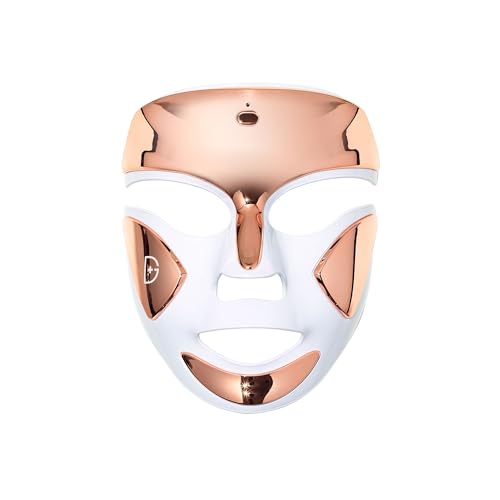
- WHAT IT IS: This LED device for the face targets wrinkles and acne for visibly smoother, clearer skin in just 3 minutes….
- HOW IT WORKS: Treat acne and breakouts with blue light, smooth wrinkles and build collagen with red light, or address bo…
- HOW TO USE: After cleansing, place the mask over your face, securing the strap around your head. Press & hold the power …
Best for: Buyers who want a fast, dermatologist-designed dual-mode mask for acne and aging Price range: $300–$550 (retailer-dependent) Light wavelengths: Red and blue LEDs (162 total: roughly 100 red / 62 blue); the brand does not publicly disclose the exact nanometer specification Treatment time: 3 minutes per session FDA clearance/status: FDA-cleared for full-face wrinkles and mild-to-moderate acne
Created by a practicing dermatologist, this hard-shell mask lets you switch between red-only, blue-only, or combined red-and-blue treatment in one hands-free session. Its standout feature is the 3-minute treatment time — the shortest of any mask here — which makes daily use realistic even on busy mornings, and the combined mode covers both acne and aging without buying two devices. The brand recommends a 10-week course for optimal results, in line with realistic LED timelines rather than overnight promises.
Pros:
- Fastest treatment time in this roundup (3 minutes)
- Three distinct modes (red, blue, combined) in one device
- FDA-cleared for both wrinkles and acne, backed by a dermatologist-founded brand with a 1-year warranty
Cons:
- Hard shell doesn’t fit as snugly on narrower or smaller face shapes
- Exact wavelength specs aren’t published by the brand
- Shorter session may mean a lower total light dose than 10–12 minute masks
Who should buy it: Anyone who wants both acne and anti-aging treatment but doesn’t want to commit 10+ minutes a day. Who should skip it: People with very small or narrow face shapes who may find the rigid shell doesn’t sit flush against the skin.
Omnilux Clear — Best for Acne
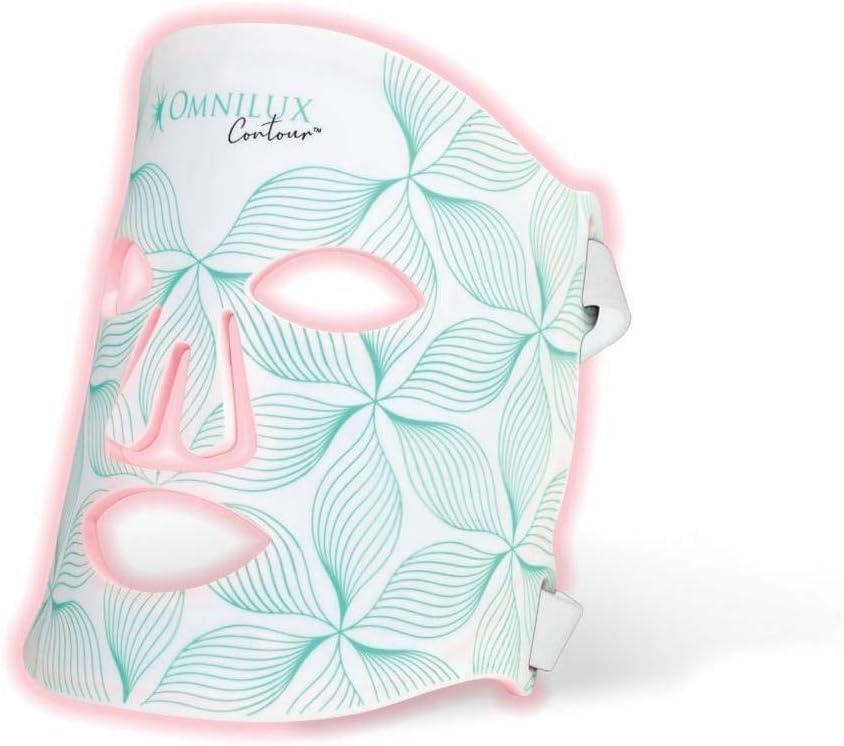
Best for: People whose primary concern is active breakouts Price range: $350–$400 Light wavelengths: Blue 415nm + Red 633nm, 132 medical-grade LEDs Treatment time: 10 minutes FDA clearance/status: FDA-cleared specifically for treatment of active acne
Omnilux Clear is purpose-built around acne rather than trying to be an all-purpose anti-aging device. It uses the two wavelengths with the most direct evidence for breakouts — 415nm blue to target bacteria and 633nm red to calm inflammation — in a flexible silicone shell. Unlike masks that bundle in near-infrared and market themselves as doing everything, it stays focused on what blue-plus-red light does best.
Pros:
- FDA-cleared with an indication specifically naming acne treatment
- Flexible, comfortable silicone fit; two well-evidenced wavelengths rather than a long list of unproven “colors”
Cons:
- No near-infrared, so it’s not built as a deep anti-aging tool
- Recommended protocol (roughly four 10-minute sessions weekly for six weeks) requires real consistency
- Final-sale / no-returns policy through some retailers
Who should buy it: Anyone whose main goal is clearer skin, with anti-aging as a secondary bonus rather than the priority. Who should skip it: Buyers whose primary concern is deep wrinkles or significant photoaging, since this mask isn’t designed around near-infrared depth.
iRestore Illumina — Best Red + Blue + Near-Infrared Combination
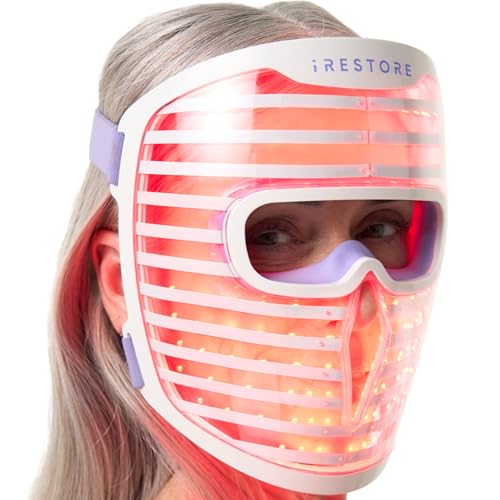
- The Most Powerful Red Light Mask for Visible Results: Experience professional-level rejuvenation at home with 360 LEDs, …
- Advanced Triple-Wavelength Technology: Powered by 3 scientifically backed wavelengths – Red (635nm), Infrared (830nm), a…
- Designed for Comfort and Multitasking: Lightweight yet sturdy, our dual-strap face mask hovers comfortably over your fac…
Best for: People who want all three major wavelengths in one mask Price range: $350–$400 Light wavelengths: Red 635nm, Near-Infrared 830nm, Blue 415nm — 360 LEDs Treatment time: 10 minutes FDA clearance/status: Manufactured in an FDA-listed, GMP-certified facility — check the current Amazon listing for the specific 510(k) clearance number
The Illumina is one of the few masks that includes all three major light categories — blue, red, and near-infrared — letting you choose between red+infrared, red+infrared+blue, or blue-only modes depending on what your skin needs that day. If you want the flexibility to run a pure anti-aging session one day and an acne-focused session the next, this is the most adaptable option in this guide.
Pros:
- Only mask here offering all three wavelengths with selectable modes
- High LED count (360) for full-face coverage
Cons:
- Realistic results reported around 6–12 weeks, on the longer end of the category
- Doesn’t offer a true “all three at once” mode in every configuration — check the current listing for exact mode options
- Price has fluctuated between the brand’s site and retail partners, per reviewer reports
Who should buy it: Buyers who want maximum wavelength flexibility and don’t mind a 10-minute daily routine. Who should skip it: Anyone who wants a single always-on combined mode rather than switching between settings.
Therabody TheraFace Mask Glo — Best Premium Pick
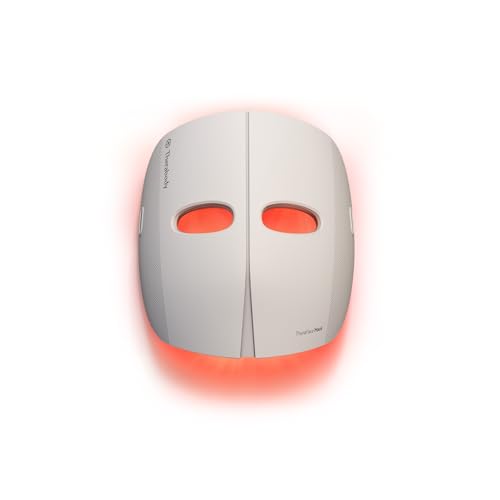
- Supercharged Face Care in 9 Minutes: A facial mask routine with 3 impressive LED light therapy technologies. Red light t…
- Vibrating Facial Massager, Too: TheraFace LED mask delivers a 15-minute vibration therapy treatment to key pressure poin…
- Powerful, Medical-Grade Lights: With 3x more LEDs than leading mask competitors for maximum efficacy and mask skincare r…
Best for: Buyers who want maximum coverage and don’t mind paying more for extras Price range: $300–$380 Light wavelengths: Blue 415nm, Red 633nm, Red+Infrared 633/830nm — 504 LEDs Treatment time: 12 minutes FDA clearance/status: FDA-cleared, Class II medical device
Therabody’s mask covers areas many competitors skip, including around the mouth and eyes, where fine lines often show up first. The preset 12-minute cycle rotates through all three light types automatically, and the mask adds a gentle vibration massage feature that isn’t part of the light therapy but is a pleasant bonus — a strong “set it and forget it” option for people who don’t want to choose a mode every time.
Pros:
- Genuine full-face coverage including typically-missed zones (lips, nose, under-eye)
- Automatically cycles through blue, red, and red+infrared in one session
Cons:
- 12-minute session is the longest in this guide
- Vibration feature adds cost without adding light-therapy benefit
- Heavier than flexible silicone alternatives, less comfortable for some during extended wear
Who should buy it: Someone prioritizing full coverage and hands-off convenience over the shortest possible session time. Who should skip it: Anyone who specifically wants a lightweight, minimal mask or has no interest in the massage feature.
Shark CryoGlow — Best Value / Multi-Concern Pick
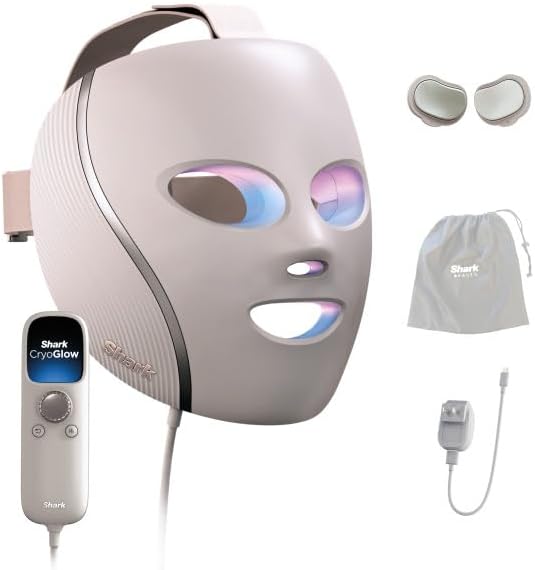
- RED LIGHT THERAPY MASK: CryoGlow is an at-home LED face mask combining red, blue & deep infrared light with under-eye co…
- MOST AWARDED LED MASK IN THE U.S.*: Real people. Real results. Clinically tested on 119 participants by an independent t…
- EXPERTLY DEVELOPED: Developed by Shark Beauty alongside optical light experts and engineers, bringing MedSpa-inspired re…
Best for: Buyers who want acne, anti-aging, and under-eye puffiness addressed in one device Price range: $300–$350 Light wavelengths: Red 630nm, Near-Infrared 830nm, and a blue light channel (exact blue nanometer spec not clearly published by the brand) Treatment time: 4–8 minutes depending on mode FDA clearance/status: FDA-cleared for fine lines and acne
Shark’s first skincare device pairs LED therapy with built-in under-eye cooling — something none of the other masks here offer. Its four preset modes (Better Aging, Skin Clearing, Under-Eye Revive, Daily Maintenance) are short and clearly labeled, taking the guesswork out of choosing a treatment, at a lower price than several competitors.
Pros:
- Shortest preset modes in this guide (as brief as 4 minutes)
- Unique under-eye cooling feature; competitively priced for its LED count and wavelength range
Cons:
- The brand’s published blue-light wavelength figure is inconsistent across sources — check current documentation before buying
- Under-eye cooling mode uses no LED light, so it’s a separate feature rather than an LED bonus
- Newer to the category than brands like Omnilux or Dr. Dennis Gross, with a shorter track record
Who should buy it: Anyone who wants acne and anti-aging coverage plus a genuine under-eye refresh feature, at a moderate price. Who should skip it: Buyers who want fully transparent, precisely published wavelength specs for every light mode.
CurrentBody Red & Blue LED Therapy Mask — Best for Sensitive or Reactive Skin

- FITS TO YOU – Unlike many other wearable LED devices, the CurrentBody Light Therapy Mask is made from patented flexible …
- LIGHT THERAPY – The device combines Red (633nm) and near Infra-Red Light (830nm). Harnessed at the perfect measurement t…
- REAL RESULTS – You can expect to see visible results in just 4 weeks when used consistently 10 minutes a day, 3 to 5 tim…
Best for: Acne-prone skin that also wants brightening benefits without an intense NIR dose Price range: $350–$400 Light wavelengths: Blue 415nm + Red 633nm Treatment time: 10 minutes FDA clearance/status: FDA-cleared
CurrentBody’s dedicated red-and-blue mask (distinct from the brand’s anti-aging-only Series 2, which excludes blue light entirely) uses a flexible silicone design many reviewers describe as comfortable for longer or more frequent use, built specifically around the acne-plus-brightening use case rather than deep-wrinkle treatment. Its lower-heat design tends to feel gentler on reactive or easily irritated skin than hard-shell alternatives.
Pros:
- Comfortable, flexible silicone build; FDA-cleared with published core wavelengths
- Well-regarded brand with an established LED product line
Cons:
- No near-infrared, so deeper anti-aging support is limited compared to combo masks
- Don’t confuse this with CurrentBody’s separate Series 2 mask, which is anti-aging only and excludes blue light
- Similar price point to masks offering three wavelengths instead of two
Who should buy it: Sensitive or reactive skin types who want acne and brightening coverage without a heavier NIR dose. Who should skip it: Anyone whose primary goal is deep wrinkle reduction, where NIR-inclusive masks have a stronger rationale.
How to Choose an LED Mask for Acne + Anti-Aging
- Acne is your main concern → Omnilux Clear or CurrentBody Red & Blue, both built around the two most-evidenced acne wavelengths.
- Wrinkles are your main concern → a red/NIR-focused option; see our 7 Best LED Face Masks for Wrinkles and Anti-Aging in 2026 for dedicated anti-aging picks.
- Both acne and wrinkles → Dr. Dennis Gross SpectraLite or iRestore Illumina, for selectable or combined red-blue(-NIR) modes.
- Sensitive skin → CurrentBody’s flexible silicone build, paired with calming ingredients — see Centella Asiatica vs. Aloe Vera for redness.
- You hate long sessions → Dr. Dennis Gross SpectraLite (3 minutes) or Shark CryoGlow’s shorter modes (4 minutes).
- Budget matters → Shark CryoGlow sits at the lower end while still covering red, blue, and NIR.
- Premium anti-aging coverage → Therabody TheraFace Mask Glo, for full-face coverage and automatic wavelength cycling.
Results Timeline: What to Realistically Expect
LED masks are not an overnight fix, and no reputable brand should promise instant results. Based on the studies referenced throughout this guide, a realistic timeline looks like:
- 2–4 weeks: Some early changes in redness or breakout frequency with consistent blue-light use. Visible anti-aging change is usually minimal this early.
- 6–8 weeks: Most cited studies begin showing statistically meaningful improvement in inflammatory lesions and early softening of fine lines.
- 8–12+ weeks: The window most brands cite for “optimal results,” matching acne studies showing continued improvement through 12 weeks.
Results vary by individual, consistency of use, and device. Skipping sessions is one of the most common reasons people don’t see the results they expected.
How to Use an LED Face Mask
- Cleanse thoroughly and make sure skin is completely dry before starting.
- Remove leave-on serums or heavy makeup, unless your mask’s instructions say otherwise.
- Position the mask so it sits as flush against your skin as possible.
- Run the treatment for the time and mode specified by your device — don’t assume every mask works the same way.
- Follow the recommended frequency on the box or manual; some devices are daily, others 3–5 times per week.
- Apply your regular skincare afterward if the instructions allow it.
- Wear sunscreen during the day, regardless of which light therapy you use. See our guide to Best Non-Greasy Sunscreens for Women Over 40 for a lightweight daily option.
Always default to your specific manufacturer’s instructions over general advice — treatment times and frequency vary meaningfully between devices.
Safety Considerations
LED masks are generally considered low-risk, but a few precautions matter:
- Photosensitizing medications. Some acne treatments (like isotretinoin), certain antibiotics, and other prescriptions can increase skin sensitivity to light. Talk to your prescribing doctor before starting LED therapy if you’re on any of these.
- Eye protection. Never look directly into the LEDs. Use the eye shielding provided with your device and follow the manufacturer’s guidance exactly.
- Existing skin conditions. Conditions like lupus can be worsened by light exposure — a dermatologist can advise whether an at-home device is appropriate for you.
- Darker skin tones. People with darker skin tones are more sensitive to visible light, including red light, and this can lead to more intense, longer-lasting hyperpigmentation. It’s worth discussing this with a dermatologist before regular use.
- Pregnancy. Some manufacturers advise against use during pregnancy out of caution. Follow your device’s guidance and check with your OB-GYN.
- History of skin cancer or unexplained lesions. Consult a dermatologist before starting any light-based device.
- When to see a dermatologist. If your acne includes cysts or nodules, or isn’t improving with consistent use, a board-certified dermatologist can offer in-office treatments that are considerably more powerful than at-home devices.
It’s also worth being clear-eyed about what these devices are not for. Visible-light LED masks are generally intended for mild-to-moderate inflammatory acne — not blackheads, whiteheads, cysts, or nodules — and they won’t replace prescription acne medication or in-office treatment for more severe cases.
Frequently Asked Questions
Is blue or red LED better for acne? Blue light has the strongest direct evidence for reducing acne-causing bacteria, but research suggests combining blue and red light produces better results for inflammatory lesions than blue light alone.
Can LED masks treat acne and wrinkles at the same time? Yes, if the mask includes both blue and red (or red+NIR) wavelengths, either in separate modes or a combined setting. Masks that only include one wavelength category will only address one concern well.
Are red and blue LED masks safe? Generally, yes, for short-term home use. The AAD notes that red light therapy is considered likely safe for short-term use, with mild side effects like temporary redness being the most common issue. That said, people with certain medical conditions, photosensitizing medications, or darker skin tones should talk to a dermatologist first.
How often should I use an LED face mask? This varies by device — some are designed for daily 3-minute sessions, others for 10-minute sessions three to five times a week. Always follow your specific manufacturer’s instructions rather than a general rule.
How long before an LED mask works? Most manufacturer and clinical studies point to meaningful improvement starting around 6–8 weeks, with continued improvement through 12 weeks of consistent use. Results vary by individual.
What wavelength is best for acne? 415nm blue light has the most consistent evidence for targeting acne-causing bacteria, often used alongside 630–660nm red light for a stronger combined effect.
What wavelength is best for wrinkles? 630–660nm red light and 800–1070nm near-infrared light are the wavelengths most associated with collagen support and anti-aging benefits.
Are expensive LED masks worth it? Not automatically. Price often reflects brand, LED count, and extra features (like massage functions), but the most important factors are published wavelength, adequate irradiance, and your willingness to actually use the device consistently. A less expensive mask you use every day will likely outperform an expensive one gathering dust in a drawer.
Can I use an LED mask with skincare products? Many masks can be used with a clean, product-free face, followed by your regular skincare routine afterward. Some brands specify whether certain serums can be worn during treatment — check your device’s manual, since this varies. If you use actives like niacinamide or vitamin C for post-acne marks, our guide to Niacinamide vs. Vitamin C for Acne Marks can help you sequence your routine.
Can an LED mask replace acne medication or professional treatment? No. At-home LED devices are generally intended for mild-to-moderate inflammatory acne and are meant to complement, not replace, a broader skincare or dermatology treatment plan — especially for more severe or cystic acne.
Final Recommendation
If I had to pick just one LED mask for both acne and anti-aging, I’d go with the Dr. Dennis Gross DRx SpectraLite FaceWare Pro. It’s the only mask in this guide that pairs a genuinely fast 3-minute treatment time with a true combined red-and-blue mode, backed by a dermatologist-founded brand and FDA clearance for both wrinkles and acne — which makes it realistic to actually stick with long-term.
If you want a few alternatives depending on your priorities:
- Prioritizing acne above all else? Go with the Omnilux Clear for its acne-specific FDA clearance and evidence-backed 415nm/633nm combination.
- Want maximum wavelength flexibility? The iRestore Illumina gives you red, blue, and near-infrared with selectable modes.
- Want full-face coverage and don’t mind a longer session? The Therabody TheraFace Mask Glo covers areas other masks miss, plus a relaxing massage feature.
Whichever mask you choose, remember that consistency matters more than any single spec on the box. Check Price on Amazon to see current availability and pricing on today’s pick.
Affiliate Disclosure: Petal Beauty Skincare is a reader-supported site. When you buy through links on this page, we may earn an affiliate commission at no additional cost to you. We do not manufacture, sell, or ship any of the products mentioned in this article — all purchases are made directly through Amazon. This article is for informational purposes only and is not a substitute for professional medical advice. Consult a board-certified dermatologist before starting any new light therapy device, especially if you have a skin condition, take photosensitizing medication, or are pregnant.
Sources:
- American Academy of Dermatology — Is Red Light Therapy Right for Your Skin?
- American Academy of Dermatology — Laser Treatment for Acne
- PubMed — Phototherapy with Blue (415 nm) and Red (660 nm) Light in the Treatment of Acne Vulgaris
- PubMed — Comparing a Red and Blue LED Light Device With an Existing Blue Light Device for At-Home Treatment of Inflammatory Acne
- PubMed — Home-Based Dermatologic Devices for Acne and Rejuvenation: Evidence-Based Insights
- FDA 510(k) Database