Petal Beauty Skincare may earn a commission from qualifying Amazon purchases at no additional cost to you. Prices and availability can change, so always check the current listing.
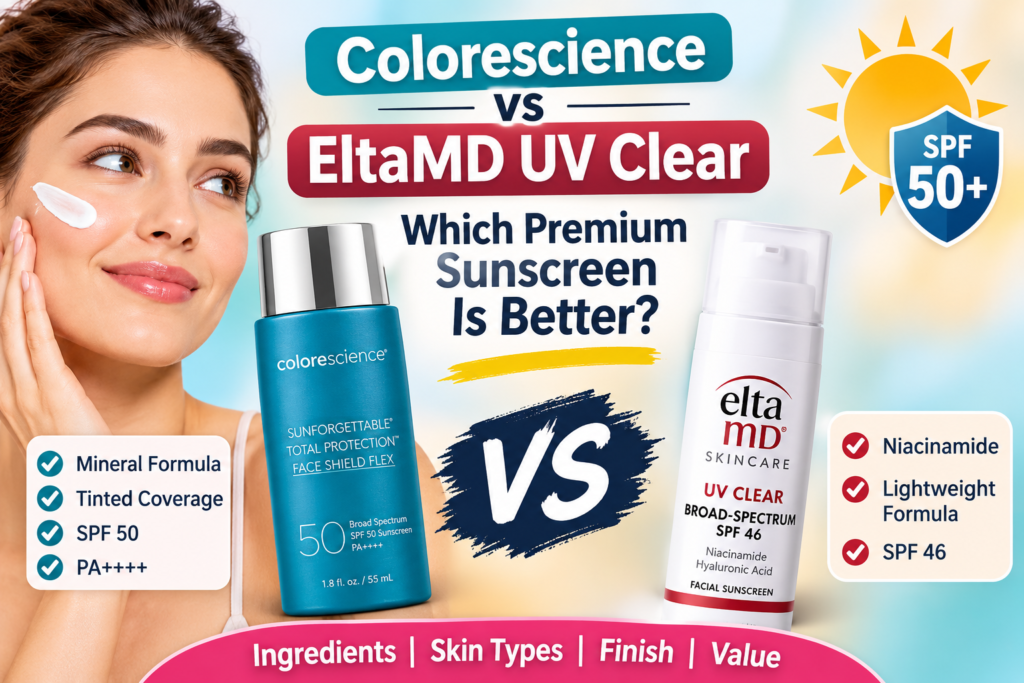
Spending $45 to $60 on a face sunscreen is a big ask, and two names keep coming up: Colorescience and EltaMD. If you’re stuck on Colorescience vs EltaMD UV Clear, you’re not alone. Both are premium, both are popular with dermatology-minded shoppers, and both promise a lot.
The catch is that they’re built for different people. Colorescience Face Shield Flex is a tinted, all-mineral sunscreen that doubles as light base makeup. EltaMD UV Clear SPF 46 is a lightweight hybrid sunscreen made for everyday wear on breakout-prone skin. This guide is based on label research, manufacturer information and customer-reported experiences. We haven’t personally tested either product.
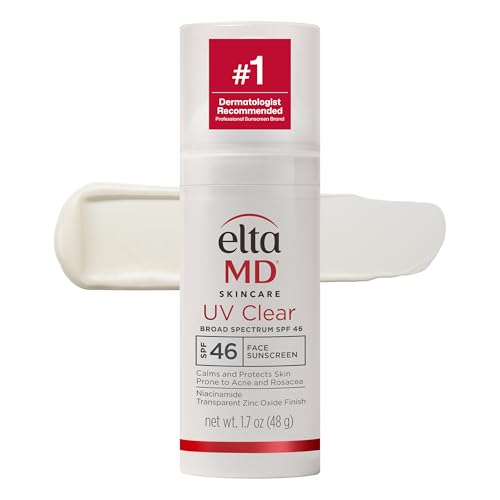
- CLEAR SUNSCREEN FOR FACE: This lightweight face sunscreen with transparent Zinc Oxide provides broad spectrum SPF 46 pro…
- FOR NORMAL, ACNE-PRONE, AND SENSITIVE SKIN TYPES: UV Clear uses an oil-free, non-comedogenic formula that’s designed for…
- SUITABLE FOR HYPERPIGMENTED SKIN: Contains Niacinamide which helps to visibly improve skin tone and reduce the appearanc…

- TONE-ADAPTING COLOR THAT BLOOMS AS YOU BLEND: Starts white, transforms on contact. Innovative iron oxide pigments delive…
- TOTAL ENVIRONMENTAL DEFENSE SPF 50 PA++++: 100% mineral Zinc Oxide formula defends against UVA/UVB, pollution, HEV blue …
- FLEXIBLE SHADES FOR ALL SKIN TONES: Each adaptive shade delivers buildable coverage that adjusts to a wide range of skin…
Quick Verdict: Which Sunscreen Wins?
| Product | Best For | SPF | Formula Type | Main Advantage | Price Range | Amazon CTA |
|---|---|---|---|---|---|---|
| Colorescience Sunforgettable Total Protection Face Shield Flex SPF 50 | Tinted coverage, uneven tone, mineral-only fans | SPF 50, PA++++ | All-mineral (12% zinc oxide) | Tint plus 40-minute water resistance | $58 brand list price (1.8 fl oz) | Check Price on Amazon |
| EltaMD UV Clear Broad-Spectrum SPF 46 | Daily wear, acne-prone and sensitive skin | SPF 46 | Hybrid (9% zinc oxide + 7.5% octinoxate) | Light, clear finish with niacinamide | Roughly $43–$46 at major retailers (1.7 fl oz) | See Latest Price on Amazon |
Short verdict: Choose Colorescience if you want one product that protects and evens out your complexion, or you want to avoid chemical filters. Choose EltaMD UV Clear if you want a simple, lightweight daily sunscreen that sits comfortably under whatever else you wear. Neither is a “better” protector by default; they solve different problems.
Colorescience vs EltaMD: Key Differences
| Feature | Colorescience Face Shield Flex SPF 50 | EltaMD UV Clear SPF 46 |
|---|---|---|
| SPF | 50, PA++++ | 46 |
| Active ingredients | Zinc oxide 12% | Zinc oxide 9%, octinoxate 7.5% |
| Formula | All-mineral | Hybrid (mineral + chemical) |
| Texture | Lightweight lotion | Light, fluid lotion |
| Finish | Demi-matte | Natural, sheer; some reviewers note a slight sheen on oily skin |
| Tint | Yes, six shades (Fair to Rich Deep) | None in the standard version (a separate tinted version exists) |
| White cast | Tint is designed to counter it | Possible on deeper skin tones, per customer reports |
| Water resistance | 40 minutes | No claim on the standard label |
| Skin type | Brand says all types, including sensitive | Marketed for sensitive and acne-prone skin |
| Under makeup | Works as a base; can replace foundation | Works as a clear base layer |
| Size | 1.8 fl oz | 1.7 fl oz |
| Price per ounce | About $32 at $58 | About $25–$27 at $43–$46 |
The biggest practical difference is the tint. Colorescience changes how your skin looks. EltaMD mostly stays out of the way. The second difference is the formula: Colorescience uses only mineral filters, while EltaMD blends zinc oxide with a chemical filter. Colorescience also contains niacinamide (the brand lists 2%), so niacinamide alone isn’t a tie-breaker.
Colorescience Face Shield Flex SPF 50 Review
Face Shield Flex is the buildable-coverage member of the Colorescience family. Don’t confuse it with the Classic, Matte, Glow or Bronze versions, which are sheerer or serve different looks. Our full Colorescience Sunforgettable review covers the wider range.
Formula and UV protection. According to the official product page, the only active ingredient is 12% zinc oxide, with SPF 50 and PA++++ (the PA scale rates UVA protection). It’s also labeled water resistant for 40 minutes. The brand describes the formula as fragrance-free, oil-free and non-comedogenic, with antioxidants and hydrating ingredients.
Iron oxides and shade matching. The pigments are encapsulated. The lotion starts out white, then “blooms” into a tone-adapting color as you rub it in, so blend until the white is gone. Colorescience suggests the lighter shade if you’re between two. Because zinc is naturally white and opaque, the iron oxides also help reduce chalkiness.
Texture and finish. Expect a lightweight lotion with medium coverage that can be layered. Colorescience’s own customer review summary says most people like the natural finish, while a few find it feels heavy. One reviewer on the brand site also mentions it takes a while to set, so be mindful around collars.
Pros
- All-mineral formula with a high 12% zinc oxide
- Tint evens out skin tone and can replace foundation
- 40-minute water resistance
- Six shades
Cons
- Priciest per ounce of the two
- Shade matching takes effort, and the brand admits deeper shades are hard to achieve in mineral formulas
- Needs proper blending
- Can feel heavier than a clear sunscreen
Who should buy it: people who want a mineral sunscreen with built-in color, or who have uneven tone. Who should skip it: anyone who wants a no-fuss clear lotion, or who dislikes any visible tint.
Is it worth the price? If it replaces a tinted moisturizer or foundation, it can be. As a plain sunscreen, it’s a stretch.
- TONE-ADAPTING COLOR THAT BLOOMS AS YOU BLEND: Starts white, transforms on contact. Innovative iron oxide pigments delive…
- TOTAL ENVIRONMENTAL DEFENSE SPF 50 PA++++: 100% mineral Zinc Oxide formula defends against UVA/UVB, pollution, HEV blue …
- FLEXIBLE SHADES FOR ALL SKIN TONES: Each adaptive shade delivers buildable coverage that adjusts to a wide range of skin…
EltaMD UV Clear SPF 46 Review
UV Clear is one of the most recommended facial sunscreens for acne-prone and sensitive skin. Read our EltaMD UV Clear review for more detail, or see how it compares in EltaMD UV Clear vs La Roche-Posay Anthelios. This article covers the standard version, not UV Clear Blemish-Prone & Oil Balancing SPF 50.
Formula. The actives are 9% zinc oxide and 7.5% octinoxate. Zinc oxide sits on the skin and reflects and scatters UV. Octinoxate is a chemical filter that absorbs mostly UVB. Retailer listings also cite niacinamide, sodium hyaluronate (hyaluronic acid) and vitamin E, and EltaMD has described the niacinamide level as 5%.
Niacinamide and hyaluronic acid. Niacinamide is a form of vitamin B3 often used in products for oily, blemish-prone skin. Hyaluronic acid attracts water, so it adds a little hydration. Neither turns a sunscreen into an acne treatment, so think of them as skin-friendly extras.
Texture, acne-prone and sensitive skin. It’s an oil-free, light lotion, and many people with breakout-prone skin like it. “Non-greasy” varies by person, though, and some reviewers on oily skin report a bit of shine in summer. Sensitive skin is a mixed picture: it’s marketed for it, but it contains a chemical filter, so patch-test if you react easily.
Makeup compatibility. Customers often use it as a clear base under foundation. It adds no color, so you still need makeup if you want coverage.
Pros
- Lightweight, oil-free feel
- Zinc oxide plus niacinamide in a daily-friendly formula
- Cheaper per ounce
- Widely available
Cons
- Contains octinoxate, so it isn’t mineral-only
- No water-resistance claim on the standard label
- Untinted, so it may leave some cast on deeper skin
Is the price justified? At roughly $43–$46, it’s a fair price for a well-liked formula, though not a bargain.
- CLEAR SUNSCREEN FOR FACE: This lightweight face sunscreen with transparent Zinc Oxide provides broad spectrum SPF 46 pro…
- FOR NORMAL, ACNE-PRONE, AND SENSITIVE SKIN TYPES: UV Clear uses an oil-free, non-comedogenic formula that’s designed for…
- SUITABLE FOR HYPERPIGMENTED SKIN: Contains Niacinamide which helps to visibly improve skin tone and reduce the appearanc…
Which Sunscreen Is Better for Different Skin Types?
Neither product cures acne, rosacea or pigmentation. These are best-fit suggestions based on formula, not medical advice.
| Skin concern | Better pick | Why |
|---|---|---|
| Oily | EltaMD | Light, clear fluid; Colorescience’s demi-matte finish is also an option |
| Dry | Colorescience | Brand includes hydrating ingredients; moisturize first |
| Combination | Either | Depends on whether you want tint |
| Acne-prone | EltaMD, with Colorescience close behind | EltaMD is marketed for this; Colorescience says non-comedogenic |
| Sensitive | Colorescience | Mineral-only avoids chemical filters; patch-test either |
| Rosacea-prone | Colorescience | Mineral filters are commonly preferred; tint can soften redness |
| Mature | Colorescience | Tint and hydration can smooth the look of skin |
| Hyperpigmentation | Colorescience | Iron oxides add visible-light shielding |
| Dark spots, uneven tone | Colorescience | Tint evens tone as you wear it |
Mineral vs Hybrid Sunscreen: Which Is Better?
A mineral sunscreen uses only zinc oxide and/or titanium dioxide. They sit on top of the skin and reflect and scatter UV. A hybrid sunscreen combines a mineral filter with a chemical one. EltaMD pairs zinc oxide with octinoxate, which absorbs UV and converts it to small amounts of heat.
People choose mineral-only for sensitive skin, rosacea, or personal preference, and the FDA has said zinc oxide and titanium dioxide are the filters it considers generally safe and effective. Others prefer hybrids because they usually feel lighter and leave less cast. The FDA has said it needs more safety data on several chemical filters, and some regions restrict octinoxate for environmental reasons. Both types can give effective broad-spectrum protection when properly formulated and applied. The FDA’s sunscreen guidance and the AAD’s guide to sunscreen labels explain what “broad spectrum” and SPF mean.
Which Is Better for Dark Spots and Hyperpigmentation?
UV is a main trigger for dark spots getting darker, so any properly applied broad-spectrum sunscreen helps. Some research also suggests visible light can worsen pigmentation in medium to deeper skin tones. Iron oxides are one of the few sunscreen-friendly ingredients that block visible light, which is why tinted formulas get attention here. Colorescience says the iron oxides in Flex also support blue-light protection.
Standard SPF ratings measure UVB only and PA measures UVA, so neither number tells you how well a product shields visible light. Standard EltaMD UV Clear has no iron oxides, so for pigmentation concerns Colorescience is the more natural fit. EltaMD does sell a tinted UV Clear, but we haven’t compared it here. For more sunscreen matchups, see Beauty of Joseon vs Round Lab sunscreen.
Which Sunscreen Is Better Under Makeup?
Colorescience Flex acts as the base itself. Apply a layer, wait a minute, and many people skip foundation. If you do add foundation, the brand says it layers well, but give it time to set to avoid pilling. EltaMD UV Clear goes on clear, so it’s flexible with any foundation, though heavy silicone primers on top can pill with some combinations. For daily convenience, EltaMD is the easier add-on; Colorescience is the better one-step routine.
Price Comparison: Which Offers Better Value?
| Colorescience Flex | EltaMD UV Clear | |
|---|---|---|
| Retail price | $58 (brand site) | $43–$46 (third-party retailers) |
| Amazon price | Check current listing | Check current listing |
| Size | 1.8 fl oz | 1.7 fl oz |
| Price per ounce | About $32 | About $25–$27 |
| Value | Sunscreen plus tint | Daily sunscreen with skincare ingredients |
Prices reflect our research and can change. A premium price doesn’t mean better protection: a well-formulated, cheaper sunscreen applied generously beats an expensive one used sparingly. The AAD’s application guide stresses applying enough and reapplying every two hours. If you mostly want an affordable daily SPF, see our list of best non-greasy sunscreens for women over 40.
Pros and Cons
Colorescience Face Shield Flex SPF 50
- Pros: all-mineral, tinted, 40-minute water resistance, SPF 50 / PA++++
- Cons: higher price, needs careful blending, may feel heavier
EltaMD UV Clear SPF 46
- Pros: lightweight, niacinamide, lower price per ounce, popular for acne-prone skin
- Cons: contains octinoxate, no water-resistance claim, untinted
- CLEAR SUNSCREEN FOR FACE: This lightweight face sunscreen with transparent Zinc Oxide provides broad spectrum SPF 46 pro…
- FOR NORMAL, ACNE-PRONE, AND SENSITIVE SKIN TYPES: UV Clear uses an oil-free, non-comedogenic formula that’s designed for…
- SUITABLE FOR HYPERPIGMENTED SKIN: Contains Niacinamide which helps to visibly improve skin tone and reduce the appearanc…
- TONE-ADAPTING COLOR THAT BLOOMS AS YOU BLEND: Starts white, transforms on contact. Innovative iron oxide pigments delive…
- TOTAL ENVIRONMENTAL DEFENSE SPF 50 PA++++: 100% mineral Zinc Oxide formula defends against UVA/UVB, pollution, HEV blue …
- FLEXIBLE SHADES FOR ALL SKIN TONES: Each adaptive shade delivers buildable coverage that adjusts to a wide range of skin…
Which One Should You Buy?
- Pick Colorescience for mineral-only protection, tinted coverage and a complexion-focused finish.
- Pick EltaMD for a lightweight daily sunscreen with niacinamide, if a hybrid formula doesn’t bother you.
- For swimming or sweating, read the label. Colorescience claims 40 minutes; standard UV Clear makes no such claim, so use a water-resistant sunscreen and reapply as directed.
- If you only want affordable daily SPF, neither premium product is essential.
Frequently Asked Questions
Is Colorescience better than EltaMD? It depends. Colorescience wins for tint and mineral-only protection; EltaMD wins for a light, clear daily lotion.
Is Colorescience Face Shield Flex worth the money? Yes, if it replaces your foundation or tinted moisturizer. As plain sunscreen, it’s costly.
Is EltaMD UV Clear a mineral sunscreen? Not strictly. It has 9% zinc oxide but also 7.5% octinoxate, so it’s a hybrid.
Which sunscreen is better for acne-prone skin? EltaMD is marketed for it, and Colorescience also says it’s non-comedogenic. Individual reactions vary.
Which is better for sensitive skin? Mineral-only Colorescience is a common starting point. Patch-test either, especially since Colorescience warns about niacinamide allergies.
Does Colorescience leave a white cast? It starts white but adapts as you blend. Poor shade matching or under-blending can still look chalky.
Is EltaMD UV Clear good under makeup? Many customers use it that way, since it’s clear and lightweight.
Which sunscreen is better for dark spots? Colorescience, because the tint contains iron oxides.
Can you wear either sunscreen every day? Yes. Apply enough and reapply every two hours outdoors.
Which sunscreen offers better value? EltaMD costs less per ounce; Colorescience offers more if it replaces tinted makeup.
Final Verdict
If you want color, mineral-only filters and help with uneven tone, Colorescience Face Shield Flex is the stronger buy. If you want a light, no-fuss daily sunscreen for breakout-prone skin, EltaMD UV Clear is the easier choice. Both offer broad-spectrum protection; the real difference is how they look and feel. Compare current listings before buying: Check Price on Amazon for Colorescience or See Latest Price on Amazon for EltaMD. For full specs, see the EltaMD product page.