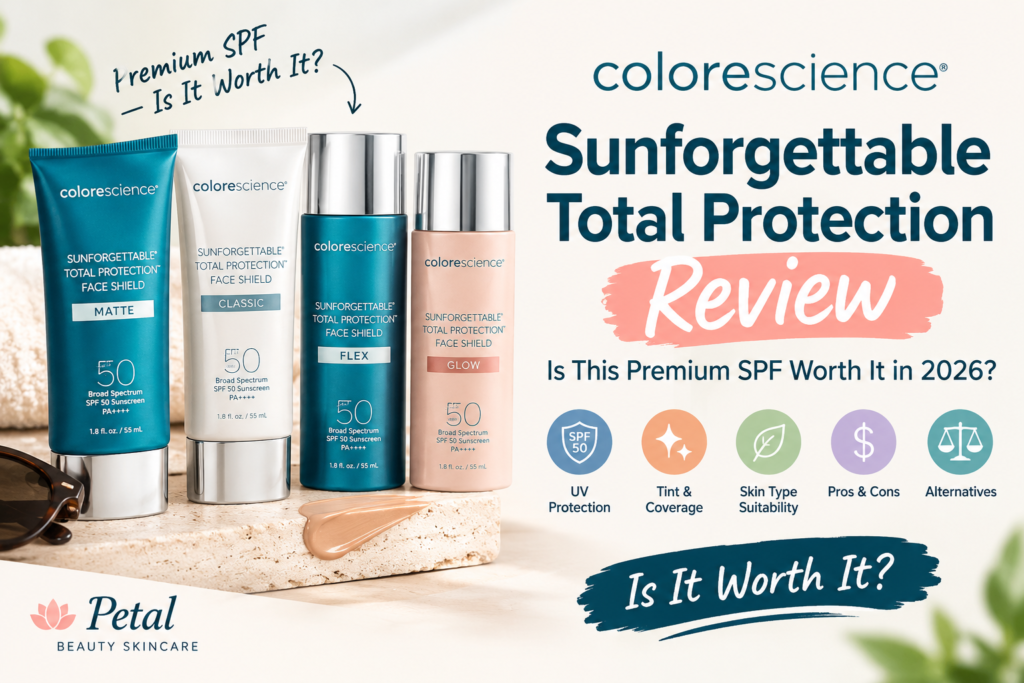
If you’ve ever hesitated over a $50+ sunscreen, you’re not alone. Colorescience sells mineral sunscreens that cost several times what a drugstore tube does. They’re also tinted, which is part of the appeal. This Colorescience Sunforgettable Total Protection review covers what the product line actually is, how the main Face Shield versions differ, who is likely to enjoy it, and where cheaper options make more sense.
As an Amazon Associate, Petal Beauty Skincare earns from qualifying purchases. This means we may earn a commission if you purchase through links in this article, at no additional cost to you.
We haven’t tested these products ourselves. This review is based on the brand’s official product information, retailer listings, and customer feedback, and we say which is which. If you’re deciding between a premium tinted mineral SPF and a budget favorite, this is for you.
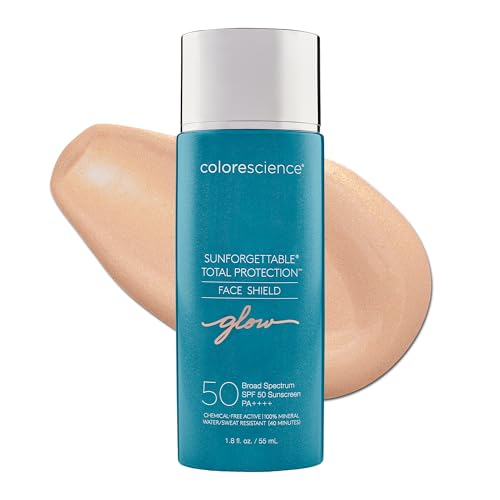
- SPF 50 PA ++++
- Zinc Oxide 12%
- Water/sweat Resistant (40 minutes)
Quick Verdict
Worth considering if you want sunscreen and a light skin-evening tint in one step, prefer mineral filters, and have the budget. Consider a cheaper option if you just want reliable daily SPF, or if you have fair skin and are wary of a universal tint.
Main benefit: a mineral SPF 50 with iron-oxide tint that can replace a separate base layer for some people.
Biggest drawback: the price, plus tint and shade matching that won’t suit everyone.
Colorescience Face Shield Variants at a Glance
Specifications differ by formula, so check each product page before buying. Prices come from the official site or retailer listings we saw and change often.
| Product or variant | Best for | Main benefit | Price range | Important limitation |
|---|---|---|---|---|
| Face Shield Matte SPF 50 | Normal to oily and combination skin | Oil-absorbing, shine-free finish | $52 on Colorescience.com | Brand says it’s ideal for medium to deep tones; one fair-skinned reviewer found the tint orange |
| Face Shield Classic SPF 50 | Normal, dry, or combination skin wanting a natural look | Very sheer tint, dewy finish | Check current price | Sheer tint won’t even out skin much |
| Face Shield Flex SPF 50 | People wanting light-to-medium color coverage | Tone-adapting, buildable, demi-matte | Roughly $54–$58 at retailers we saw | Limited shade range; matching can be off |
| Face Shield Glow SPF 50 | Anyone wanting a subtle radiant sheen | Champagne glow, can be mixed with other shades | $52 on Colorescience.com | Not designed for oil control |
Colorescience also sells Face Shield Bronze, a sheer-bronze luminizer. Availability on Amazon varies by seller and variant, so confirm the exact version before clicking.
- SPF 50 PA ++++
- Zinc Oxide 12%
- Water/sweat Resistant (40 minutes)
What Is Colorescience Sunforgettable Total Protection?
“Sunforgettable Total Protection” is a family name, not one product. It includes liquid Face Shields, brush-on powders, color balms, and more. When you read a review praising “Colorescience sunscreen,” it matters which formula is meant.
The Face Shield products are liquid, all-mineral formulas. According to the official Colorescience Face Shield Matte page, the family shares SPF 50 and 40-minute water and sweat resistance. The Matte page lists zinc oxide at 12% as the active ingredient, and retailer listings give the size as 1.8 oz. Treat these as brand claims and recheck the label on the exact variant you buy.
The brand also markets what it calls EnviroScreen technology, which it says covers pollution, blue light, and infrared in addition to UVA and UVB. Those extra claims come from the manufacturer. They aren’t regulated sunscreen ratings.
Key Ingredients and Protection
Zinc oxide is a mineral UV filter that sits on the skin and protects against both UVB and UVA rays. Mineral formulas are often chosen by people who find chemical filters irritating, though no sunscreen type is guaranteed to suit everyone.
Iron oxides give the Face Shields their tint. The brand says they also help against blue (high-energy visible) light. Tinted iron oxides are a reasonable choice if you’re concerned about visible light, because regular SPF doesn’t address it. Still, visible-light protection isn’t part of an SPF rating, so don’t read it as a measured number.
It helps to know what the label tells you. As the FDA explains, SPF mainly reflects protection against UVB, the rays that cause sunburn. “Broad spectrum” means the product also covers UVA, the rays linked to skin aging. The American Academy of Dermatology’s label guide is a good plain-English summary.
The Matte listing also names niacinamide, bisabolol, vitamin E, and a silicone powder for oil absorption. Check the ingredient list for your specific variant, since they aren’t identical across the family.
No sunscreen reverses wrinkles, cures pigmentation, or prevents every kind of skin damage. Used correctly, it helps lower the risk.
Texture, Finish, Shade Matching, and Makeup
What the brand says: Matte has a modern matte finish and blends sheer. Classic is naturally dewy. Flex is demi-matte with buildable coverage. Glow adds a soft champagne sheen.
What customers report: Reviews are mixed, which is typical. On the brand’s Matte page, one fair-skinned reviewer said the “universal” tint looked orange on her and asked for an untinted option. Another reviewer felt Matte wasn’t as good as Flex. Reviews summarized elsewhere for Flex mention occasional shade mismatches, a runny texture, and a noticeable scent. These are individual reports, not lab findings.
What to check before buying:
- Undertone: a tint that adapts to many skin tones may still not suit very fair, very olive, or very deep complexions.
- Shade: one retailer advises choosing the lighter shade of Flex if you’re between two.
- Finish: if you dislike shine, avoid Classic and Glow. If you dislike a flat look, Matte may feel dry on some skin.
- Makeup: the brand says you can layer these under cosmetics. Let the sunscreen set first, and test a small amount of your usual foundation to check for pilling.
Who Should Consider It?
Oily or combination skin. Matte is the one made for this. The brand specifically says it targets oily or blemish-prone skin, but whether it controls shine through a long day depends on your skin.
Dry or mature skin. Classic or Flex may feel more comfortable than Matte. Our guide to non-greasy sunscreens for mature skin is worth reading if you want to compare textures.
Sensitive skin. The brand describes the line as hypoallergenic and non-comedogenic, and one retailer notes Flex as suitable for sensitive skin. Even so, patch test first, since any product can irritate someone. If you want other options, see our list of mineral sunscreens for sensitive skin (link to be added once the exact URL is confirmed).
Acne-prone skin. Matte is positioned for blemish-prone skin and is labeled non-comedogenic. Labels aren’t guarantees, so introduce it gradually.
Dark spots or uneven tone. Daily sunscreen is one of the most useful habits for people prone to dark spots, because sun exposure can make them darker. Tinted iron-oxide formulas may add extra visible-light coverage. Sunscreen won’t remove existing pigmentation, though.
Tinted coverage. Flex is the most complexion-like option in the family. Classic and Matte are sheer, so expect a “skin but better” effect rather than foundation.
Pros and Cons
Pros
- Mineral zinc oxide formula with SPF 50 and broad-spectrum labeling
- Tint and sunscreen in one step
- Different finishes for different skin types
- Brand lists antioxidants and hydrating ingredients
- Brand lists the line as fragrance-free and non-comedogenic
Cons
- Premium price compared with most face sunscreens
- Tint may not match fair or certain undertones
- Finishes differ, so the “wrong” variant can disappoint
- Only 40 minutes of water resistance
- Needs generous application, which makes a small bottle go faster
- Individual irritation is always possible
- SPF 50 PA ++++
- Zinc Oxide 12%
- Water/sweat Resistant (40 minutes)
Flex vs. Matte vs. Other Variants
Think about finish first. Matte is the choice for oily or shiny skin. Classic is the easy default for normal or dry skin that wants a natural look. Flex suits people who want some coverage. Glow works best for those who like a radiant finish, or as a mixer.
Colorescience says the Face Shields all share the same SPF 50 mineral protection and are designed to be layered or blended. We couldn’t verify every shade range and size for each variant, so check the official product pages for current details. We also saw conflicting shade counts for Flex (four on one page, six on another), which is a good reason to confirm before you buy.
Best Alternatives
Check each product’s current formula and label. Some of these are chemical-filter sunscreens, not mineral.
| Alternative | Best for | Key difference | Price positioning | Main trade-off |
|---|---|---|---|---|
| Beauty of Joseon Relief Sun | Daily, comfortable wear on a budget | Lightweight; chemical (organic) filters, untinted | Check current price (typically much lower) | Not mineral and no tint |
| Round Lab Birch Juice Sunscreen | Hydrated, glowy skin | Moisturizing, chemical filters, untinted | Check current price (typically lower) | Not mineral and no tint |
| La Roche-Posay Anthelios | Trusted pharmacy brand, many formulas | Some versions are mineral, others chemical; a tinted mineral option exists | Check current price (generally mid-range) | Must pick the right Anthelios formula |
| CeraVe Hydrating Mineral Sunscreen, Tinted | A budget mineral tinted option | Zinc and titanium with tint | Check current price (typically drugstore) | Fewer shades and a different finish; verify details |
For more on the two Korean options, see our Beauty of Joseon vs. Round Lab sunscreen comparison.
How to Apply and Reapply
Sunscreen only works if you use enough. The AAD’s application guidance says to apply generously and evenly before going outdoors, then reapply at least every two hours, and sooner after swimming or sweating.
A tint doesn’t mean you can use less. Colorescience’s Matte page suggests at least a nickel-sized amount for the face. Since these formulas are rated for 40 minutes of water resistance, reapply soon after swimming or heavy sweating. Many people wearing makeup find a powder SPF easier to touch up midday, and Colorescience sells brush-on versions for that.
Is Colorescience Sunforgettable Worth the Price?
It depends on what you replace. If it takes the place of a sunscreen and a tinted moisturizer or light foundation, the cost looks more reasonable. If you’d wear a basic sunscreen regardless of tint, a $52 bottle is mostly paying for the tint, texture, and brand extras.
Because you need a generous amount, a 1.8 oz bottle won’t last long with daily use. We haven’t calculated cost per ounce here, since prices vary by retailer and change often.
A cheaper sunscreen you’ll actually wear every day beats an expensive one you save for special days. The tint matters only if you’ll value it.
- SPF 50 PA ++++
- Zinc Oxide 12%
- Water/sweat Resistant (40 minutes)
Frequently Asked Questions
Is Colorescience Sunforgettable worth the money? For tinted, mineral, all-in-one convenience, it can be. For basic daily SPF, cheaper options work well.
Is Colorescience Face Shield a mineral sunscreen? The Face Shield liquids are described by the brand as all-mineral, with zinc oxide as the active ingredient on the Matte page.
Is Colorescience suitable for sensitive skin? The brand calls it hypoallergenic, but patch test first.
Does Colorescience leave a white cast? The tinted formulas are designed to blend sheer. Some reviewers report tint mismatches, including orange tones on fair skin.
Which Colorescience sunscreen is best for oily skin? Face Shield Matte, which is formulated for normal-to-oily and combination skin.
Can Colorescience help protect skin prone to dark spots? Daily broad-spectrum sunscreen supports that goal, and iron oxides add some visible-light coverage. It won’t treat existing spots.
Can you wear makeup over Colorescience sunscreen? The brand says it can be layered under cosmetics. Let it set and test your foundation.
How often should Colorescience sunscreen be reapplied? At least every two hours outdoors, and after 40 minutes of swimming or sweating.
What are the best alternatives to Colorescience? Beauty of Joseon, Round Lab, La Roche-Posay Anthelios, and budget tinted mineral options, depending on your priorities.
Final Verdict
Our Colorescience Sunforgettable Total Protection review comes down to this: it’s a polished, well-designed line, but it’s a luxury choice. It makes the most sense for people who want mineral protection, a light tint, and a skin-friendly finish in one step, and who don’t mind paying for it.
Choose an alternative if you want the lowest price, don’t care about tint, or are fair-skinned and worried about the universal shade. When you’re ready, check the latest price and make sure you choose the right variant for your skin type.
- SPF 50 PA ++++
- Zinc Oxide 12%
- Water/sweat Resistant (40 minutes)