
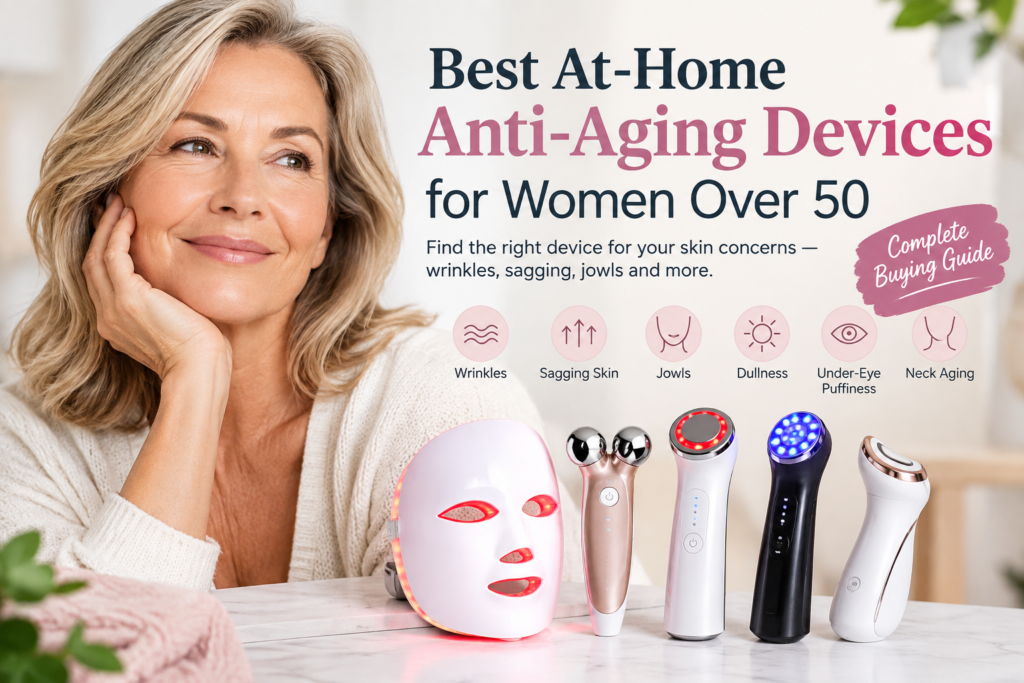
After 50, most women aren’t dealing with just one skin concern. You may notice fine lines, softer jawlines, a loss of firmness, dullness, and changes around the eyes all at once. Different devices target different problems, and no single gadget solves every sign of aging. That’s why the best at-home anti-aging devices for women over 50 depend on what bothers you most.
Petal Beauty Skincare is reader-supported. If you buy through links on our site, we may earn a commission at no extra cost to you. Our recommendations are based on product research, published specifications, available evidence, expert guidance, and buyer feedback.
This guide explains the main technologies (LED, microcurrent, and radiofrequency) in plain language. It then compares popular devices so you can choose based on your priorities and budget. We haven’t personally tested these products. Everything here comes from published specifications, research, and available buyer feedback.
Quick Comparison: Top At-Home Anti-Aging Devices
| Device | Technology | Best For | Treatment Time | Approx. Price | Key Advantage | Main Limitation |
|---|---|---|---|---|---|---|
| NuFACE TRINITY+ | Microcurrent | Jawline and lifted appearance | A few minutes per session | Typically around $300–$450 | Well-known, easy to use | Needs consistent use; gel required |
| CurrentBody Skin RF | RF + red light | Firmness and tightening | Short sessions | Typically around $250–$400 | Targets firmness | Must follow instructions carefully |
| CurrentBody Skin LED Series 2 | Red + near-infrared LED | Wrinkles, overall skin quality | About 10 minutes | Typically around $300–$450 | Hands-free routine | Gradual results |
| Omnilux Contour Face | Red + near-infrared LED | Premium LED for mature skin | About 10 minutes | Typically around $350–$450 | Flexible mask; LED-focused brand | Higher price |
| Shark CryoGlow | LED + under-eye cooling | Under-eye area | Roughly 10 minutes | Typically around $250–$350 | Cooling under-eye feature | Cooling isn’t a long-term fix |
| Medicube Age-R Booster Pro | Multi-function | Simple all-in-one routine | Short sessions | Typically around $200–$350 | Combines several functions | Less specialized |
| iRestore Illumina | LED mask | Premium LED routine | Check current specs | Typically around $400–$600 | Full-face coverage | Price; LED-only |
| Dr. Dennis Gross SpectraLite FaceWare Pro | Red + infrared LED | A quick, simple routine | About 3 minutes | Typically around $400–$500 | Short sessions | Premium price |
Prices are approximate and change often. Check the current price on Amazon before deciding.
Which Anti-Aging Technology Is Best After 50?
If you’ve never bought a beauty device, the terminology can be confusing. Here’s what each technology does, so you can choose the one that matches your concerns.
LED / Red Light Therapy
LED (light-emitting diode) devices shine specific colors of light onto the skin. Red light and near-infrared light are the ones usually used for aging concerns. Consumer devices commonly use red light around 630–660 nm and near-infrared around 830–850 nm.
LED doesn’t heat or stimulate your muscles. The idea is that light supports skin cell activity over time. People generally use it for fine lines, overall texture, and a healthier-looking complexion.
Consistency matters. LED is a gradual technology. One session won’t change much, but regular use over weeks is where studies have looked for changes.
In one home-use LED study using 637 and 854 nm light, 24 participants with photoaged skin used the device twice a week for 8 weeks. Skin elasticity was higher on the treated side than the control side at the 6- and 8-week follow-ups. It was a small pilot study, so it can’t tell you how every LED mask performs. Another sham-controlled study of an LED and infrared mask for crow’s feet used 630 nm and 850 nm light and concluded the approach was effective and well tolerated. That was a specific device, not all LED masks.
Realistic expectations: subtle, gradual improvements in the look of fine lines, texture, and radiance. Not dramatic changes. For more options, see our guide to the best LED face masks for wrinkles and anti-aging.
Microcurrent
Microcurrent uses very low-level electrical current. Unlike LED, it’s meant to stimulate facial muscles and skin, which is why it’s popular for a toned, lifted look.
Many women use microcurrent for the jawline, cheeks, and overall facial contour. Some people see a temporary lifted appearance right after a session. Longer-term changes in appearance depend on regular use.
Microcurrent isn’t a surgical facelift replacement. It won’t remove significant sagging, and it isn’t a permanent fix. Think of it as a maintenance tool. Our NuFACE TRINITY+ review covers one of the best-known options in more detail.
Radiofrequency (RF)
RF devices gently warm the skin’s deeper layers using radiofrequency energy. This differs from LED (light) and microcurrent (electrical stimulation). The marketed benefit is improved firmness and a tighter appearance.
There is some published evidence for home-use RF. One randomized split-face trial of 33 women aged 35–60 evaluated a home RF device that also included 630 nm red LED. It measured wrinkles, hydration, elasticity, and more. Limitations: the participants were mostly younger than many of our readers, it was one specific device, and it combined RF with LED light, so the results can’t be credited to RF alone.
Correct use matters. RF devices usually require a conductive gel or lotion, careful movement across the skin, and following the manufacturer’s time and frequency limits. Skipping these steps risks discomfort or poor results.
Other Technologies
- Laser: At-home lasers exist, but they aren’t the same as clinic lasers. Evidence and safety vary, so check manufacturer instructions carefully.
- EMS (electrical muscle stimulation): Similar in spirit to microcurrent but usually stronger. Less evidence exists for facial anti-aging.
- Cooling/massage: Helps with temporary puffiness and comfort, but isn’t a long-term wrinkle treatment.
- Combination devices: Merge several technologies. Convenient, though they may not be as specialized as a dedicated device.
What Should a Woman Over 50 Look for in an Anti-Aging Device?
- Primary concern. Pick the technology that matches your top priority, not the most features.
- Evidence and published studies. Look for studies on the technology, and be skeptical of dramatic claims. Device-specific evidence is stronger than generic evidence.
- Device specifications. For LED, check wavelengths. For RF and microcurrent, check the manufacturer’s usage guidelines.
- FDA clearance where applicable. See the safety section below for what this does and doesn’t mean.
- Ease of use. If it’s complicated, you won’t use it.
- Treatment frequency. Some devices are used daily, others a few times a week.
- Treatment time. A 3-minute routine is easier to keep than 20 minutes.
- Comfort. Microcurrent and RF can feel different from person to person.
- Ongoing costs. Some devices require gels or replacement accessories.
- Warranty and returns. Check Amazon’s return window and the manufacturer’s warranty.
- Routine fit. The best device is the one you’ll actually use consistently.
Which Device Should You Choose for Your Main Concern?
| Concern | Technology to Consider | Why | What to Expect |
|---|---|---|---|
| Fine lines | LED | Light-based devices have been studied for lines and texture | Gradual, subtle changes |
| Deep wrinkles | LED or RF, realistically | May soften the look of some lines | Improvement in appearance, not removal; deep wrinkles often need professional treatment |
| Sagging skin | RF | Marketed for firmness and tightening | Changes may take several weeks |
| Jowls | Microcurrent or RF | Aimed at lifted or tighter appearance | Modest, ongoing maintenance |
| Jawline | Microcurrent | Popular for contour and toning | Temporary lift after sessions; consistency matters |
| Dull skin | LED | Often used for overall radiance | Gradual improvement |
| Uneven tone | LED | Some studies examine tone and texture | Subtle; not a treatment for medical pigmentation issues |
| Under-eye puffiness | Cooling or gentle massage | Cooling can temporarily reduce the look of puffiness | Short-lived; underlying causes vary |
| Neck aging | LED or microcurrent | Some devices are designed for the neck | Gradual; check that the device is labeled for neck use |
| Overall anti-aging | LED, or a combination routine | Covers general skin quality | Steady, modest improvement |
Our Top Picks by Category
Best for Jawline Toning: NuFACE TRINITY+
If jawline definition is your main concern, microcurrent is the technology most associated with a lifted look, and NuFACE is one of the most recognized names. The TRINITY+ is a handheld device used with a conductive gel, and it supports attachments for different areas. It’s a straightforward option for beginners who want a jawline and cheek routine.
Keep in mind: it works best with regular use, and it isn’t a substitute for surgical results. See our NuFACE TRINITY+ review for more.
Best for Sagging and Firmness: CurrentBody Skin RF
For women whose main worry is loss of firmness, RF is the technology to look at. CurrentBody’s device combines RF with red light and is designed for short at-home sessions. It’s a reasonable choice if you want something aimed at firmness rather than only radiance.
Keep in mind: follow the instructions closely, including gel and timing. Evidence for home RF exists but is limited.
See Current Price on currentbody official website.
Best LED Option for Wrinkles: CurrentBody Skin LED Series 2
This flexible LED mask uses red and near-infrared light, the wavelength combination commonly used in consumer LED devices. It’s hands-free, so you can wear it while doing something else. That makes it a good fit for a simple, consistent routine.

- Enhanced collagen production capability significantly reduces fine lines, wrinkles and redness, for younger-looking skin…
- Upgraded light coverage provides our famous instant glow, for a healthier, brighter and smoother complexion.
- An all-new, exclusive layout of 236 LED bulbs emits three clinically recognised wavelengths: red (633nm), near-infrared …
Keep in mind: LED is gradual, and it won’t produce dramatic lifting.
Best Premium LED Option: Omnilux Contour Face
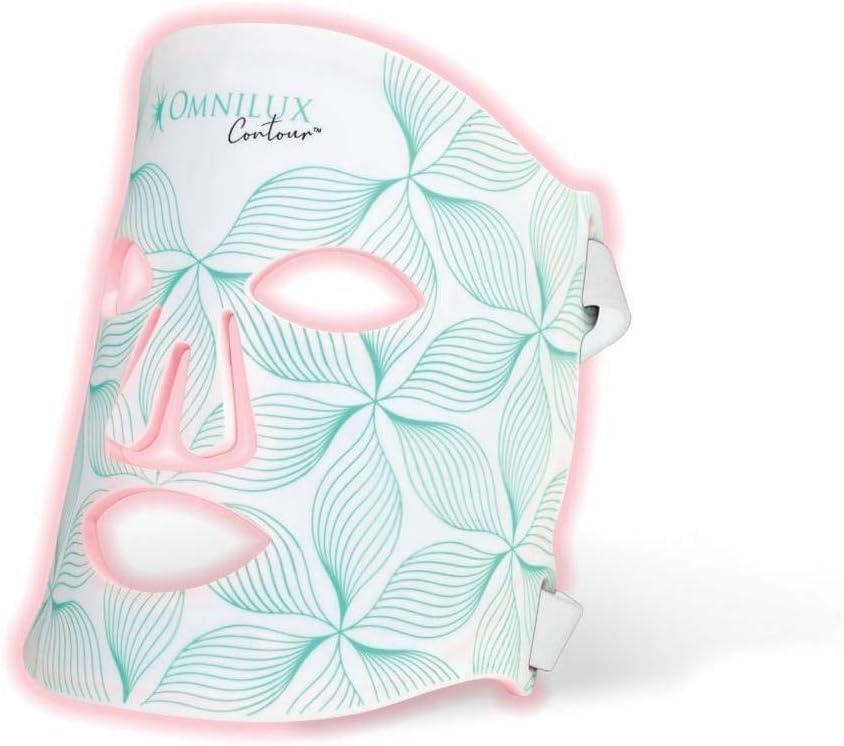
Omnilux is a brand often discussed in LED skin research, and the Contour Face is a flexible mask using red and near-infrared light. It’s a premium pick for women who want a well-known LED brand and are comfortable with a higher price. If you’re also comparing masks with full-face coverage, our iRestore Illumina review looks at another premium LED option.
Keep in mind: price. If you’re not sure you’ll use it consistently, a less expensive mask may be smarter.
Best for Under-Eye Puffiness and Mature Skin: Shark CryoGlow

- RED LIGHT THERAPY MASK: CryoGlow is an at-home LED face mask combining red, blue & deep infrared light with under-eye co…
- MOST AWARDED LED MASK IN THE U.S.*: Real people. Real results. Clinically tested on 119 participants by an independent t…
- EXPERTLY DEVELOPED: Developed by Shark Beauty alongside optical light experts and engineers, bringing MedSpa-inspired re…
Under-eye changes are a common concern after 50. The Shark CryoGlow pairs an LED mask with under-eye cooling, which some people find soothing for puffiness. Our Shark CryoGlow review covers the details.
Keep in mind: cooling gives a temporary de-puffing effect, not a permanent change.
Best Multi-Function Device: Medicube Age-R Booster Pro
If you want one device that does several things, this is a multi-function option combining several technologies. It suits women who want a simple, all-in-one routine and don’t want to buy separate devices.
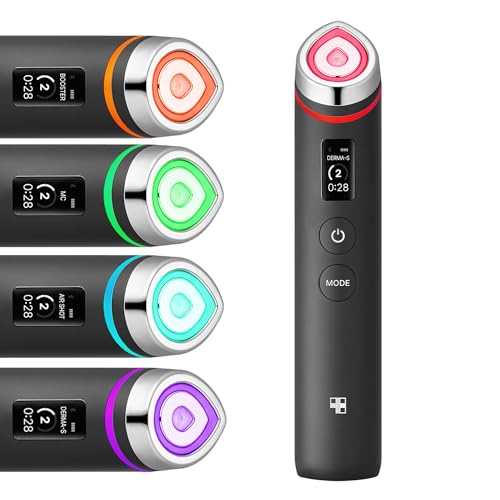
- All-in-One Glass Glow Wand: Achieve your glass skin goals with innovative technology. All-In-One wand offers Enhanced Ab…
- Maximize Your Results with the AGE-R App: Enhance your skincare routine with the AGE-R app, featuring custom guide video…
- No Conductive Gel Required: Use with your favorite skincare products! Booster Pro is a game changer, making your skin he…
Keep in mind: all-in-one devices may be less specialized than dedicated ones, so check what each mode actually does.
Best for a Simple Routine: Dr. Dennis Gross SpectraLite FaceWare Pro
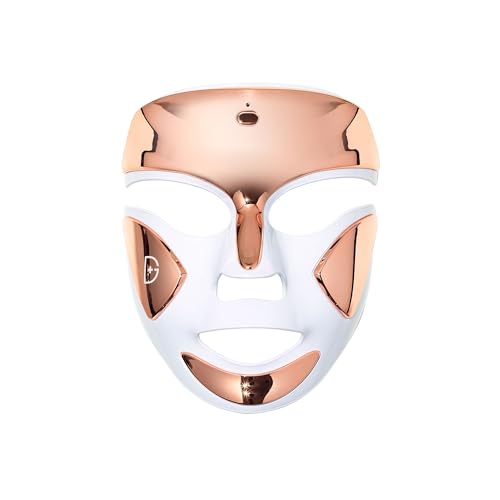
- WHAT IT IS: This LED device for the face targets wrinkles and acne for visibly smoother, clearer skin in just 3 minutes….
- HOW IT WORKS: Treat acne and breakouts with blue light, smooth wrinkles and build collagen with red light, or address bo…
- HOW TO USE: After cleansing, place the mask over your face, securing the strap around your head. Press & hold the power …
The main appeal is speed. Sessions are only a few minutes, which helps if long routines don’t fit your life. It uses red and infrared LED light. It’s a premium-priced pick, so it makes most sense if convenience is a priority.
Also Worth Considering: iRestore Illumina

- Full Coverage: Includes LED masks designed to target the face, neck, and chest, ensuring comprehensive treatment for all…
- Anti-Aging Benefits: Red light therapy stimulates natural collagen production, helping to achieve firmer, smoother, and …
- Prep & Enhance: The included cleanser and facial spray prime your skin for maximum absorption, creating the perfect foun…
This is another premium LED mask with full-face coverage. Compare it with the Omnilux and CurrentBody masks based on price, comfort, and current specifications.
How Long Does It Take to See Results?
Timelines vary by technology and by person:
- LED: Results build gradually. The home-use LED study cited above ran 8 weeks.
- Microcurrent: Some people notice a temporary lifted look right after a session. Longer-term changes require consistent use.
- RF: Results may take several weeks of regular use.
Results vary by device, skin, and how consistently you use it. At-home devices aren’t equivalent to surgical procedures, and no device should be presented as a permanent facelift. If your goals are dramatic, a consultation with a board-certified dermatologist or plastic surgeon can help you understand your options.
Are At-Home Anti-Aging Devices Safe?
Most consumer devices are designed for home use, but safe use still depends on you. General guidelines:
- Follow the manufacturer’s instructions, including time limits and frequency.
- Check contraindications before you start. Manuals typically list situations where the device shouldn’t be used.
- Avoid open wounds or active skin problems where the manufacturer prohibits use.
- Be cautious after cosmetic procedures. Check with the provider who did your treatment first.
- Talk with a qualified healthcare professional if you have a medical condition, an implanted electronic device (such as a pacemaker), or any contraindication relevant to the technology. This is especially important for microcurrent and RF.
This article doesn’t offer personalized medical advice.
FDA terms matter. According to the FDA’s overview of device approvals and clearances, “cleared” and “approved” are different regulatory pathways. FDA clearance means a device was found substantially equivalent to a legally marketed device for a specific intended use. It doesn’t mean the FDA endorsed every marketing claim. “FDA registered” is different again, because it generally refers to a facility listing rather than a product review. You can look up a device in the Devices@FDA database to see what it was actually cleared for.
What Does the Research Say About At-Home Anti-Aging Devices?
The honest summary: there is promising evidence, but it’s limited and device-specific.
- LED: Small studies of specific home-use devices report improvements in elasticity, texture, or crow’s feet. The 637/854 nm pilot study had 24 participants over 8 weeks. The LED and infrared mask study for crow’s feet was sham-controlled, which strengthens it, but it tested one device.
- RF: The home-use RF split-face trial involved 33 women aged 35–60 and combined RF with red LED, so it isn’t a pure test of RF or a test of women in their 60s and beyond.
- Microcurrent: Published evidence for consumer microcurrent devices is more limited, so we treat claims as modest and encourage realistic expectations.
Common limitations include small sample sizes, short durations, younger participants than many readers, and studies funded or tied to device makers. A study of one device doesn’t prove that every similar device works the same way.
Frequently Asked Questions
What is the best anti-aging device for women over 50?
There isn’t one universal winner. If wrinkles and overall skin quality are your priority, LED is a common choice. If firmness is the concern, look at RF. For jawline and lifted appearance, microcurrent is popular. If you have several concerns, a combination device or a planned routine may make sense.
What is the best device for sagging skin after 50?
RF is most often marketed for firmness and tightening, and microcurrent for contour. Both have limits, and neither replaces surgery for significant sagging.
Do LED masks work for mature skin?
Some small studies of home-use LED devices report improvements in elasticity, texture, and fine lines. Results are gradual and vary by device and person.
Is microcurrent or RF better for sagging skin?
They work differently. Microcurrent focuses on muscle stimulation and a lifted look, while RF focuses on warming skin for firmness. Some women use both, following each manufacturer’s guidance.
What is the best device for jowls?
Microcurrent is popular for jawline and jowl areas, and RF is sometimes used for tightening. Expect modest, temporary-to-gradual changes rather than dramatic ones.
Can at-home devices really reduce wrinkles?
They may soften the appearance of fine lines for some people, based on limited studies. Deep wrinkles usually need professional treatment.
How often should women over 50 use anti-aging devices?
It depends on the device. Some are used several times a week, others daily, and RF often has strict limits. Follow the manufacturer’s schedule.
Are expensive anti-aging devices worth it?
Not automatically. Price doesn’t guarantee better results. Compare the technology, published evidence, comfort, and whether you’ll use it consistently.
Are at-home anti-aging devices safe?
Generally, when used as directed and with contraindications checked. Talk with a healthcare professional if you have a medical condition or implanted electronic device.
Can I combine LED, microcurrent, and RF?
Some people do, but check each manufacturer’s instructions first, and don’t overdo it. If you’re unsure, ask a dermatologist. For more ideas, browse the rest of Petal Beauty Skincare.
If Your Main Concern Is…
- Wrinkles: Consider LED.
- Loss of firmness: Consider RF.
- Jawline or jowls: Consider microcurrent or another lifting technology.
- Dullness or overall skin quality: Consider LED.
- Under-eye puffiness: Consider a cooling feature.
- Multiple concerns: Consider a combination device or a carefully planned routine.
None of these categories is guaranteed to work. They’re starting points for your own research.
Final Thoughts
The best anti-aging device for a woman over 50 is the one that fits her main concern, has reasonable evidence behind its technology, feels comfortable, is safe for her situation, and matches her budget. Consistency matters more than price, and a device that sits in a drawer won’t help anyone.
Start by naming your top priority: wrinkles, firmness, jawline, or overall radiance. Match it to a technology, then compare a couple of devices on specifications, clearance status, return policy, and current price. Expect gradual, modest improvements rather than a transformation, and talk with a healthcare professional if you have any medical concerns.
A smart purchase is an informed one, not necessarily the most expensive one. Take your time, and check current prices and availability on Amazon before you decide.