If your sunscreen feels tight by noon, settles into fine lines, or makes dark spots look patchier under foundation, you’re not imagining it. Skin over 40 tends to be drier, more reactive, and less forgiving of a formula that doesn’t feel good. That matters because the best sunscreen is the one you’ll actually wear every day.
Petal Beauty Skincare is reader-supported. As an Amazon Associate, we earn from qualifying purchases. If you buy through links on our site, we may earn a commission at no extra cost to you.
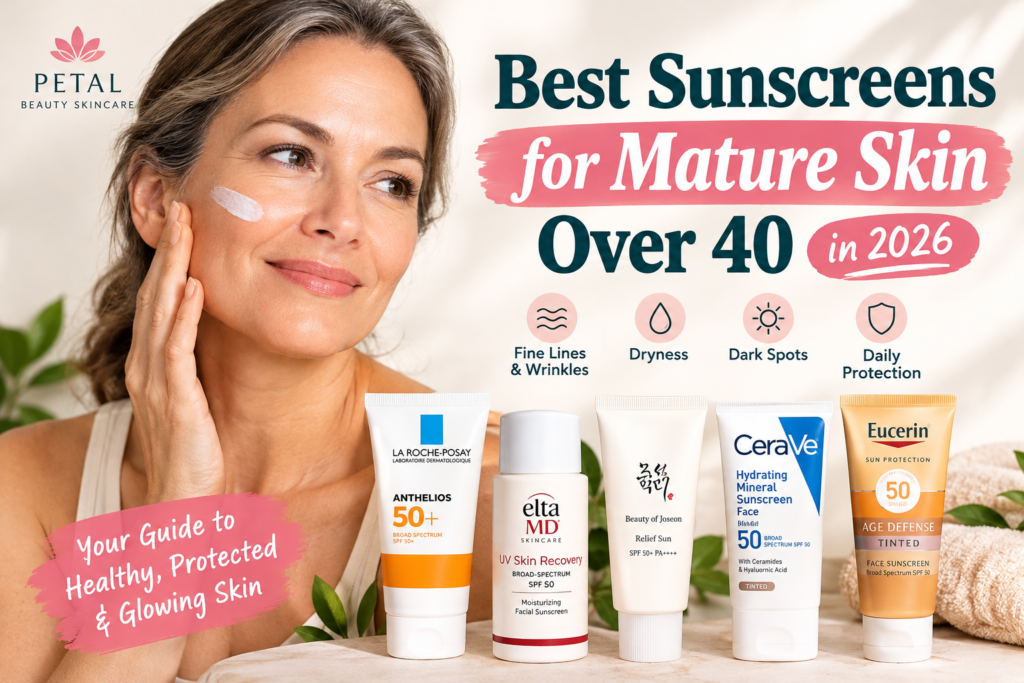
This guide to the best sunscreens for mature skin over 40 in 2026 compares six options by finish, filter type, hydration, and price. Sunscreen can’t erase existing wrinkles. Used correctly, it helps prevent further UV damage and premature skin aging.
Quick Comparison Table
| Product | Best For | SPF | Finish / Texture | Approximate Price* | Amazon Link |
|---|---|---|---|---|---|
| ISDIN Eryfotona Actinica Ultralight Emulsion | Best overall, best under makeup | 50+ | Brand describes it as an ultralight, fast-absorbing mineral emulsion | About $46 (50 mL, brand site); about $55–64 (100 mL, retailers) | Check Price on Amazon [add link] |
| EltaMD UV Skin Recovery | Sensitive, redness-prone skin | 50 | Brand describes it as lightweight and quick-absorbing (mineral) | About $50 (1.7 oz) | Check Price on Amazon [add link] |
| CeraVe Hydrating Mineral Sunscreen Face | Dry skin, budget pick | 50 | Mineral lotion; brand notes a white cast can remain | Low-to-mid teens at major retailers | Check Price on Amazon |
| Eucerin Sun Age Defense Tinted Face Lotion | Affordable tinted option | 50 | Tinted, blendable chemical-filter lotion | About $16 (2.5 fl oz) | Check Price on Amazon [add link] |
| Beauty of Joseon Day Dew Sunscreen | Best Korean sunscreen | 50 | Brand describes it as dewy and lightweight (chemical) | About $18 in one listing | Check Price on Amazon [add link] |
| Colorescience Sunforgettable Total Protection Face Shield Flex | Tinted pick for uneven tone, premium | 50 | Brand describes a demi-matte, tone-adapting tint (mineral) | About $54 (1.8 oz, brand/retailer) | Check Price on Amazon [add link] |
*Prices come from recent brand and retailer listings, not live Amazon pages, and change often. Check Amazon for the latest price.
How We Chose the Best Sunscreens for Mature Skin
We didn’t test these products ourselves, and no independent lab testing was involved. This guide is research-based. For each pick, we reviewed label ingredients and active filters, brand claims, retailer listings, and what major dermatology and skin cancer organizations say about sunscreen.
We looked at:
- Sun protection: broad-spectrum labeling and SPF of at least 30.
- Suitability: how a formula fits dry, sensitive, combination, or pigmentation-prone skin.
- Texture and finish: only where brand or retailer descriptions support it.
- Formula: mineral or chemical filters, and moisturizing or soothing ingredients.
- Price: and whether the formula justifies it.
- Drawbacks: white cast, shine, fragrance, or thin hydration.
We picked products to cover different needs rather than going by brand popularity. Formulas get updated, so check the label on your package.
The 6 Best Sunscreens for Mature Skin Over 40
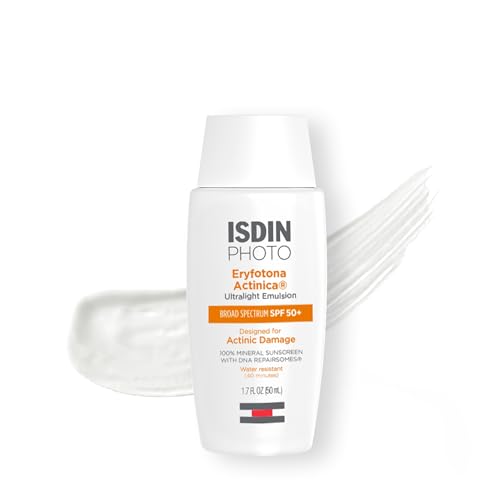
1. ISDIN Eryfotona Actinica SPF 50+: Best Overall and Best Under Makeup
Verdict: A lightweight mineral option for readers who want protection without a heavy layer.
- FSA/HSA ELIGIBLE & DERMATOLOGIST RECOMMENDED: 100% mineral face sunscreen rigorously tested and recommended by dermatolo…
- ADVANCED SUN DAMAGE REPAIR: Formulated with clinically proven Patented DNA Repairsomes and photolyase enzymes to activel…
- SENSITIVE & ACNE-PRONE SKIN: Gentle, non-comedogenic daily sunblock. Delivers broad-spectrum SPF 50+ protection formulat…
Why it may suit mature skin: The active ingredient is 11% zinc oxide, and the brand lists vitamin E. ISDIN also says the formula contains DNA Repairsomes (photolyase enzymes) and markets it for skin with existing sun damage. Treat that as a brand claim. Sunscreen mainly helps prevent further damage.
Formula details: Broad-spectrum SPF 50+, non-tinted, labeled water resistant for 40 minutes.
Pros:
- Mineral filter with a light, emulsion-style texture, per brand and retailer descriptions
- Water resistant for 40 minutes
- Brand says it works as a base under makeup
Cons:
- The ingredient list includes fragrance and alcohol denat., so it isn’t ideal for fragrance-averse or very reactive skin
- Pricier than drugstore options
- Not tinted, so it won’t help blur uneven tone
Best for: Normal to combination skin, and makeup wearers who dislike thick sunscreens. Not ideal for: Fragrance-sensitive skin.
Price: About $46 for 50 mL on the brand’s site, and roughly $55–64 for 100 mL at retailers. Check Amazon for the latest price.
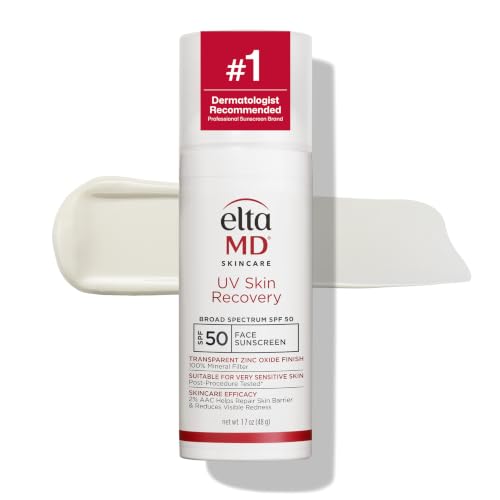
2. EltaMD UV Skin Recovery SPF 50: Best for Sensitive Skin
Verdict: A calming mineral formula for skin that flushes or stings easily.
- INSTANTLY NEUTRALIZES SKIN REDNESS: Instantly neutralize the look of skin redness with this untinted 100% mineral sunscr…
- GENTLE, FAST-ABSORBING FORMULA: The lightweight, oil-free, hypo-allergenic and non-comedogenic formula absorbs quickly w…
- CLINICALLY PROVEN AND DERMATOLOGIST-TRUSTED: EltaMD UV Skin Recovery is a Dermatologist-trusted SPF 50 sunscreen that is…
Why it may suit mature skin: It uses 12.9% zinc oxide with a ceramide blend, centella asiatica, and the brand’s AAComplex amino acid blend. The brand positions it for sensitive, rosacea-prone, and post-procedure skin. An untinted version and a green-tinted, redness-neutralizing version both exist.
Pros:
- 100% mineral filter
- Ceramides and centella for a comforting feel
- No fragrance in the ingredient list we reviewed
Cons:
- Costs about $50
- Zinc oxide formulas can look slightly visible on deeper skin tones, so check shade photos
- The green tint targets redness, not dark spots
Best for: Sensitive or redness-prone skin. Not ideal for: Budget shoppers, or anyone wanting color for pigmentation.
Price: About $50 for 1.7 oz at several retailers. Check Amazon for the latest price.
For more options, see our guide to the best sunscreens for sensitive skin.
3. CeraVe Hydrating Mineral Sunscreen Face SPF 50: Best for Dry Skin and Best Drugstore Value
Verdict: A comfortable, affordable mineral lotion for skin that needs moisture.
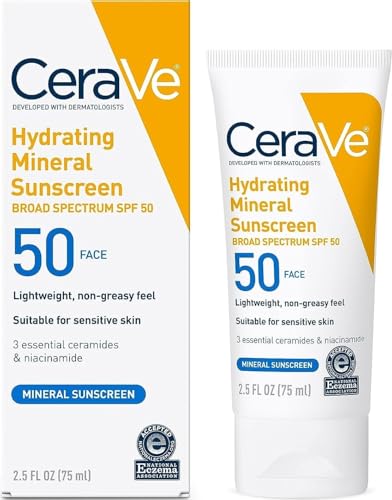
- [ BROAD SPECTRUM SUNSCREEN FOR FACE ] 100% Mineral-based, chemical free sunscreen, also known as a physical sunscreen, r…
- [ MINERAL SUNSCREEN APPLICATION ] Mineral based sunscreen for face can often leave a white cast. For best results, apply…
- [ HAWAII COMPLIANT SUNSCREEN ] Oxybenzone free, avobenzone free & benzene free, this sunscreen contains physical filters…
Why it may suit mature skin: Actives are 9% titanium dioxide and 7% zinc oxide. The label lists three ceramides, hyaluronic acid, and niacinamide. CeraVe describes it as fragrance-free, oil-free, and non-comedogenic.
Pros:
- Hydrating, barrier-focused ingredients
- Fragrance-free
- Budget-friendly
Cons:
- CeraVe notes a white cast can sometimes remain, especially on medium to deep skin tones
- May feel thicker than gel or fluid formulas
- Not tinted
Best for: Dry or sensitive mature skin. Not ideal for: Anyone who wants a sheer, invisible finish.
Price: Typically in the low-to-mid teens at major retailers. Check Amazon for the latest price.
4. Eucerin Sun Age Defense Tinted Face Lotion SPF 50: Best Affordable Tinted Option
Verdict: A budget-friendly tinted lotion for readers who want a little evenness.
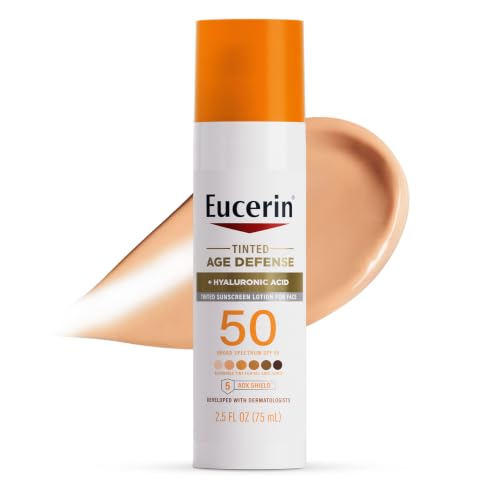
- 5 ANTIOXIDANT FORMULA: Sunscreen features 5 Antioxidants to guard from free radicals to combat premature skin aging* and…
- UNIVERSAL TINTED SUNSCREEN FOR FACE: Lightweight, non-greasy formula with a universal tint that blends seamlessly on all…
- DAILY SUNSCREEN: Developed with dermatologists, this hypoallergenic facial sunscreen SPF 50 is suitable for daily use un…
Why it may suit mature skin: It’s a tinted, blendable lotion with hyaluronic acid. It uses chemical filters, which are generally easier to blend than zinc oxide. The untinted version lists avobenzone, homosalate, octisalate, and octocrylene, and the tinted version appears to follow the same chemical-filter approach. Confirm on your package.
Pros:
- Tint can soften uneven tone
- Hyaluronic acid base
- Often one of the cheaper tinted SPF 50 options
Cons:
- Chemical filters may irritate very sensitive skin
- The untinted version lists alcohol denat., so check the tinted label if dryness is a concern
- We couldn’t confirm whether the tint uses iron oxides, so it may not address visible-light concerns
Best for: Normal to dry skin and shoppers on a budget. Not ideal for: Reactive skin, or anyone targeting visible-light-related pigmentation.
Price: About $16 for 2.5 fl oz in recent retailer listings. Check Amazon for the latest price.
5. Beauty of Joseon Day Dew Sunscreen SPF 50: Best Korean Sunscreen
Verdict: A glowy, hydrating chemical sunscreen for dry skin that likes a dewy finish.
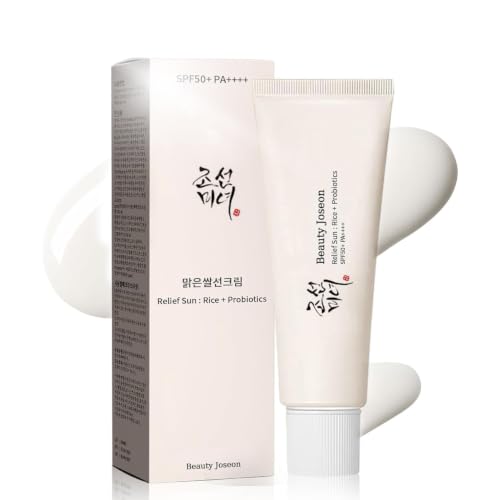
- 1.Korean Rice Probiotics Anti-black frost offers , ideal for all skin types.
- 2.Enriched with nourishing ingredients for superior skin protection and deep hydration.
- 3.Provides long-lasting moisture to keep skin supple and hydrated.
Why it may suit mature skin: The U.S. formula uses avobenzone 3%, homosalate 7%, octisalate 5%, and octocrylene 5%. The brand highlights hyaluronic acid and rice extract and describes the finish as dewy with no white cast. It lists a clinically tested SPF of 52 and PA++++, but PA ratings aren’t an FDA standard.
Pros:
- Hydrating, moisturizer-like feel
- No white cast, per the brand
- Reasonable price
Cons:
- Dewy finishes can slide under foundation or look shiny on oilier skin
- Chemical filters, including homosalate and octocrylene, don’t suit everyone
- Not tinted
Best for: Dry skin and no-makeup days. Not ideal for: Oily skin or anyone who wants a matte base.
Price: About $18 in one retail listing. Check Amazon for the latest price, and buy from the brand’s official storefront or a reputable seller.
Curious how it compares? See our Beauty of Joseon vs Round Lab sunscreen breakdown.
6. Colorescience Sunforgettable Total Protection Face Shield Flex SPF 50: Best Tinted Sunscreen for Uneven Tone (Premium Pick)
Verdict: A pricier tinted mineral sunscreen that doubles as a light base.

- TONE-ADAPTING COLOR THAT BLOOMS AS YOU BLEND: Starts white, transforms on contact. Innovative iron oxide pigments delive…
- TOTAL ENVIRONMENTAL DEFENSE SPF 50 PA++++: 100% mineral Zinc Oxide formula defends against UVA/UVB, pollution, HEV blue …
- FLEXIBLE SHADES FOR ALL SKIN TONES: Each adaptive shade delivers buildable coverage that adjusts to a wide range of skin…
Why it may suit mature skin: The formula uses 12% zinc oxide and iron oxide pigments. The brand describes tone-adapting, buildable color with a demi-matte finish, in several shades. The American Academy of Dermatology notes that visible light can worsen melasma and recommends tinted sunscreen with iron oxide and SPF 30 or higher. A tint doesn’t treat dark spots, but it can help protect against visible light and even out how skin looks.
Pros:
- Mineral filter plus iron oxides
- Light coverage can replace foundation on some days
- Water resistant for 40 minutes, per the brand
Cons:
- Shade matching can be tricky, and the brand suggests choosing the lighter shade if you’re unsure
- A demi-matte finish may emphasize dryness
- Expensive at about $54
Best for: Uneven tone, visible dark spots, and minimal-makeup routines. Not ideal for: Dry skin without a moisturizer underneath, or tight budgets.
Price: About $54 for 1.8 oz at the brand and retailers. Check Amazon for the latest price.
What Mature Skin Should Look for in a Sunscreen
- Broad-spectrum SPF 30 or higher. The Skin Cancer Foundation recommends SPF 30+ for everyday use and water-resistant SPF 50 or more for long outdoor stretches. The American Academy of Dermatology also covers sunscreen in its anti-aging product guidance.
- UVA and UVB protection. UVB causes burns, while UVA is more tied to photoaging. “Broad spectrum” on the label means coverage of both.
- Hydrating ingredients. Hyaluronic acid, glycerin, and ceramides can make skin feel more comfortable, but they’re a bonus.
- Fragrance considerations. If your skin reacts easily, scan the ingredient list and patch test.
- Tint and iron oxides. For visible-light-related pigmentation, the AAD’s melasma self-care guidance suggests tinted sunscreen with iron oxide.
- White cast and shades. Mineral formulas can look visible on deeper skin tones. Tinted or sheer formulas help.
- Makeup compatibility. Thin layers and a few minutes of setting time reduce pilling.
- Water resistance. Choose it for swimming or sweating, and reapply as directed.
Mineral vs Chemical Sunscreen for Skin Over 40
Both types can work well. The right one depends on the specific formula and how your skin tolerates it.
Mineral (zinc oxide, titanium dioxide): These sit on the skin’s surface. They’re often a comfortable starting point for sensitive skin. The trade-off is a possible white cast and a thicker feel.
Chemical (avobenzone, octocrylene and similar): These tend to blend more invisibly and feel lighter. The trade-off is that some people find them irritating, particularly around the eyes.
Choose the texture you’ll enjoy wearing daily. If you’re unsure, start with a mineral formula if your skin is reactive, or a chemical formula if white cast bothers you.
Which Sunscreen Is Best for Your Skin Type?
- Dry skin: CeraVe Hydrating Mineral for ceramides and hyaluronic acid, or Beauty of Joseon Day Dew if you like a dewy finish.
- Sensitive skin: EltaMD UV Skin Recovery. For more picks, see our sensitive skin sunscreen guide.
- Combination skin: ISDIN Eryfotona Actinica, which brand and retailer descriptions call ultralight.
- Oily skin: None of these six is clearly built for oily skin. ISDIN is the lightest-feeling choice we found, but see our sunscreens for anti-aging and fine lines roundup for more options.
- Dark spots and uneven tone: Colorescience Flex, or Eucerin Tinted on a budget. Our sunscreens for hyperpigmentation and dark spots guide goes deeper. If you suspect melasma, see a dermatologist.
- Makeup wearers: ISDIN or Colorescience Flex. Moisturize first and let sunscreen set before foundation.
How to Apply Sunscreen to Help Prevent Premature Aging
The American Academy of Dermatology’s application guidance is a good reference. The basics:
- Use enough. Most people under-apply. Cover your face, ears, neck, and any exposed chest.
- Follow the label. Many products say to apply about 15 minutes before going outside.
- Reapply about every two hours outdoors, and after swimming or sweating, as directed.
- Layer your protection. Shade, hats, and sunglasses help too. The FDA’s sun safety tips cover this.
- Be consistent. Daily use matters more than occasional heavy use.
Sunscreen won’t remove existing wrinkles. It helps limit further UV-related damage.
Common Sunscreen Mistakes After 40
- Using too little. A thin layer gives less protection than the label suggests.
- Skipping the neck. It shows sun damage too.
- Forgetting to reapply. Protection wears off outdoors.
- Choosing a formula you dislike. If it feels greasy, tight, or chalky, you won’t wear it.
- Relying on SPF makeup alone. Most people don’t apply enough foundation to reach the labeled SPF.
Frequently Asked Questions
1. What is the best sunscreen for mature skin over 40?
The best one is broad-spectrum, SPF 30 or higher, comfortable on your skin, and something you’ll use daily. ISDIN is our overall pick, and EltaMD, CeraVe, and Colorescience suit specific needs.
2. Is SPF 30 or SPF 50 better for skin over 40?
SPF 50 blocks slightly more UVB (roughly 98% versus 97%). How much you apply matters more. The Skin Cancer Foundation suggests SPF 30+ for daily use and water-resistant SPF 50+ for long outdoor time.
3. Which sunscreen is best for dry skin and fine lines?
CeraVe Hydrating Mineral or Beauty of Joseon Day Dew. Hydration can make fine lines look softer, but sunscreen’s main job is preventing further damage.
4. Is mineral sunscreen better for mature skin?
Not necessarily. Mineral formulas are often gentler for reactive skin, while chemical formulas can feel lighter. Choose by formula and tolerance.
5. Which tinted sunscreen may help with dark spots?
Colorescience Flex contains iron oxides, which the AAD recommends for visible-light concerns such as melasma. Tint can help even tone but doesn’t treat pigmentation. See a dermatologist for persistent dark patches.
6. Can sunscreen be worn under makeup without emphasizing fine lines?
Often yes. Moisturize first, use a thin layer, and wait a few minutes before foundation. Our vitamin C serum guide and niacinamide vs vitamin C for acne marks comparison can help you plan your routine around sunscreen.
7. Should people over 40 wear sunscreen every day?
Dermatology organizations recommend daily sun protection, including on cloudy days.
8. How often should sunscreen be reapplied?
About every two hours outdoors, and after swimming or sweating, per label directions.
Final Verdict
No single sunscreen is best for everyone. Use this as a shortcut:
- Best overall / under makeup: ISDIN Eryfotona Actinica
- Best for sensitive skin: EltaMD UV Skin Recovery
- Best for dry skin / budget: CeraVe Hydrating Mineral
- Best affordable tinted: Eucerin Sun Age Defense Tinted
- Best Korean sunscreen: Beauty of Joseon Day Dew
- Best tinted for uneven tone (premium): Colorescience Flex
Start with the texture you’ll enjoy wearing, apply enough, and use it every day. Prices and availability change, so check Amazon for current details. Check Price on Amazon: CeraVe Hydrating Mineral