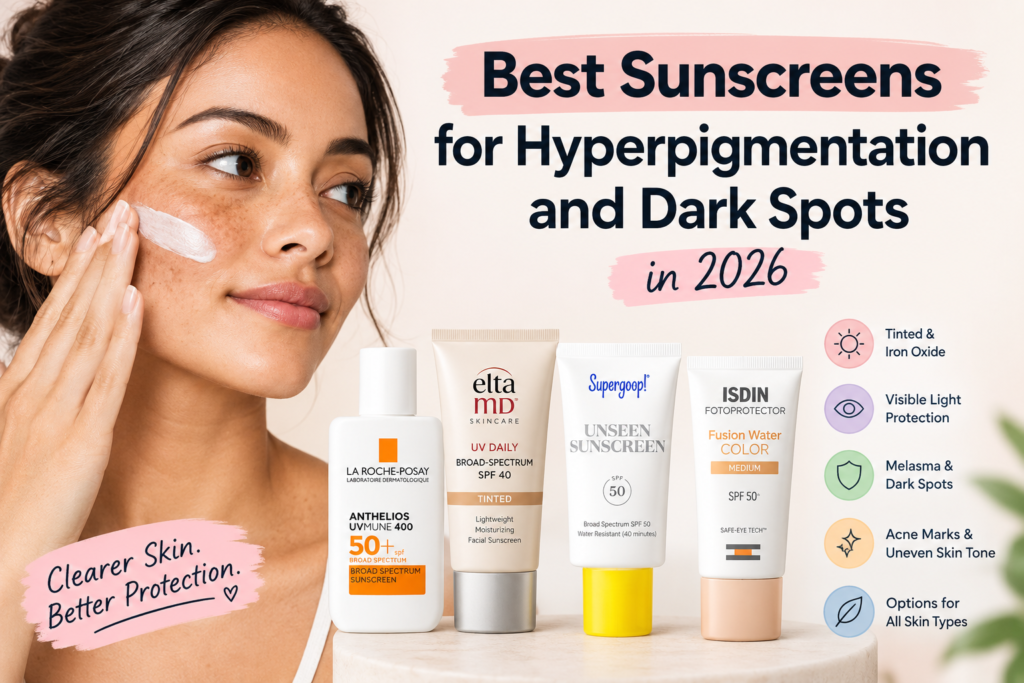
Choosing the best sunscreens for hyperpigmentation and dark spots is not just about grabbing the highest SPF. The biggest mistake is focusing only on that number and ignoring UVA protection, visible light, tint, iron oxides, and your skin tone. Many people also skip the most basic question: will you actually wear it and reapply it every day?
Sunscreen won’t erase existing dark spots. Its job is to stop them from getting darker and to protect the progress you make with brightening products. Below, we break down what to look for and which sunscreens fit different pigmentation concerns.
Petal Beauty Skincare is reader-supported. As an Amazon Associate, we may earn from qualifying purchases at no extra cost to you. Our recommendations are based on research, product information, and what we believe is useful for readers.
Product formulas, shades, and Amazon listings change, so always check the current label and listing before you buy.
Quick Comparison Table
| Product | Best For | SPF | Tinted/Iron Oxides | Skin Type | Approx. Price | Rating |
|---|---|---|---|---|---|---|
| EltaMD UV Elements Tinted | Best overall | 44 | Tinted, iron oxides | Normal, dry, combination | $40–$50 | Check Amazon |
| EltaMD UV Physical Tinted | Melasma, sensitive skin | 41 | Tinted, iron oxides | Sensitive, post-procedure | $40–$50 | Check Amazon |
| EltaMD UV Clear | Oily skin, acne marks | 46 | Untinted | Oily, acne-prone | $40–$50 | Check Amazon |
| Colorescience Face Shield Flex | Darker skin, premium pick | 50 | Tinted, iron oxides | Most skin types | $60–$80 | Check Amazon |
| Beauty of Joseon Relief Sun | Lightweight, no white cast | 50+ | Untinted | Most skin types | $15–$25 | Check Amazon |
| CeraVe Hydrating Mineral Tinted | Budget tinted pick | 30 | Tinted, iron oxides | Normal to dry, sensitive | $15–$25 | Check Amazon |
Prices are approximate and change often. Ratings shift over time, so check the live Amazon listing.
Our Top Picks
- Best Overall: EltaMD UV Elements Tinted
- Best for Melasma: EltaMD UV Physical Tinted
- Best Tinted/Iron Oxide Option: EltaMD UV Elements Tinted
- Best for Darker Skin Tones: Colorescience Face Shield Flex (check the shade range)
- Best for Oily and Acne-Prone Skin: EltaMD UV Clear
- Best Lightweight/No White Cast: Beauty of Joseon Relief Sun
- Best Budget Pick: CeraVe Hydrating Mineral Sunscreen Tinted
What Makes a Sunscreen Good for Hyperpigmentation?
A good pigmentation-friendly sunscreen checks several boxes, not just one:
- Broad-spectrum protection: It should cover both UVA and UVB rays. UVA contributes to pigmentation and aging, UVB to burning.
- SPF 30–50+: The Skin Cancer Foundation recommends a broad-spectrum SPF of 30 or higher for daily use. SPF 50 filters slightly more UVB, but only if you apply enough and reapply.
- Strong UVA protection: On Asian and European labels, look for PA++++ or a UVA circle logo.
- Visible-light protection: Regular clear sunscreens don’t block this well (more below).
- Iron oxides: These pigments help block visible light.
- Tint: The tint is what carries the iron oxides.
- Water resistance: Useful if you sweat or swim, but only if the label states it.
- Comfortable texture: If it feels greasy, you’ll skip it.
- Low irritation: Inflamed skin can make dark spots worse.
- Reapplication practicality: The best sunscreen is one you’ll reapply on a busy day.
Why Visible Light Matters for Dark Spots
Sunscreen conversations usually stop at UV, but visible light (the light you can see) may also contribute to pigmentation. This seems especially relevant for deeper skin tones and for melasma-prone skin. DermNet notes that visible light can play a role in melasma and that tinted sunscreens containing iron oxides are often suggested.
Standard clear sunscreens are designed for UV, not visible light. Iron oxides are pigments that absorb and scatter visible light, which is why tinted formulas with iron oxides may offer an edge for this concern.
The evidence is still developing, and not every tinted sunscreen is automatically better. A tint with little iron oxide, or one that’s applied too thinly, won’t help much. Check the ingredient list for “iron oxides” or “CI 77491/77492/77499.”
Tinted vs. Untinted Sunscreen
| Feature | Tinted Sunscreen | Untinted Sunscreen |
|---|---|---|
| Visible light | Often better, if it contains iron oxides | Usually limited |
| Iron oxides | Typically included | Usually absent |
| White cast | Tint can help offset it | Can leave a cast, depending on formula |
| Makeup | Can act as a light base, but shade matching matters | Layers easily under any makeup |
| Darker skin tones | May help with pigmentation, but shade range can be limited | Easier to find a no-cast formula |
| Melasma | Often preferred | Less ideal on its own |
| Everyday convenience | One step, but you must find your shade | Simple and flexible |
Melasma, Acne Marks, Sun Spots, and Uneven Tone
Your concern changes what to prioritize:
- Melasma: Prioritize tint with iron oxides and strict daily use. Melasma can be triggered by heat, sun, and hormones. See the American Academy of Dermatology’s melasma overview and talk to a dermatologist about treatment.
- Post-acne marks (PIH): Marks left after breakouts darken with sun exposure, as DermNet explains. Choose a non-irritating formula that won’t trigger new breakouts. Our niacinamide vs vitamin C for acne marks guide covers the treatment side.
- Sun or age spots: Reliable broad-spectrum protection and consistent reapplication matter most. If a spot changes, bleeds, or looks unusual, see a dermatologist.
- General uneven tone: Either tinted or untinted works. Pick whatever you’ll use daily.
Sunscreen for Darker Skin Tones
Deeper skin has more natural protection, but not complete protection. Sun exposure can still darken existing marks and trigger pigmentation, and it can still cause skin damage. Skipping sunscreen is a common reason dark spots linger.
For deeper skin tones, two things matter most. First, tint and iron oxides may be especially relevant because of visible light’s potential role in pigmentation. Second, the shade has to match, or the tint may look gray or ashy. If you can’t find your shade, a well-blended untinted formula with no white cast is a reasonable alternative.
Oily and Sensitive Skin: What to Look For
Oily or acne-prone skin:
- Lightweight gel, fluid, or serum textures
- “Non-comedogenic” positioning where the brand officially states it
- A finish that isn’t heavy or greasy
Sensitive skin:
- Fragrance-free formulas
- Mineral filters (zinc oxide, titanium dioxide), which many sensitive-skin users tolerate well
- Minimal extras. Irritation can worsen inflammation-related pigmentation.
Detailed Reviews
1. EltaMD UV Elements Tinted (Best Overall)
Why it made the list: It combines tint, iron oxides, and a high-SPF mineral base in an elegant formula, which suits pigmentation concerns well.

- Key hydrating sunscreen ingredients like hyaluronic acid help keep your skin soft by retaining moisture for a smoother f…
Best for: Daily wear with melasma or general pigmentation concerns.
SPF/protection: Broad-spectrum SPF 44.
Tint/iron oxide: Tinted, with iron oxides.
Key ingredients: Zinc oxide, plus a chemical filter, with a moisturizing base.
Texture and finish: Creamy, hydrating, with a slightly dewy-natural finish.
White cast: Minimal, thanks to the tint, but it comes in a limited shade range. Check how it suits your tone.
Skin type: Best for normal, dry, or combination skin.
Makeup compatibility: Works well as a light base.
Water resistance: Check the current label.
Pros: Tinted with iron oxides, comfortable, pairs well with makeup.
Cons: Pricey, limited shades, may feel rich for very oily skin.
Who should buy it: Anyone who wants a daily tinted formula for pigmentation.
Who should skip it: Very oily skin, or anyone who can’t find a matching shade.
Approx. price: $40–$50.
2. EltaMD UV Physical Tinted (Best for Melasma and Sensitive Skin)
Why it made the list: It’s a mineral-only, tinted option with iron oxides, which is a strong combination for melasma-prone or reactive skin.
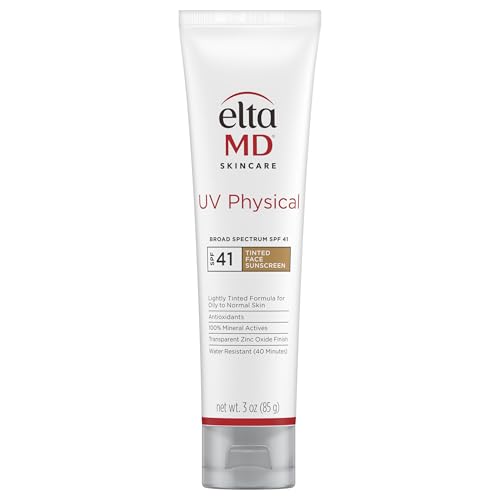
- BROAD SPECTRUM UVA/UVB PROTECTION: This 100% mineral active sunscreen with transparent Zinc Oxide provides broad spectru…
- WATER RESISTANT UP TO 40 MINUTES: Enjoy reliable sun protection with this water-resistant mineral sunscreen, making it i…
- FOR OILY AND SENSITIVE SKIN TYPES: Can be used on both oily and sensitive skin and is made with antioxidants to combat f…
Best for: Melasma and sensitive skin.
SPF/protection: Broad-spectrum SPF 41.
Tint/iron oxide: Tinted, with iron oxides.
Key ingredients: Zinc oxide and titanium dioxide.
Texture and finish: Lightweight for a mineral, with a natural tinted finish.
White cast: Reduced by the tint. Check the shade.
Skin type: Sensitive and post-procedure skin.
Makeup compatibility: Good under makeup.
Water resistance: Check the current label.
Pros: Mineral-only, visible-light-friendly tint, gentle.
Cons: Higher price, limited shades.
Who should buy it: Melasma-prone or sensitive skin.
Who should skip it: Anyone avoiding any tint or anyone on a tight budget.
Approx. price: $40–$50.
3. EltaMD UV Clear (Best for Oily and Acne-Prone Skin)
Why it made the list: It’s an oil-free, lightweight formula positioned for acne-prone skin, making it a practical choice for post-acne marks.
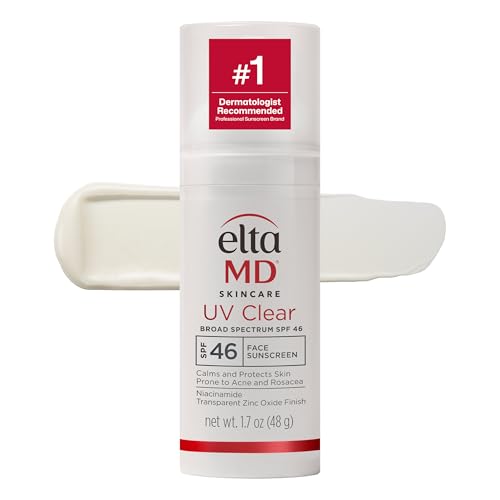
- CLEAR SUNSCREEN FOR FACE: This lightweight face sunscreen with transparent Zinc Oxide provides broad spectrum SPF 46 pro…
- FOR NORMAL, ACNE-PRONE, AND SENSITIVE SKIN TYPES: UV Clear uses an oil-free, non-comedogenic formula that’s designed for…
- SUITABLE FOR HYPERPIGMENTED SKIN: Contains Niacinamide which helps to visibly improve skin tone and reduce the appearanc…
Best for: Oily or acne-prone skin and PIH.
SPF/protection: Broad-spectrum SPF 46.
Tint/iron oxide: Untinted version, so no iron oxide benefit. A tinted version has been offered, so check availability if visible light is a priority.
Key ingredients: Zinc oxide, niacinamide, hyaluronic acid.
Texture and finish: Light, smooth, non-greasy.
White cast: Usually low, but can vary on deeper tones.
Skin type: Oily, acne-prone, and sensitive.
Makeup compatibility: Layers well.
Water resistance: Check the label.
Pros: Light finish, good for breakout-prone skin.
Cons: Untinted, pricey.
Who should buy it: Oily or acne-prone skin.
Who should skip it: Anyone who specifically wants iron oxides in an untinted-only formula.
Approx. price: $40–$50.
4. Colorescience Face Shield Flex (Best Premium and Best for Darker Skin)
Why it made the list: It’s a premium tinted sunscreen offered in multiple shades, which matters when finding a match for deeper skin.

- TONE-ADAPTING COLOR THAT BLOOMS AS YOU BLEND: Starts white, transforms on contact. Innovative iron oxide pigments delive…
- TOTAL ENVIRONMENTAL DEFENSE SPF 50 PA++++: 100% mineral Zinc Oxide formula defends against UVA/UVB, pollution, HEV blue …
- FLEXIBLE SHADES FOR ALL SKIN TONES: Each adaptive shade delivers buildable coverage that adjusts to a wide range of skin…
Best for: Darker skin tones with pigmentation concerns, and anyone wanting a tinted, makeup-like finish.
SPF/protection: Broad-spectrum SPF 50.
Tint/iron oxide: Tinted, with iron oxides.
Key ingredients: Mineral filters plus iron oxide pigments.
Texture and finish: Smooth, skin-like.
White cast: Low when you’ve matched the shade. Check the current shade range.
Skin type: Most skin types.
Makeup compatibility: Works as a base.
Water resistance: Check the label.
Pros: Multiple shades, tinted, polished finish.
Cons: Expensive.
Who should buy it: Those who want sunscreen and light coverage in one.
Who should skip it: Anyone on a budget.
Approx. price: $60–$80.
5. Beauty of Joseon Relief Sun: Rice + Probiotics (Best Lightweight, No White Cast)
Why it made the list: It’s an affordable, lightweight, no-cast SPF 50+ that people actually enjoy wearing. Comfortable daily use is a real advantage for pigmentation-prone skin. We compare it in detail in our Beauty of Joseon vs Round Lab sunscreen comparison, and in our Skin1004 vs Beauty of Joseon sunscreen comparison.
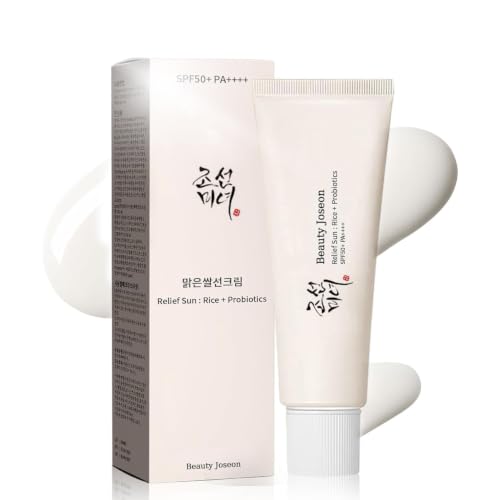
- 1.Korean Rice Probiotics Anti-black frost offers , ideal for all skin types.
- 2.Enriched with nourishing ingredients for superior skin protection and deep hydration.
- 3.Provides long-lasting moisture to keep skin supple and hydrated.
Best for: Daily comfort, deeper skin tones who want no cast, and oily-to-combination skin.
SPF/protection: SPF 50+ PA++++.
Tint/iron oxide: Untinted, so no iron oxide benefit.
Key ingredients: Chemical UV filters with rice extract and probiotic-type ingredients.
Texture and finish: Light, creamy, slightly dewy.
White cast: Generally none.
Skin type: Most skin types.
Makeup compatibility: Layers well.
Water resistance: Not specifically claimed here, so reapply and check the label.
Pros: Affordable, easy to wear, strong UVA rating.
Cons: No visible-light protection from iron oxides, may sting some sensitive eyes.
Who should buy it: Anyone who wants a comfortable everyday sunscreen with no cast.
Who should skip it: Melasma-prone skin that needs tinted protection.
Approx. price: $15–$25.
6. CeraVe Hydrating Mineral Sunscreen, Tinted (Best Budget Pick)
Why it made the list: It’s an inexpensive, widely available tinted mineral option that is fragrance-free.

- [ BROAD SPECTRUM SUNSCREEN FOR FACE ] 100% Mineral-based, chemical free sunscreen, also known as a physical sunscreen, r…
- [ MINERAL SUNSCREEN APPLICATION ] Mineral based sunscreen for face can often leave a white cast. For best results, apply…
- [ HAWAII COMPLIANT SUNSCREEN ] Oxybenzone free, avobenzone free & benzene free, this sunscreen contains physical filters…
Best for: Budget-conscious shoppers who want a tinted formula.
SPF/protection: Broad-spectrum SPF 30.
Tint/iron oxide: Tinted, with iron oxides.
Key ingredients: Zinc oxide, titanium dioxide, ceramides, hyaluronic acid.
Texture and finish: Moisturizing, slightly thicker.
White cast: Tint helps, but shade range is limited, so check it carefully on deeper skin.
Skin type: Normal to dry, sensitive.
Makeup compatibility: Fair. It may feel heavy under makeup.
Water resistance: Check the label.
Pros: Affordable, fragrance-free, tinted.
Cons: SPF 30 only, limited shades, can feel thick on oily skin.
Who should buy it: Anyone wanting an affordable tinted mineral option.
Who should skip it: Oily skin, or anyone who wants SPF 50.
Approx. price: $15–$25.
How to Use Sunscreen for Dark Spots
Morning routine:
- Cleanser
- Brightening treatment or serum, if appropriate (see our best face serums on Amazon for glowing skin)
- Moisturizer, if needed
- Sunscreen as the final skincare step
Reapplication: The American Academy of Dermatology advises reapplying about every two hours when outdoors, and after swimming or heavy sweating. Follow your product’s directions.
How much to use: Using too little is one of the most common reasons sunscreen underperforms. Many people use the “two-finger method” (a line of sunscreen along two fingers for face and neck) as a practical habit. This is a consumer technique, not a formal label instruction, so follow your product’s directions. If you wear a tinted sunscreen, a thin layer may give less protection than you expect.
If you’re over 40 and want a less greasy finish, see our best non-greasy sunscreens for women over 40.
Common Mistakes to Avoid
- Choosing SPF based only on the number
- Ignoring UVA protection
- Choosing untinted sunscreen when visible light is a main concern
- Applying too little
- Not reapplying
- Skipping sunscreen because of darker skin
- Choosing a formula so greasy you won’t wear it
- Using irritating products that worsen inflammation
- Expecting sunscreen alone to erase existing pigmentation
FAQs
What is the best sunscreen for hyperpigmentation?
There’s no single best one. Look for broad-spectrum SPF 30–50+, strong UVA protection, and ideally a tint with iron oxides. A formula you’ll wear every day matters most. EltaMD UV Elements Tinted is our top overall pick.
Is SPF 50 better for dark spots?
SPF 50 filters slightly more UVB than SPF 30, but the difference is modest. How much you apply, how often you reapply, and UVA and visible-light protection matter just as much.
Is tinted sunscreen better for hyperpigmentation?
It can be, especially for melasma, because tints often contain iron oxides that help block visible light. Not every tinted sunscreen is automatically better, so check the ingredient list.
Does iron oxide help with dark spots?
Iron oxides help block visible light, which may contribute to pigmentation, especially in deeper skin tones and melasma. They don’t remove existing spots, but they may help prevent darkening.
What sunscreen is best for melasma?
Many dermatology sources suggest broad-spectrum tinted sunscreens with iron oxides, often mineral-based. EltaMD UV Physical Tinted is a good example. A dermatologist can advise on treatment.
Can sunscreen fade existing dark spots?
Not on its own. Sunscreen mainly prevents spots from getting darker and protects progress from brightening treatments. Fading usually takes time and, sometimes, a dermatologist’s help.
What is the best sunscreen for acne marks?
Choose a lightweight, non-irritating formula you’ll wear daily. EltaMD UV Clear suits oily, acne-prone skin, and Beauty of Joseon Relief Sun is a comfortable lighter option.
Is tinted sunscreen better for darker skin?
It can help with pigmentation concerns, but only if the shade matches. If you can’t find a shade, a no-cast untinted sunscreen is a reasonable alternative.
How often should I reapply sunscreen?
About every two hours when outdoors, and after swimming or heavy sweating, following your product’s directions.
Can I use vitamin C with sunscreen?
Yes. Many people apply vitamin C in the morning before sunscreen. If your skin gets irritated, simplify your routine or ask a dermatologist.
Final Verdict: Which Should You Choose?
- If you have melasma: choose a tinted mineral sunscreen with iron oxides, like EltaMD UV Physical Tinted.
- If you have acne marks: choose a lightweight, non-irritating formula, like EltaMD UV Clear.
- If you have darker skin and pigmentation: choose a well-matched tinted option like Colorescience Face Shield Flex, or a no-cast formula if no shade fits.
- If you have oily skin: choose EltaMD UV Clear or Beauty of Joseon Relief Sun.
- If you have sensitive skin: choose EltaMD UV Physical Tinted or CeraVe Hydrating Mineral Tinted.
- If you want the best overall: choose EltaMD UV Elements Tinted.
If a dark spot changes shape or color, bleeds, or feels painful, or if your pigmentation is persistent, see a qualified dermatologist. Before you buy, check the current label and Amazon listing, since formulas, shades, and prices can change.