

If you’re looking for the best at-home radio frequency devices for skin tightening, start here: most devices sold as “RF” are not equal. Some deliver real, temperature-monitored RF. Others are microcurrent or LED tools with “RF” printed on the box. Prices run from about $200 to $700+, so it pays to know what you’re buying.
This guide covers the RF devices worth a look in 2026, what results are realistic, and how to spot the difference. It is based on manufacturer specifications, regulatory records, published research, and current product listings. We have not personally tested these devices.
Petal Beauty Skincare is reader-supported. If you buy through links on our site, we may earn a commission at no extra cost to you. As an Amazon Associate, we earn from qualifying purchases.
Quick Comparison
| Device | Best For | RF Technology | Session Time | Suggested Frequency | Approx. Price | Warranty |
|---|---|---|---|---|---|---|
| CurrentBody Skin RF | Beginners, face and neck | Bipolar RF with auto temperature control | Varies by area; check manual | Follow manual | ~$330–$390 | Check current listing |
| TriPollar STOP Vx 2 | Jawline, shorter sessions | Multi-RF + VIB | About 9 min (manufacturer) | 2–3x/week, 6–8 weeks | Price varies | 1 year (manufacturer) |
| Silk’n Titan | Multi-technology | Bipolar RF + LED/IR (varies by version) | Varies by version | Follow manual | Price varies | Check listing |
| NEWA Classic / Plus | Wrinkles, FDA-cleared route | 3DEEP RF | Follow manual | Follow manual | $339 / $439 (brand site) | Check listing |
| AMIRO R1 Pro | Budget-friendly | RF + EMS + LED/IR | 5 min morning, 10 min night | 2–3x/week | ~$200–$430 | Check listing |
Amazon prices change often. Check the latest Amazon price before buying.
What Is Radio Frequency Skin Tightening?
RF uses energy to gently heat the deeper layers of skin. That controlled warmth is thought to encourage collagen remodeling over time. It is a gradual, non-surgical approach to firmness and fine lines.
It is not a facelift. At-home devices deliver much less energy than clinic treatments, so results are subtler and depend on consistent use.
How At-Home RF Devices Work
You apply a conductive gel and glide the device over one small area at a time. Electrodes send RF energy into the skin, and the device tries to hold the surface at a target temperature. CurrentBody, for example, says its Skin Sense system keeps skin at 43°C (a manufacturer claim). Sensors, temperature control, and automatic shutoff are what separate a well-made device from a gimmick. CurrentBody
RF vs Microcurrent vs LED: What’s the Difference?
| Technology | What It Does | Best Known For |
|---|---|---|
| RF | Controlled heat in the skin | Firmness, fine lines, tightening |
| Microcurrent | Low-level electrical stimulation | Toning and lifted appearance |
| LED | Specific light wavelengths | Skin tone, texture, breakouts |
A microcurrent device is not an RF device. NuFACE and Medicube are the most common examples of this mix-up. Our NuFACE TRINITY+ review and Medicube Age-R Booster Pro review explain how those work, and Medicube vs NuFACE compares them directly. For toning, see our guide to the best microcurrent devices for wrinkles. For light-based options, browse our LED face mask reviews.
Many devices combine technologies. That’s fine, but make sure the RF part is real.
How We Evaluated These RF Devices
We did not personally test these devices. We checked each one against:
- Whether it clearly states it uses RF
- Temperature monitoring and safety features
- Regulatory information, such as FDA clearance
- Whether it is the current model
- Session time and how often you’d use it
- Ongoing costs like gel
- Clear separation of manufacturer claims from independent evidence
We left out any device whose specifications we couldn’t confirm, including Sensica SensiLift. Check its listing yourself if it interests you.
Best At-Home RF Devices for Skin Tightening in 2026
1. CurrentBody Skin RF: Best for Beginners
What it is: A handheld bipolar RF device for the face and neck.
Key features: CurrentBody says it continuously measures skin temperature and adjusts to keep skin at 43°C. Reviewers mention 104°F, which is about 40°C, so figures vary by source. Trust the manual. CurrentBody
Price and warranty: Roughly $330–$390 depending on retailer and date. Confirm the warranty on the listing.
Time: A Daily Beast reviewer noted that full-face treatment can take over an hour, so expect a real time commitment. The Daily Beast
Pros: Temperature regulation, a simple concept, and a well-known brand.
Cons: Long sessions and higher cost than some rivals.
Best for: First-time RF buyers.
Skip it if: You want a fast routine.
Expectations: CurrentBody reports 89% of users saw improved tightness in 8 weeks. That is a manufacturer claim, not independent proof. CurrentBody
2. TriPollar STOP Vx 2: Best for a Shorter Routine

- AIDS IN COLLAGEN PRODUCTION: new Triple-Wave Multi-RF Technology delivers interchanging RF waves that comb the dermis la…
- PERSONALIZED TREATMENT: 2nd Generation Thermal Mapping provides the skin with the most accurate temperature for effectiv…
- PLEASANT TREATMENT & SUPERIOR RESULTS: the 3rd Generation features automatically adjusts in real-time to ensure a pleasa…
Current-model note: The Vx 2 is the model on TriPollar’s own site. Amazon lists it as a 2023 model, and TriPollar also sells a Vx GOLD 2. Some marketplace sellers advertise a “Vx3.” We could not confirm that on TriPollar’s official pages, so be cautious.
What it is: An FDA-cleared device using triple-wave Multi-RF plus vibration, with sessions of about 9 minutes, according to TriPollar. TriPollar
Usage: 2–3 times a week, at least 24 hours apart in the same area, for 6–8 weeks, per the manufacturer. TriPollar
Warranty: One year, plus a 30-day money-back guarantee on TriPollar’s site. Amazon terms may differ. TriPollar
Pros: Fast sessions and jawline focus.
Cons: Corded, and it needs a compatible gel, which adds ongoing cost.
Best for: People who want a shorter routine.
Skip it if: You want cordless convenience.
3. Silk’n Titan: Best Multi-Technology Option
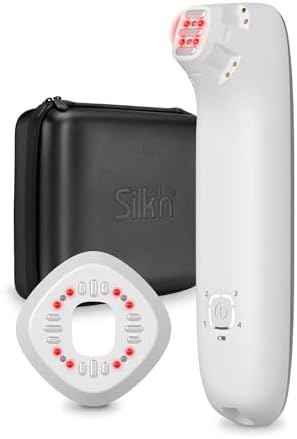
- VISIBLE WRINKLE REDUCTION IN AS LITTLE AS 5 WEEKS – Clinically tested technology helps visibly reduce wrinkles and fine …
- ADVANCED RF COLLAGEN BOOSTING TECHNOLOGY – Radio Frequency energy gently heats the deeper skin layers to stimulate natur…
- MULTI-PLATFORM ANTI-AGING SYSTEM – Combines RF energy with LED light therapy to improve skin elasticity, texture, and ov…
What it is: A cordless device pairing bipolar RF with light-based technologies. Versions differ. Amazon’s Titan Multiplatform listing combines RF with low-level laser and red light, and includes a thermal sensor. Amazon
Regulatory note: FDA records show clearances for Titan-family devices. The Titan AllWays is described as bipolar RF plus red and infrared LEDs with a temperature stabilizer, and its clearance is for a specific indication. FDA clearance is a substantial-equivalence finding for a stated use. It is not an endorsement of every claim. FDA
Pros: Cordless, with RF plus light in one tool.
Cons: Confusing model names, and Silk’n recommends its own gel.
Best for: Readers who want RF and LED together.
Skip it if: You want the simplest product line to research.
4. NEWA: Best for Wrinkle Focus
What it is: NEWA uses 3DEEP RF technology from Endymed. The corded Classic and cordless Plus use the same technology, according to the brand. NEWA

- SKIN TIGHTENING DEVICE: NEWA uses the power of radio frequency to: ✔️Boost the skin’s collagen production ✔️Visibly redu…
- PROVEN TECHNOLOGY: The NEWA device and gel were clinically tested on various skin types aged 37 to 65. Individuals who t…
- TRUSTED TECHNOLOGY: One of the most clinically validated skin tightening technologies around today, radio frequency mach…
Price: NEWA lists the Classic at $339 and the Plus at $439 on its own site. NEWA
Important limit: NEWA’s team has said the device is not intended to tighten loose skin under the chin, and it stresses that only certain treatment areas are FDA-cleared. It is a poor pick for neck or jowl concerns.
Pros: Regulatory clearance for wrinkle reduction and a 30-day refund policy on NEWA’s site.
Cons: Not for the under-chin area.
Best for: Facial fine lines and wrinkles.
5. AMIRO R1 Pro: Best Budget Option
What it is: A rechargeable RF, EMS, and light device. Specs listed by a retailer include 1–2MHz RF, 8W power, 42°C temperature control, and five intensity levels. Cathayelectronic

- Microcurrent-Enhanced Skincare Experience – Gentle microcurrent supports a more comfortable application experience and h…
- Red Light Skincare Support – Red light technology is designed to complement daily skincare routines, helping improve the…
- Infrared Light Comfort Care – Infrared light provides gentle warmth during use, enhancing the overall skincare experienc…
Routine: AMIRO suggests 5 minutes in the morning and 10 minutes at night. Urbeau
Price: AMIRO’s own site showed $199.99 on sale, down from $299.99. Other retailers have listed it higher. Certification: AMIRO says it is FCC and CE certified. We did not find FDA clearance, so don’t assume it. AMIROUrbeau
Pros: Affordable and short sessions.
Cons: Less clinical backing than cleared devices.
Best for: Budget-conscious first-timers.
Best RF Device by Skin-Tightening Goal
- Beginners: CurrentBody Skin RF
- Shortest routine: TriPollar STOP Vx 2
- Best budget: AMIRO R1 Pro
- Multi-technology: Silk’n Titan
- Wrinkle-focused, FDA-cleared route: NEWA
- Jawline and neck: TriPollar or CurrentBody, but read each manual for approved areas
- Mature skin: Any of the above, with slow, careful use. See our facial lifting devices for women over 40.
We are not awarding “best of” titles based on testing, only on specifications and fit.
What Results Can You Realistically Expect From At-Home RF?
| Time | What You May Notice |
|---|---|
| First few sessions | Temporary skin feel changes, possible mild warmth or redness |
| Several weeks | Gradual, subtle changes |
| 8–12 weeks | A fair point to judge consistent use |
| Long term | Maintenance likely needed |
Does At-Home RF Actually Work?
The research on RF is encouraging but mixed. A 2025 systematic review in Aesthetic Surgery Journal Open Forum covered 15 studies with 1,230 participants. It concluded RF facial treatments produce meaningful aesthetic improvements and high satisfaction, with a favorable safety profile. PubMed CentralPubMed
There are caveats. Only one of the 15 studies was a randomized controlled trial; most were case series. The studies used different devices, settings, and protocols, many of them professional. That doesn’t prove every consumer device works equally well. Treat manufacturer trial claims as marketing until independent data backs them. PubMed Central
How Often Should You Use an RF Device?
Follow your manual. TriPollar suggests 2–3 sessions weekly for 6–8 weeks, with at least 24 hours between sessions on the same area. AMIRO’s site also suggests 2–3 times weekly. More is not better, and overuse can irritate skin.
At-Home RF Safety: What You Need to Know
Manufacturer instructions come first. This is general information, not medical advice.
- Overheating and burns: Keep the device moving, use the required gel, and stop if skin feels hot or painful.
- Sensitive skin: Start on the lowest setting.
- Recent procedures: CurrentBody’s related RF microneedling page says not to use it within 3 months of injectables, fillers, or plastic surgery in the treatment area. Check your own device’s manual. CurrentBody
- Implants and medical devices: The same page warns against use with active or silicone implants, implantable metal devices, or piercings in the treatment area. Pacemakers and implanted electronics are commonly listed as reasons to avoid RF.
- Active skin problems and skin cancer history: Skip use over these, and ask a doctor.
- Pregnancy: Many manufacturers advise against use. Check yours.
- Eyes: Avoid eyelids and the orbital bone unless the manual explicitly allows it.
Speak with a dermatologist before starting if you have medical conditions or recent cosmetic procedures.
At-Home RF vs Professional RF Treatments
| Feature | At-Home RF | Professional RF |
|---|---|---|
| Energy level | Lower | Higher |
| Convenience | High | Requires appointment |
| Cost per session | Lower after device purchase | Usually higher |
| Results | Gradual | Can be more substantial |
| Maintenance | Usually ongoing | Depends on plan |
| Supervision | No | Yes |
At-home devices are not equivalent to clinic procedures.
How Much Does an At-Home RF Device Cost?
Expect roughly $200 to $450 for the devices above, with premium models higher. Also budget for:
- Gel: Most devices need a specific gel, and some brands require their own.
- Consumables: Gel runs out. Check refill costs.
- Warranty: Confirm terms on the listing, since Amazon and brand-site terms can differ.
- Time and frequency: A cheap device with hour-long sessions costs you more time.
- Accessories: Cases, extra gel, and add-on attachments add up.
A $200 device with expensive gel can cost more over a year than a $400 device that uses standard gel.
RF Device Buying Checklist
- States RF clearly, with specifications
- Temperature sensor and skin-contact sensors
- Automatic shutoff
- Clear instructions and stated treatment areas
- Regulatory info, such as an FDA clearance you can look up
- Current model, not an older version
- Known gel and warranty costs
Don’t call a device fake without evidence. If specs are missing, ask the seller before buying.
Frequently Asked Questions
Do at-home RF devices really tighten skin?
They may help gradually. Evidence is stronger for RF generally than for any individual consumer device.
How long does RF take to show results?
Many brands suggest evaluating at 8–12 weeks.
How often should I use an RF device?
Commonly 2–3 times a week, but follow your device’s manual.
Is RF better than microcurrent?
They do different things. RF targets tightening through heat, while microcurrent targets toning. Some people use both.
Is RF better than LED?
LED targets tone, texture, and breakouts. It’s a different job, not a stronger one.
Can RF help sagging skin?
It may help mild laxity. It won’t replace surgery.
Can RF help the jawline or neck?
Some devices list those areas. NEWA, for example, isn’t intended for under the chin.
Are at-home RF devices safe?
Generally when used as directed, but burns and irritation are possible.
Do I need conductive gel?
Usually yes. Brands such as Silk’n warn against substitutes.
How much does a good RF device cost?
Roughly $200–$450 for most, higher for premium.
Can I use RF after Botox or fillers?
Some manufacturers say to wait about 3 months. Ask your doctor and check your manual.
Final Buying Guide
- First device, willing to go slow: CurrentBody Skin RF
- Short sessions: TriPollar STOP Vx 2
- Tight budget: AMIRO R1 Pro
- RF plus light: Silk’n Titan
- Wrinkle focus: NEWA
Set realistic expectations, use it consistently, and check the current Amazon price before you buy.