When your skin barrier is compromised, choosing the wrong moisturizer can make things significantly worse. For anyone dealing with eczema, chronic dryness, or a damaged barrier, the stakes are real — the right cream can calm a flare-up while the wrong one can trigger irritation that sets you back weeks.
At Petal Beauty Skincare, our content is reader-supported. This means that when you click on certain links on our website and make a purchase, we may earn a small commission—at no extra cost to you.As an Amazon Associate, we earn from qualifying purchases. We only recommend products that we genuinely believe can provide value to our readers. Our reviews and recommendations are based on research, expert opinions, and user feedback, not influenced by affiliate partnerships.Your support helps us continue to create helpful, honest, and high-quality skincare content.
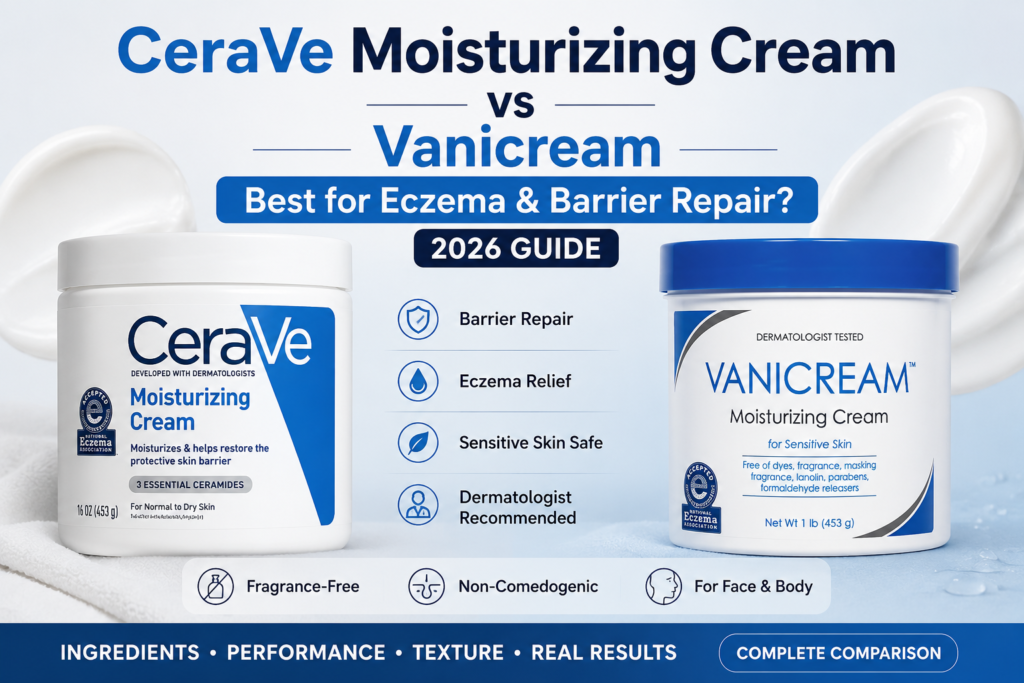
Two names come up again and again in dermatologist offices and skincare communities: CeraVe Moisturizing Cream and Vanicream Moisturizing Cream. Both are fragrance-free, dermatologist-recommended, and formulated with sensitive skin in mind. But they take meaningfully different approaches to hydration and barrier support.
This guide breaks down everything you need to know — ingredients, texture, eczema performance, barrier repair, and real-world use cases — so you can choose the right moisturizer for your specific skin needs.
This comparison is for anyone dealing with eczema, sensitive skin, a damaged skin barrier, or chronic dryness, whether you’re new to skincare or a well-researched enthusiast.
Also read Centella Asiatica vs Aloe Vera: Which Ingredient Calms Redness Faster? (2026 Guide)

- [ HYALURONIC ACID MOISTURIZER ] With hyaluronic acid, ceramides and MVE technology for 24 hour hydration. Rich, velvety …
- [ MOISTURIZER FOR DRY SKIN ] A deficiency of ceramides in skin can often be associated with dry skin, which can feel itc…
- [ GENTLE DAILY MOISTURIZER ] For face and body or can be used as a hand cream for dry skin relief. Holds National Eczema…
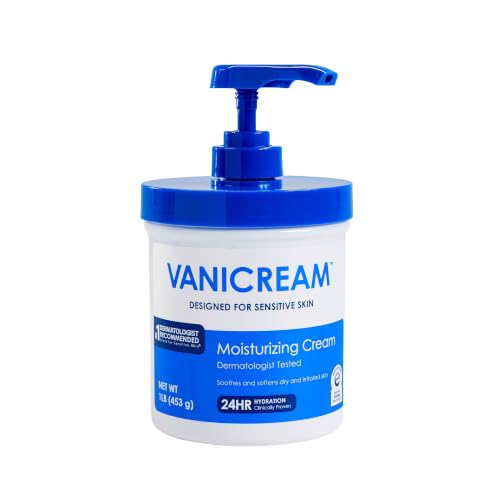
- Designed for Sensitive Skin: Vanicream is the #1 Dermatologist-Recommended Brand for Sensitive Skin*. Vanicream Moisturi…
- Non-Greasy & Moisturizing: A fast-absorbing moisturizing cream that is easy to spread and does not feel sticky, making i…
- No Common Irritants: This non-irritating moisturizer has a mild, unscented formula and contains no gluten, fragrance, dy…
Quick Verdict
| Winner | |
|---|---|
| 🏆 Best Overall | CeraVe Moisturizing Cream |
| 🔴 Best for Eczema | Vanicream (mild–moderate) / CeraVe (barrier-focused) |
| 🌸 Best for Extremely Sensitive Skin | Vanicream |
| 💰 Best Value | CeraVe (more widely available, larger sizes) |
| 🛡️ Best for Barrier Repair | CeraVe Moisturizing Cream |
Short version: CeraVe wins for barrier repair thanks to its ceramide-rich formula. Vanicream wins for ultra-sensitive skin with its minimal, preservative-conscious ingredient list. Both are excellent — your ideal choice depends on which type of sensitivity you’re managing.
We have found Best Non-Greasy Sunscreens for Women Over 40 on Amazon (2026)
CeraVe vs Vanicream: Comparison at a Glance
| Feature | CeraVe Moisturizing Cream | Vanicream Moisturizing Cream |
|---|---|---|
| Price Range | ~$14–$22 (16 oz) | ~$12–$18 (16 oz) |
| Size Options | 3 oz, 8 oz, 16 oz, 19 oz | 1 lb, 4 lb tub |
| Skin Type | Dry, Normal, Sensitive, Eczema | Dry, Very Sensitive, Eczema |
| Ceramides | ✅ Yes (3 types) | ❌ No |
| Petrolatum | ❌ No | ✅ Yes |
| Hyaluronic Acid | ✅ Yes | ❌ No |
| Cholesterol | ✅ Yes | ❌ No |
| Fragrance-Free | ✅ Yes | ✅ Yes |
| Non-Comedogenic | ✅ Yes | ✅ Yes |
| Eczema Friendly | ✅ Yes | ✅ Yes |
| Barrier Repair Support | ✅✅ Strong (ceramide complex) | ✅ Good (occlusive protection) |
| Texture | Rich, moderately thick | Very thick, slightly waxy |
| Absorption | Moderate | Slower |
| Best For | Barrier repair, eczema, daily use | Ultra-sensitive, reactive, allergy-prone skin |
Product Overview
CeraVe Moisturizing Cream
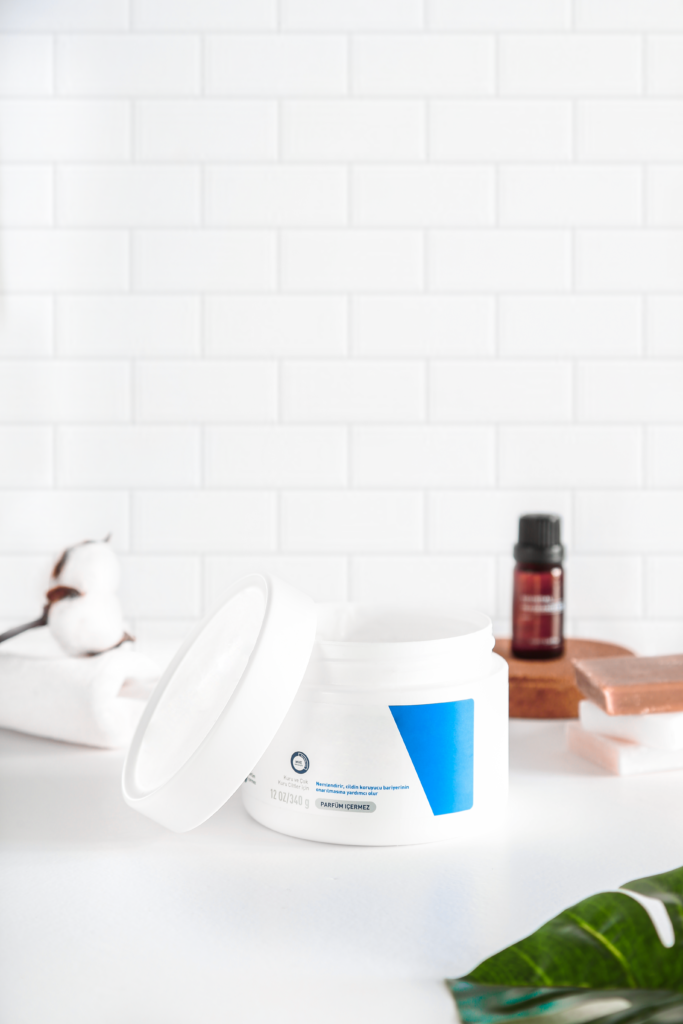
CeraVe launched in 2005 with a specific mission: develop moisturizers that support the skin’s natural protective barrier using ingredients that actually belong in skin. The CeraVe Moisturizing Cream has since become one of the most recommended products by dermatologists in the United States.
Key Ingredients
- Ceramides 1, 3, 6-II — three types of ceramides that mirror the lipids naturally found in healthy skin
- Hyaluronic Acid — a powerful humectant that draws moisture into the skin
- Cholesterol — works synergistically with ceramides to reinforce the lipid barrier
- Niacinamide — a form of vitamin B3 that reduces inflammation and supports barrier function
- Dimethicone — a silicone-based emollient that creates a lightweight barrier on the skin’s surface
CeraVe also uses their patented MVE (Multivesicular Emulsion) technology, which releases moisturizing ingredients gradually throughout the day rather than all at once.
Compairing Skin1004 Hyalu-Cica vs Beauty of Joseon Relief Sun: Best Korean Sunscreen for Oily Skin?
Texture
CeraVe Moisturizing Cream has a rich, dense consistency that spreads easily despite its thickness. It absorbs within a few minutes and leaves a soft, non-greasy finish on most skin types. It strikes a balance between being genuinely emollient without feeling heavy.
Pros
- Clinically proven to restore the skin barrier
- Contains three essential ceramides
- Works on both face and body
- Long-lasting hydration thanks to MVE technology
- Widely available and affordable
- Suitable for daily use morning and night
Cons
- Contains some preservatives that very sensitive individuals may react to
- Slightly heavier texture may feel uncomfortable in warmer weather
- Dimethicone can feel occlusive for those not used to silicones
Best Suited For
Eczema-prone skin, damaged skin barriers, dry and normal skin, facial and body use, anyone who wants evidence-based barrier repair in a daily moisturizer.
Vanicream Moisturizing Cream
Vanicream was developed by Pharmaceutical Specialties, Inc. with one core philosophy: remove everything that commonly causes skin reactions. The brand was born from the need to create products safe enough for patch testing — meaning they had to eliminate virtually all known sensitizers.
Key Ingredients
- Petrolatum — a heavy-duty occlusive agent that locks moisture in and physically protects the skin surface
- Sorbitol — a humectant that draws water to the skin
- Cetearyl Alcohol — a gentle fatty alcohol that emulsifies and softens
- Propylene Glycol — another humectant (note: some sensitive individuals react to this)
- White Petrolatum — reinforces the occlusive layer
- Simethicone — a gentle anti-foaming agent that provides some skin-smoothing benefit
Vanicream’s ingredient list is intentionally short. It contains no dyes, fragrances, masking fragrances, lanolin, parabens, or formaldehyde releasers.
Texture
Vanicream is noticeably thicker and waxier than CeraVe. It takes longer to absorb and leaves a slightly tacky finish, especially when applied generously. Many users prefer it as an overnight treatment or for very dry, cracked areas.
Pros
- Extremely minimal formula — very low risk of reactions
- Petrolatum is one of the most effective occlusive ingredients available
- Widely trusted by allergists and dermatologists for patch-test-safe skincare
- No parabens, no lanolin, no formaldehyde releasers, no dyes
- Available in a 4 lb tub — economical for whole-body use
Cons
- No ceramides or barrier-building actives
- Heavier, waxy texture makes it difficult to wear under makeup
- Less elegant feel than CeraVe
- May feel uncomfortably heavy for those with combination skin
Best Suited For
Extremely sensitive or reactive skin, allergy-prone individuals, those who have reacted to other moisturizers, body eczema, severe dry patches, overnight repair treatments.
We reasearched Top 10 Face Serums on Amazon for Healthy and Glowing Skin.
Ingredient Breakdown: What Actually Matters for Eczema
Understanding key ingredients helps you make a smarter choice — especially when your skin is reactive.
Ceramides
Ceramides are lipid molecules that make up roughly 50% of the skin’s outer barrier. In eczema-prone skin, ceramide levels are measurably lower than in healthy skin, which is a primary reason why moisture escapes and irritants penetrate easily.
CeraVe contains ceramides 1, 3, and 6-II — three of the most important types found naturally in skin. Research supports the use of ceramide-containing moisturizers in managing eczema symptoms and supporting barrier recovery.
Vanicream contains no ceramides. It doesn’t attempt to rebuild the barrier from the inside out — instead, it protects what’s there by creating an occlusive seal on the surface.
Edge: CeraVe for active barrier repair.
See which product is best Anua Heartleaf 77% vs I’m From Rice Toner: Which Is Better for Sensitive Skin? (2026 Guide)
Hyaluronic Acid
Hyaluronic acid (HA) is a humectant that can hold up to 1,000 times its weight in water. It draws moisture from the environment (and from deeper skin layers) into the outermost layer of skin.
CeraVe contains HA as a key active ingredient. Vanicream uses sorbitol as its primary humectant instead — a milder option that is less likely to cause reactions in ultra-sensitive individuals.
Edge: CeraVe for hydration depth; Vanicream for those who react to HA.
Petrolatum
Petrolatum is among the most effective skin protectants available. The FDA recognizes it as a safe and effective over-the-counter skin protectant. It works by forming a physical layer that prevents transepidermal water loss (TEWL) — the evaporation of moisture through damaged skin.
Vanicream’s formula centers around petrolatum. CeraVe relies on dimethicone and the emollient base rather than petrolatum for its occlusive properties.
Edge: Vanicream for raw occlusive protection.
Cholesterol
Cholesterol is another key lipid in the skin barrier, working alongside ceramides and fatty acids. CeraVe includes cholesterol specifically to replicate the skin’s natural lipid ratio, which research suggests may improve barrier recovery speed.
Vanicream does not include cholesterol.
Edge: CeraVe for barrier mimicry.
Preservatives
CeraVe uses phenoxyethanol and ethylhexylglycerin as preservatives. These are generally well-tolerated but can irritate a very small subset of people with extreme sensitivity.
Vanicream uses DMDM hydantoin in some formulations (a formaldehyde releaser) and also uses BHT as an antioxidant. However, newer Vanicream formulations have moved away from traditional preservative concerns — always check the current label.
Edge: Neutral — both have thoughtful, low-irritant preservative systems.
Potential Irritants
Vanicream’s key watch ingredient for sensitive users is propylene glycol, which, while generally safe, does cause reactions in a subset of eczema and contact dermatitis patients. CeraVe’s potential irritant flag is its niacinamide content — rare, but some individuals experience flushing from niacinamide at higher concentrations.
Eczema Performance: Head-to-Head
Both products are commonly recommended for eczema. Here’s how they compare across the symptoms that matter most.
Redness and Inflammation: CeraVe has a slight edge thanks to niacinamide, which has anti-inflammatory properties. Vanicream’s occlusive layer also reduces redness indirectly by protecting irritated skin from environmental triggers.
Itching: Vanicream’s petrolatum-heavy formula often provides faster itch relief by immediately sealing the skin. CeraVe’s itch relief tends to build over time as ceramides work to restore the barrier.
Dry Patches and Flaking: Both perform well. CeraVe addresses the root cause (barrier deficiency) while Vanicream provides immediate surface-level relief.
Long-Term Hydration: CeraVe’s MVE technology provides measurably longer hydration cycles. Clinical studies on ceramide-containing moisturizers show sustained barrier improvement over weeks of consistent use.
Overall Eczema Performance: Tie — with CeraVe better for long-term management and Vanicream better for acute flare comfort.
Barrier Repair: Which Rebuilds Skin Faster?
Skin barrier repair is not just about keeping moisture in — it’s about restoring the structural integrity of the stratum corneum, the outermost skin layer.
CeraVe’s approach is active and structural. By delivering ceramides 1, 3, and 6-II alongside cholesterol, it supplies the exact lipids the skin needs to rebuild its lipid matrix. This is analogous to providing building materials for a damaged wall.
Vanicream’s approach is protective and passive. It creates an occlusive seal that prevents further damage and allows the skin to repair itself beneath the barrier. This is analogous to putting a tarp over a damaged wall while it heals.
Both strategies have clinical merit. For faster measurable barrier recovery, the research favors ceramide-containing formulations like CeraVe. For preventing further damage and allowing natural repair — especially in very reactive skin — Vanicream’s occlusive approach is highly effective.
Edge: CeraVe for active barrier repair; Vanicream for protection-first recovery.
Checkout complete guide of Best Vitamin C Serum for Oily Skin Under $30 (2026 Budget Picks You’ll Actually Love)
Texture & Feel
Thickness: Vanicream is noticeably thicker and waxier. CeraVe is rich but smoother.
Absorption: CeraVe absorbs in 3–5 minutes on most skin. Vanicream takes 10–15 minutes and may never fully “disappear” when applied generously.
Daytime Wear: CeraVe is the clear choice for daytime — it absorbs cleanly and sits well under sunscreen or makeup. Vanicream is difficult to layer over without a tacky or shiny finish.
Nighttime Wear: Vanicream excels as an overnight treatment. Its occlusive properties work best during extended skin-contact periods.
Greasy Factor: CeraVe scores better. Vanicream feels greasy unless used very sparingly.
Makeup Compatibility: CeraVe works under makeup. Vanicream does not.
Sensitive Skin Test
Both products are fragrance-free, dye-free, and non-comedogenic. However, there are meaningful differences in their sensitive-skin suitability.
Fragrance: Neither product contains fragrance or masking fragrance — a key requirement for eczema and rosacea-prone skin.
Common Triggers Avoided:
- Vanicream avoids: lanolin, parabens, formaldehyde releasers, fragrances, dyes
- CeraVe avoids: fragrances, parabens (in most formulas), common allergens
Allergy Considerations: For anyone with confirmed contact allergies or who is undergoing patch testing, Vanicream is the safer default. It was specifically formulated to be patch-test safe.
Dermatologist Recommendations: Both products appear regularly on dermatologist-recommended lists. The National Eczema Association has granted its Seal of Acceptance to CeraVe Moisturizing Cream. Vanicream is widely used in clinical and allergy settings for its minimal ingredient profile.
Real-Life Use Cases: Which Is Right for Your Situation?
Mild Eczema: Either product works well. CeraVe may provide better long-term improvement; Vanicream is a safe choice if you’ve reacted to products before.
Severe Eczema: Use Vanicream for acute flare-up relief (especially on body), then transition to CeraVe for maintenance once the flare subsides.
Rosacea-Prone Skin: CeraVe — niacinamide supports redness reduction and the formula is lighter than Vanicream.
Damaged Skin Barrier (Post-Retinol, Over-Exfoliation, etc.): CeraVe — the ceramide + cholesterol combination actively rebuilds what was damaged.
Winter Dryness: Vanicream at night, CeraVe during the day. This combination covers both occlusive protection and active repair.
Sensitive Facial Skin: CeraVe for most people. Vanicream if you’ve reacted to multiple products or have confirmed contact allergies.
Body Eczema: Vanicream — the 4 lb tub makes whole-body application affordable, and petrolatum is excellent for thick patches on legs, arms, and torso.
Pros & Cons Summary
| CeraVe Moisturizing Cream | Vanicream Moisturizing Cream | |
|---|---|---|
| ✅ Pros | Active barrier repair with ceramides | Ultra-minimal ingredient list |
| Hyaluronic acid for deep hydration | Petrolatum for strong occlusion | |
| Absorbs well, suitable for face + body | No lanolin, parabens, or dyes | |
| National Eczema Association approved | Patch-test safe, allergy-friendly | |
| MVE technology for long-lasting moisture | Affordable in large tub format | |
| ❌ Cons | Some very sensitive users react to preservatives | No ceramides or barrier actives |
| Heavier feel in warm weather | Waxy, difficult under makeup | |
| Niacinamide may cause flushing in rare cases | Propylene glycol may irritate some | |
| Slow absorption, tacky finish |
Which Should You Buy?
Choose CeraVe Moisturizing Cream If…
- You want a moisturizer that actively rebuilds your skin barrier
- You have eczema or dry skin that needs long-term improvement
- You use the moisturizer on your face and body
- You want a product that works under sunscreen and makeup
- You prefer faster-absorbing textures
- You’re managing post-procedure or over-exfoliated skin
Choose Vanicream Moisturizing Cream If…
- You have extremely reactive, sensitive, or allergy-prone skin
- You’ve reacted to multiple moisturizers and need a clean-slate option
- You’re currently undergoing patch testing or allergy evaluation
- You use it primarily overnight or for targeted body application
- You have very dry, cracked skin that needs heavy occlusive protection
- You want a large tub for cost-effective whole-body coverage
👉 Buy CeraVe Moisturizing Cream on Amazon
Frequently Asked Questions
Is Vanicream better than CeraVe for eczema? Not categorically — it depends on your skin’s specific needs. Vanicream is often preferred for very reactive skin or during active flare-ups because its minimal formula reduces the risk of further irritation. CeraVe is typically better for ongoing barrier repair and long-term eczema management due to its ceramide content.
Which is better for skin barrier repair? CeraVe Moisturizing Cream. Its combination of ceramides 1, 3, and 6-II with cholesterol and hyaluronic acid is specifically designed to replicate and restore the natural lipid barrier. Research consistently supports ceramide-containing moisturizers for barrier repair.
Can I use CeraVe Moisturizing Cream on my face? Yes. CeraVe Moisturizing Cream is formulated for both face and body use. It is non-comedogenic and widely used as a facial moisturizer for dry, sensitive, and eczema-prone skin. Those with oily or acne-prone skin may prefer the lighter CeraVe Facial Moisturizing Lotion instead.
Is Vanicream safe for sensitive skin? Yes — it is one of the most sensitive-skin-friendly products available. Vanicream was specifically formulated to exclude common skin sensitizers and is used in allergy clinics as a baseline product for patients with contact allergies or multiple sensitivities.
Which moisturizer do dermatologists recommend for eczema? Both CeraVe and Vanicream appear regularly on dermatologist-recommended lists for eczema. CeraVe holds the National Eczema Association Seal of Acceptance. Many dermatologists recommend CeraVe for its ceramide content and Vanicream for ultra-sensitive or allergy-prone patients.
Does CeraVe contain ceramides? Yes. CeraVe Moisturizing Cream contains three types of ceramides: ceramides 1, 3, and 6-II. These mirror the ceramides found naturally in healthy skin and are the cornerstone of CeraVe’s approach to barrier repair. This is a primary reason CeraVe is recommended so frequently for eczema and barrier damage.
Can I use both CeraVe and Vanicream together? Absolutely. A common approach is to use CeraVe Moisturizing Cream during the day (for barrier repair and better wearability) and Vanicream at night as a heavy occlusive treatment. This layering strategy covers both active repair and overnight protection.
Is Vanicream good for children with eczema? Yes. Vanicream’s minimal, allergen-free formula makes it a popular choice for infants and children with eczema or sensitive skin. Always patch-test any new product on a small area first, and consult your pediatrician for guidance on managing childhood eczema.
Final Verdict
Both CeraVe Moisturizing Cream and Vanicream Moisturizing Cream are genuinely excellent products for eczema-prone and sensitive skin. Neither is a bad choice.
However, for most people — especially those focused on barrier repair and long-term eczema management — CeraVe Moisturizing Cream is the stronger option. Its ceramide complex, hyaluronic acid, and cholesterol combination provides evidence-based support for restoring the skin’s natural protective layer. The MVE technology ensures sustained hydration, and the texture is versatile enough for both face and body, day and night.
Vanicream earns its place as the go-to for anyone with extremely reactive skin, confirmed contact allergies, or a pattern of reacting to other moisturizers. Its ultra-clean formula and petrolatum base make it an outstanding protective option, particularly for overnight use and body eczema treatment.
When in doubt, speak with your dermatologist — especially for severe or widespread eczema. Both these products are excellent starting points that your doctor is almost certainly familiar with.
Disclaimer: This article contains affiliate links. If you purchase through these links, Petal Beauty Skincare may earn a small commission at no extra cost to you. All product recommendations are based on research and editorial judgment, not advertiser relationships.