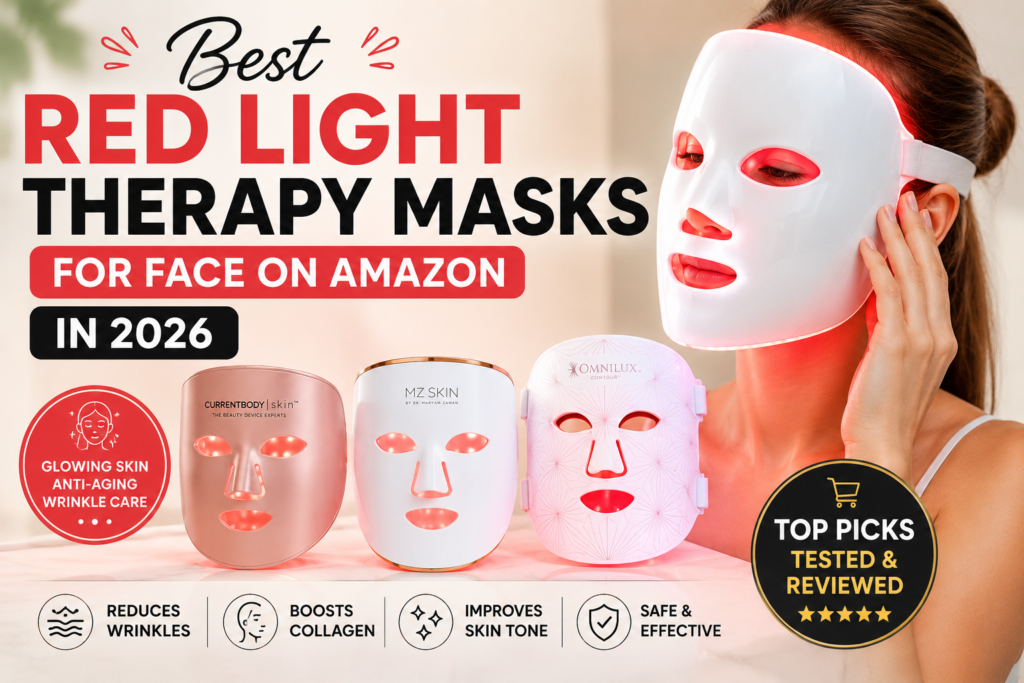
If you’ve spent any time on skincare TikTok or scrolling Amazon lately, you’ve probably seen someone glowing under a silicone mask covered in tiny red lights. Red light therapy masks have gone from clinic-only treatments to one of the most searched-for skincare tools on Amazon, and for good reason — used consistently, red and near-infrared light can genuinely support smoother, firmer-looking skin over time.
But here’s the catch: this is also one of the most confusing categories to shop. Amazon is flooded with masks claiming “FDA-cleared,” “clinical-grade,” or “500 LEDs” without any real way to check if those claims hold up. Some are excellent. Many are not.
Petal Beauty Skincare is reader-supported. If you buy something through a link on this page, we may earn a small commission at no extra cost to you. This never affects which products we recommend — we only feature masks we’d genuinely suggest to a friend.
This guide walks through the best red light therapy masks for face on Amazon in 2026, but more importantly, it explains what actually separates a good mask from a gimmick — wavelengths, irradiance, LED count, and FDA claims — so you can shop with confidence instead of guessing.
Quick Answer: Which Mask Should You Buy?
If you only read one section, here it is:
- Best overall: CurrentBody Skin LED Light Therapy Mask Series 2 — the most well-rounded combination of coverage, wavelengths, and clinical backing.
- Best for wrinkles specifically: Omnilux Contour Face — the most clinically documented brand in this category.
- Best for beginners / fastest routine: Solawave Wrinkle Retreat Pro — 3-minute sessions, easy to stick with.
- Best for acne + anti-aging in one device: Dr. Dennis Gross DRx SpectraLite FaceWare Pro — red and blue light in a single mask.
- Best value: iRestore Illumina LED Face Mask — the most LEDs of the group at a lower price point.
Now let’s get into why.
Quick Comparison Table
| Product | Best For | Main Light Types | Treatment Time | Key Advantage | Price Range | Check on Amazon |
|---|---|---|---|---|---|---|
| CurrentBody Skin Series 2 | Best overall | 633nm red, 830nm NIR, 1072nm deep NIR | 10 min | Broad wavelength coverage + flexible silicone fit | $$$$ (~$450–$470) | View on Amazon |
| Omnilux Contour Face | Wrinkles & anti-aging | 633nm red, 830nm NIR | 10 min | Most clinically documented brand in the category | $$$$ (~$395) | View on Amazon |
| Dr. Dennis Gross SpectraLite FaceWare Pro | Acne + fine lines combo | Red + blue LEDs | 3 min | Fast sessions, dual acne/anti-aging function | $$$ (~$340–$455) | View on Amazon |
| Solawave Wrinkle Retreat Pro | Beginners | Amber, red, deep red, NIR | 3 min | Very short sessions, up to 20 uses per charge | $$$ (~$390–$500) | View on Amazon |
| iRestore Illumina | Best value | 635nm red, 830nm NIR, 415nm blue | 10 min | Highest LED count of the group, cordless design | $$ (~$300–$400) | View on Amazon |
Prices fluctuate on Amazon, so always confirm current pricing on the product page before buying.
How We Chose These Red Light Therapy Masks
We didn’t just pull together a list of whatever ranks highest for “red light face mask Amazon.” Every mask on this list was evaluated against the same criteria:
- Wavelengths used — and whether they fall within ranges actually studied for skin
- Light technology — LED type, distribution, and whether specs are independently verifiable
- FDA status — cleared, and for what specific claim
- Comfort and fit — silicone vs. rigid shell, strap design, weight
- Treatment time — how realistic it is to fit into a daily or weekly routine
- Ease of use — cordless vs. corded, controls, charging
- Brand reputation — how long the company has been making light therapy devices, and whether third-party reviewers can verify their claims
- Value for money — not just price, but what you’re getting for it
- Amazon availability — confirmed, currently listed products only
We excluded a long list of unbranded and generic masks that make bold claims (“600 LEDs!” “clinically proven!”) without any traceable manufacturer, safety documentation, or clear US business presence. That doesn’t mean every unbranded mask is bad — it means we couldn’t verify enough about them to responsibly recommend them here.
The Red Light Therapy Masks
CurrentBody Skin LED Light Therapy Mask Series 2 – Best Overall
CurrentBody has built its reputation specifically around light therapy devices, and the Series 2 mask is its most refined version yet. It’s the mask most frequently compared against every other premium option on the market, which says something about where it sits in the category.

- Enhanced collagen production capability significantly reduces fine lines, wrinkles and redness, for younger-looking skin…
- Upgraded light coverage provides our famous instant glow, for a healthier, brighter and smoother complexion.
- An all-new, exclusive layout of 236 LED bulbs emits three clinically recognised wavelengths: red (633nm), near-infrared …
Best for: Someone who wants the most complete wavelength coverage and doesn’t mind paying a premium price for it.
Key specifications:
- Wavelengths: 633nm red, 830nm near-infrared, 1072nm deep near-infrared
- 236 LEDs total (110 red, 110 NIR, 16 deep NIR)
- Treatment time: 10 minutes, 3–5 times weekly
- FDA-cleared
- Flexible liquid-silicone shell designed to contour to the face, including chin and nose coverage
Pros:
- Three distinct wavelengths instead of the usual two
- Silicone build reduces gaps between LEDs and skin compared to rigid masks
- Cordless controller clips to clothing so you can move around during treatment
- Backed by brand-published 56-day testing data
- Long, 2-year warranty
Cons:
- One of the more expensive options on this list
- The 1072nm wavelength has less independent research behind it than the 633nm/830nm pairing
- Requires the external battery pack, which some find slightly bulky
Why we recommend it: No other mask on this list combines this level of coverage, fit engineering, and brand track record. CurrentBody has focused exclusively on light therapy devices for years, and it shows in the build quality.
Who should buy it: Anyone treating this as a long-term investment in their routine and who wants the most complete spec sheet available.
Who should skip it: If you’re new to red light therapy and unsure you’ll stick with it, this isn’t the place to start — try a lower-cost option first.
See the current price and availability on Amazon before deciding.
Omnilux Contour Face – Best for Wrinkles and Anti-Aging
Omnilux has been manufacturing medical-grade LED devices for clinics since the early 2000s, long before “LED mask” was a skincare buzzword. The Contour Face brings that same clinical-grade technology into a home-use device, and it’s backed by more independent research than most competitors in this space.
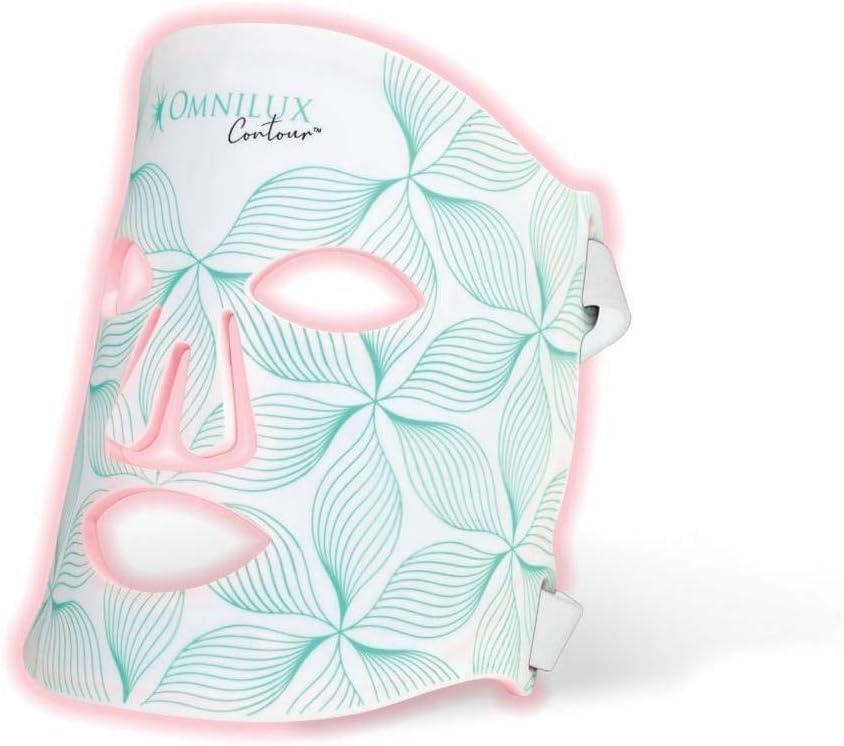
Best for: Readers specifically focused on fine lines, wrinkles, and firmness who want a brand with a long clinical track record.
Key specifications:
- Wavelengths: 633nm red, 830nm near-infrared
- 132 medical-grade LEDs
- Treatment time: 10 minutes daily or every other day
- FDA-cleared, dermatologist-recommended
Pros:
- Backed by decades of published clinical research, more than most consumer LED brands
- Semi-rigid design keeps consistent LED-to-skin distance for predictable energy delivery
- Straightforward two-wavelength approach — no gimmicky extra colors to distract from the core function
- Suitable for sensitive and acne-prone skin
Cons:
- Semi-rigid shell fits less adaptably to different face shapes than flexible silicone masks
- Fewer LEDs than some competitors (though LED count alone isn’t the full story — more on that below)
- No blue light mode for acne
Why we recommend it: Omnilux’s biggest advantage isn’t flashy specs — it’s the depth of clinical evidence behind the exact wavelengths it uses. If you want a brand whose claims are the most independently substantiated, this is it.
Who should buy it: People whose primary goal is wrinkle reduction and skin firmness, and who value clinical pedigree over extra features.
Who should skip it: If acne is your main concern, a mask with a dedicated blue light mode, like the Dr. Dennis Gross option below, will serve you better.
Compare the latest Amazon price before adding this one to your routine.
Dr. Dennis Gross DRx SpectraLite FaceWare Pro – Best for Acne and Anti-Aging Combined
Created by a board-certified dermatologist, this mask stands out for combining red and blue light in one device, plus one of the shortest treatment times in the category.
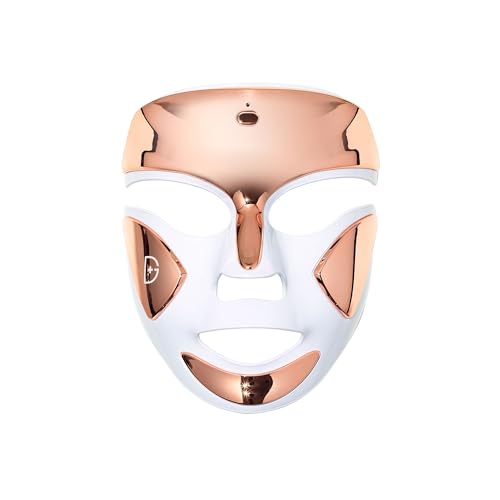
- WHAT IT IS: This LED device for the face targets wrinkles and acne for visibly smoother, clearer skin in just 3 minutes….
- HOW IT WORKS: Treat acne and breakouts with blue light, smooth wrinkles and build collagen with red light, or address bo…
- HOW TO USE: After cleansing, place the mask over your face, securing the strap around your head. Press & hold the power …
Best for: Readers dealing with both breakouts and fine lines who want one mask instead of two devices.
Key specifications:
- Up to 100 red LEDs and 60 blue LEDs (162 total)
- Treatment time: 3 minutes, with automatic shut-off
- FDA-cleared
- Universal-fit adjustable head strap
Pros:
- Combines red (anti-aging) and blue (anti-acne) light in a single mask
- Extremely short session time makes daily use realistic
- Created by a practicing dermatologist’s brand with a long history in skincare
- One-year limited warranty
Cons:
- Doesn’t include a dedicated near-infrared wavelength, which some other premium masks offer
- Rigid design won’t contour to the face as closely as silicone options
- Optimal results are described as taking a full 10-week course of consistent use
Why we recommend it: Few masks let you address both acne and visible aging without switching devices or squeezing in two separate routines. The 3-minute treatment time is also the fastest of any mask on this list.
Who should buy it: Anyone managing occasional breakouts alongside early signs of aging, who wants a quick, no-fuss routine.
Who should skip it: If near-infrared penetration for deeper anti-aging support is your top priority, the CurrentBody or Omnilux masks go deeper into that specific wavelength range.
See whether this model is currently in stock on Amazon.
Solawave Wrinkle Retreat Pro – Best for Beginners
Solawave built its name on the viral Red Light Wand before expanding into full-face masks, and the Wrinkle Retreat Pro is designed around one core idea: make red light therapy something you’ll actually stick with.
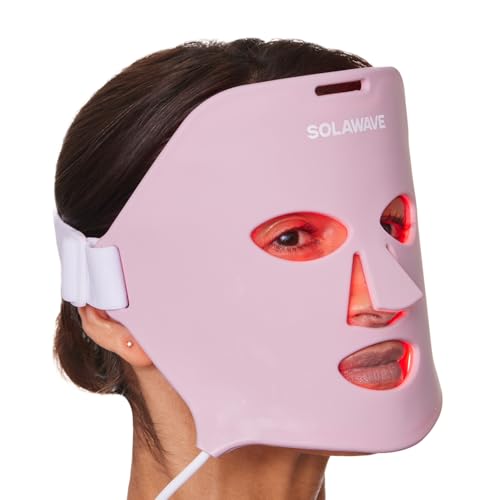
- Red & Near-Infrared Light Therapy Face Mask: Harness the power of red light therapy (630nm) and near-infrared light ther…
- Visible Skin Rejuvenation: This red light therapy mask for face helps visibly reduce the appearance of fine lines and wr…
- Comfortable, Hands-Free Treatment: This LED light therapy mask is made from flexible, medical-grade silicone that comfor…
Best for: First-time buyers who want the shortest possible learning curve and session length.
Key specifications:
- Wavelengths: red (630nm), near-infrared (830nm), deep red (660nm), amber (605nm)
- 320 LEDs
- Treatment time: 3 minutes, 3–5 times weekly
- FDA-cleared
- Up to 20 sessions per charge
Pros:
- One of the shortest session times available, at just 3 minutes
- Four wavelengths in one device, including amber light for surface-level tone concerns
- Medical-grade silicone with dual adjustable straps fits a range of face sizes
- Long battery life relative to competitors — up to 20 uses per charge
- Comes with detachable protective eyewear
Cons:
- Some of the wavelength claims (like amber light benefits) have less robust independent research than the red/NIR pairing
- Best results are described as appearing after roughly 8 weeks of consistent use, not instantly
- The brand strongly encourages pairing with its LightBoost serum, which adds to the total cost if you want the “full” experience
Why we recommend it: For someone intimidated by 10-minute daily commitments, a well-built 3-minute mask is often the difference between a device that gets used and one that ends up in a drawer.
Who should buy it: Anyone new to red light therapy who wants an easy entry point with minimal time investment.
Who should skip it: If you want the deepest possible near-infrared penetration or the most heavily researched wavelength combination, Omnilux or CurrentBody are better matched to that goal.
Check the current price and availability on Amazon.
iRestore Illumina LED Face Mask – Best Value
iRestore built its reputation in hair-growth devices before expanding into skincare, and the Illumina mask leans into one clear differentiator: more LEDs, a cordless design, and a lower price than the premium tier above.
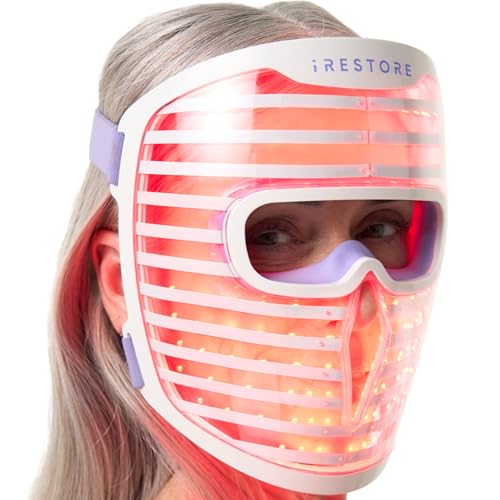
- The Most Powerful Red Light Mask for Visible Results: Experience professional-level rejuvenation at home with 360 LEDs, …
- Advanced Triple-Wavelength Technology: Powered by 3 scientifically backed wavelengths – Red (635nm), Infrared (830nm), a…
- Designed for Comfort and Multitasking: Lightweight yet sturdy, our dual-strap face mask hovers comfortably over your fac…
Best for: Someone who wants strong coverage and a triple-wavelength mask without paying $400+.
Key specifications:
- Wavelengths: 635nm red, 830nm near-infrared, 415nm blue
- 360 LEDs — the highest count of any mask on this list
- Treatment time: 10 minutes, 3–5 times weekly
- Manufactured in an FDA-listed, GMP-certified facility
- Cordless, battery-powered design with eye shields built in
Pros:
- Highest LED count in this roundup
- Cordless design means you can walk around and multitask during treatment
- Combines anti-aging (red/NIR) and anti-acne (blue) wavelengths in one mask
- Replaceable battery, which extends the device’s usable life
- 100-day return window
Cons:
- Irradiance (light intensity) has been measured lower than some premium competitors, even with more LEDs — a reminder that LED count alone doesn’t guarantee stronger treatment
- Marketing language around “FDA-cleared technology” is less precise than dedicated device clearance claims from brands like Omnilux or CurrentBody — worth reading the fine print
- Semi-transparent shell design isn’t as fully opaque as fully silicone masks
Why we recommend it: If your budget doesn’t stretch to a $400+ mask, this is the most reasonable compromise: strong LED count, three wavelengths, and a cordless design, at a noticeably lower price.
Who should buy it: Budget-conscious shoppers who still want multi-wavelength coverage and don’t mind a slightly less premium build.
Who should skip it: If measured irradiance and precise FDA device clearance documentation matter more to you than raw LED count, spend the extra money on Omnilux or CurrentBody instead.
Compare this option against the pricier masks on Amazon before deciding.
Red Light Therapy Mask Buying Guide: 7 Things to Check Before Buying
Before you add anything to your cart, here’s what actually separates a good mask from a mediocre one.
1. Wavelengths
Wavelength is measured in nanometers (nm), and it determines how deep the light penetrates into skin. Visible red light, generally in the 630–660nm range, is associated with surface-level benefits like tone and texture. Near-infrared (NIR) light, typically 800–850nm, is invisible to the eye and penetrates deeper into skin tissue, where it’s thought to support cellular energy production and collagen synthesis. According to the Cleveland Clinic, red and near-infrared light are the two wavelength ranges most commonly studied for skin-related uses. If a mask doesn’t list specific nanometer values, that’s a red flag — vague terms like “advanced light technology” without numbers usually mean the wavelengths haven’t been verified or disclosed.
2. Red + Near-Infrared Combination
Masks that combine both red and near-infrared light are generally considered more versatile than single-wavelength devices, since they target both surface and deeper skin layers. That said, more wavelengths isn’t automatically better — what matters is whether each wavelength included has real research behind it, rather than just being added for marketing purposes.
3. FDA-Cleared Claims (Read This Carefully)
You’ll see “FDA-cleared” on almost every mask in this category, and it’s important to understand what that phrase actually means. FDA clearance is not the same as FDA approval. According to the FDA, most low-risk devices go through a process called 510(k) clearance, which means the manufacturer demonstrated the device is “substantially equivalent” to an existing legally marketed device — it does not mean the FDA independently verified the specific anti-aging or skin claims made in the marketing copy. FDA clearance is a real and meaningful safety benchmark, but it is not proof that a mask will deliver dramatic results. Some sellers also print “FDA-cleared” on generic products without a traceable clearance number — when in doubt, look up the manufacturer directly rather than trusting an Amazon listing alone.
4. LED Count — and Why More Isn’t Automatically Better
It’s tempting to assume a mask with 600 LEDs must be better than one with 130. In reality, LED count is only one factor. What matters more is irradiance (covered next), wavelength accuracy, and how evenly the LEDs are distributed across the face. A mask with fewer, well-placed, properly calibrated LEDs can outperform one with more LEDs that are dim or imprecisely tuned. Be skeptical of listings that lead entirely with a big LED number and little else.
5. Irradiance, in Plain English
Irradiance is basically how much light energy actually reaches your skin, measured in milliwatts per square centimeter (mW/cm²). Think of it like the difference between standing near a dim lamp versus standing near a bright one — both are “light,” but the intensity reaching you is very different. Higher irradiance isn’t automatically better either, since skin can only absorb so much light productively in a given session, and excessive intensity can increase the risk of irritation. Reputable brands typically publish irradiance figures; if a listing gives you an LED count but no irradiance data at all, that’s worth noting.
6. Treatment Time
Session length varies from 3 minutes (Solawave, Dr. Dennis Gross) to 10 minutes (CurrentBody, Omnilux, iRestore). Neither is inherently superior — what matters most is which routine you’ll actually maintain. A 10-minute mask you use twice a week will likely do less for your skin than a 3-minute mask you use consistently.
7. Mask Comfort and Fit
A mask that pinches, overheats, or doesn’t sit flush against your skin will end up unused. Silicone and flexible shells tend to contour better to different face shapes, while rigid plastic masks maintain a consistent LED distance but may not fit smaller or larger faces as well. If you can, check the brand’s return policy before buying — most reputable companies offer at least a 30- to 60-day window.
Eye Protection
LED masks are designed to avoid direct exposure to your eyes, either through built-in eye cutouts, opaque shielding, or included protective goggles. According to the American Academy of Dermatology, protecting your eyes during any light-based skin treatment is important, since prolonged bright light exposure can cause discomfort or strain even when the device itself is considered safe for skin use. Always check whether a mask includes eye protection, and follow the manufacturer’s instructions about closing your eyes or wearing the included goggles during treatment.
How to Verify a Seller Before Buying an Expensive Mask on Amazon
Because this category attracts so many unbranded sellers, a little verification goes a long way before you spend $300–$500:
- Check who’s actually selling it. Look for “Ships from and sold by Amazon.com” or the brand’s official storefront, rather than a third-party seller with an unfamiliar name.
- Search the brand name outside Amazon. A legitimate skincare device company will have its own website, customer service contact, and consistent branding across platforms.
- Look for a real FDA clearance number, not just the phrase “FDA-cleared.” You can cross-reference device clearances through the FDA’s own database.
- Read the negative reviews first. Look specifically for patterns — reports of devices that stop working, inaccurate wavelength claims, or missing eye protection.
- Be cautious of prices that seem too good relative to LED count and wavelength claims. A “500 LED, tri-wavelength, FDA-cleared” mask for $60 should raise questions.
Red Light Therapy Mask for Wrinkles: What Can You Realistically Expect?
It’s worth being honest here: red light therapy is not an overnight fix, and no mask — regardless of price — will replicate the results of an in-office procedure like microneedling or laser resurfacing.
Based on the clinical data brands themselves publish, along with general dermatology guidance, most people using a red light therapy mask consistently (typically 3–5 times weekly) start noticing subtle changes in skin tone and texture around 4 to 8 weeks, with more visible improvements in fine lines and firmness reported after 8 to 12 weeks of regular use. The American Academy of Dermatology notes that at-home light therapy devices can be a helpful addition to a skincare routine, but results tend to be gradual and vary significantly from person to person based on skin type, consistency of use, and the specific device.
Consistency matters more than intensity. Skipping sessions, or expecting results within a week or two, is the most common reason people feel disappointed with these devices. Treat it the way you would treat a retinol routine — a long-term habit, not a quick fix.
How to Use a Red Light Therapy Mask
If you’re new to this, here’s a simple routine to follow:
- Cleanse your face first. Apply the mask to clean, dry skin, free of makeup, sunscreen, or heavy serums, so light can reach your skin directly.
- Do a patch test if it’s your first use. Follow the manufacturer’s sensitivity test instructions before a full session.
- Put on any included eye protection. Close your eyes or wear the provided goggles for the full session.
- Secure the mask and start your session. Follow the manufacturer’s recommended time — don’t extend sessions longer than instructed, assuming it will speed up results.
- Follow with your regular skincare. Once the session ends, continue with your normal routine — serum, moisturizer, and sunscreen if it’s daytime.
- Stick to the recommended weekly frequency. Most masks recommend 3–5 sessions per week; more isn’t necessarily better and can increase the chance of irritation.
Who Should Be Careful With Red Light Therapy?
Red light therapy masks are generally considered low-risk for most healthy adults, but they aren’t right for everyone. You should talk to a dermatologist before using one if any of the following apply to you:
- You’re taking medications known to increase photosensitivity, including certain antibiotics, acne medications like isotretinoin, or some antidepressants
- You have a history of skin cancer or another active skin condition on the treatment area
- You have a seizure disorder, particularly one triggered by flashing or bright light
- You are pregnant, as most manufacturers advise caution or avoidance during pregnancy
- You have a diagnosed eye condition, given the importance of proper eye protection during treatment
This is general safety information, not personalized medical advice. If you have any underlying health condition or are on prescription medication, check with a dermatologist or your doctor before adding a light therapy device to your routine, and always follow the manufacturer’s specific instructions and warnings.
How to Add a Red Light Therapy Mask to Your Skincare Routine
A red light mask works best as one part of a full routine, not a replacement for the basics. A simple way to build it in:
- Cleanse with a gentle formula suited to your skin type — if you’re not sure where to start, this roundup of face wash for oily skin is a good place to look.
- Use your red light mask on clean, dry skin, following the manufacturer’s session time.
- Apply serum after your session, since some brands suggest treated skin may absorb serums more readily immediately afterward. If you’re building out this step, our guide to the best face serums on Amazon covers options for different skin concerns.
- Moisturize. A solid moisturizer helps lock in hydration after treatment — see our picks for moisturizers for dry skin if that’s a priority for you.
- Never skip sunscreen during the day. Light therapy doesn’t replace sun protection, and consistent SPF use matters even more while you’re actively working on skin tone and texture. If you have reactive or sensitive skin, this guide to sunscreen for sensitive skin can help you find a comfortable option.
If you’re building out a full routine around glowing, healthy-looking skin, our skincare routine for glowing skin guide is a helpful next stop.
Which Red Light Therapy Mask Should You Buy?
To bring it all together:
- Best Overall: The CurrentBody Skin Series 2 earns this spot because it combines the widest wavelength range, a genuinely comfortable silicone fit, and a well-documented brand history. If you want one mask that does the most across the board and are comfortable with the price, start here.
- Best for Beginners: The Solawave Wrinkle Retreat Pro removes the biggest barrier to consistency — time. A 3-minute session is far easier to commit to than 10 minutes, which matters more than any spec sheet if you’re not sure you’ll stick with it.
- Best for Wrinkles and Anti-Aging: Omnilux Contour Face has the deepest bench of independent clinical research behind its specific wavelengths, making it the most evidence-backed choice if anti-aging is your singular focus.
- Best Premium Option: The CurrentBody Series 2 again, for anyone treating this as a serious long-term investment rather than a trial run.
- Best Value: The iRestore Illumina gets you multi-wavelength coverage, a high LED count, and a cordless design without hitting the $400+ price tier.
Whichever mask you choose, the single biggest factor in your results won’t be the spec sheet — it will be whether you actually use it consistently for the weeks it takes to see a real difference.
Frequently Asked Questions
Are red light therapy masks worth it?
For most people, yes, if expectations are realistic. Used consistently over several weeks, red and near-infrared light masks are associated with improvements in skin tone, texture, and the appearance of fine lines. They won’t replace professional treatments for deeper wrinkles or significant skin concerns, but as a low-risk, non-invasive addition to a skincare routine, many users find them worthwhile.
What is the best red light therapy mask for wrinkles?
Based on wavelength precision and the depth of independent clinical research behind it, Omnilux Contour Face stands out specifically for anti-aging and wrinkle concerns. CurrentBody Skin Series 2 is a close alternative with broader wavelength coverage.
How often should I use a red light therapy mask?
Most manufacturers recommend 3 to 5 sessions per week. Using it more often than recommended doesn’t necessarily speed up results and may increase the risk of skin irritation.
How long does it take to see results?
Most brands report early changes in skin tone and texture around 4 to 8 weeks of consistent use, with more noticeable improvements in fine lines and firmness after 8 to 12 weeks. Individual results vary based on skin type and consistency.
Are red light therapy masks safe?
For most healthy adults, yes — they’re generally considered low-risk when used as directed. However, people on certain photosensitizing medications, those with a history of skin cancer, seizure disorders, or who are pregnant should consult a dermatologist before use.
What wavelengths are best for red light therapy?
Red light in the 630–660nm range and near-infrared light in the 800–850nm range are the two wavelength categories most commonly supported by existing research on skin applications. Masks combining both tend to offer broader coverage than single-wavelength devices.
Are expensive LED masks better than cheap ones?
Not automatically, but price often does correlate with verified specs, wavelength accuracy, and traceable FDA clearance documentation. A well-reviewed $300+ mask from an established brand is generally a safer bet than an unbranded $40 mask making similar claims, simply because the specs are easier to verify.
What should I check before buying a red light therapy mask on Amazon?
Confirm the seller is either Amazon itself or the brand’s official storefront, look for a specific and verifiable FDA clearance rather than just the phrase “FDA-cleared,” check that wavelengths are listed in nanometers rather than vague marketing language, and read through negative reviews for recurring complaints.
Choosing the best red light therapy mask for face on Amazon comes down to matching the device to your actual goals and habits — not just chasing the highest LED count or lowest price. Whichever option you land on, give it a fair, consistent trial before judging the results, and don’t hesitate to check in with a dermatologist if you have any underlying skin or health concerns.